Service
Broken Spring Repair in Dallas & the east metroplex
Most spring replacements in Dallas are completed within an hour to ninety minutes of arrival, because the truck carries the common wire sizes and lengths. The visit ends with the door balanced by hand and the opener's force reset to the corrected door rather than the broken one.
- Same-day service available
- 10+ years serving Dallas
- Free on-site estimates
- 15% off current repairs
How a torsion spring stores and returns energy
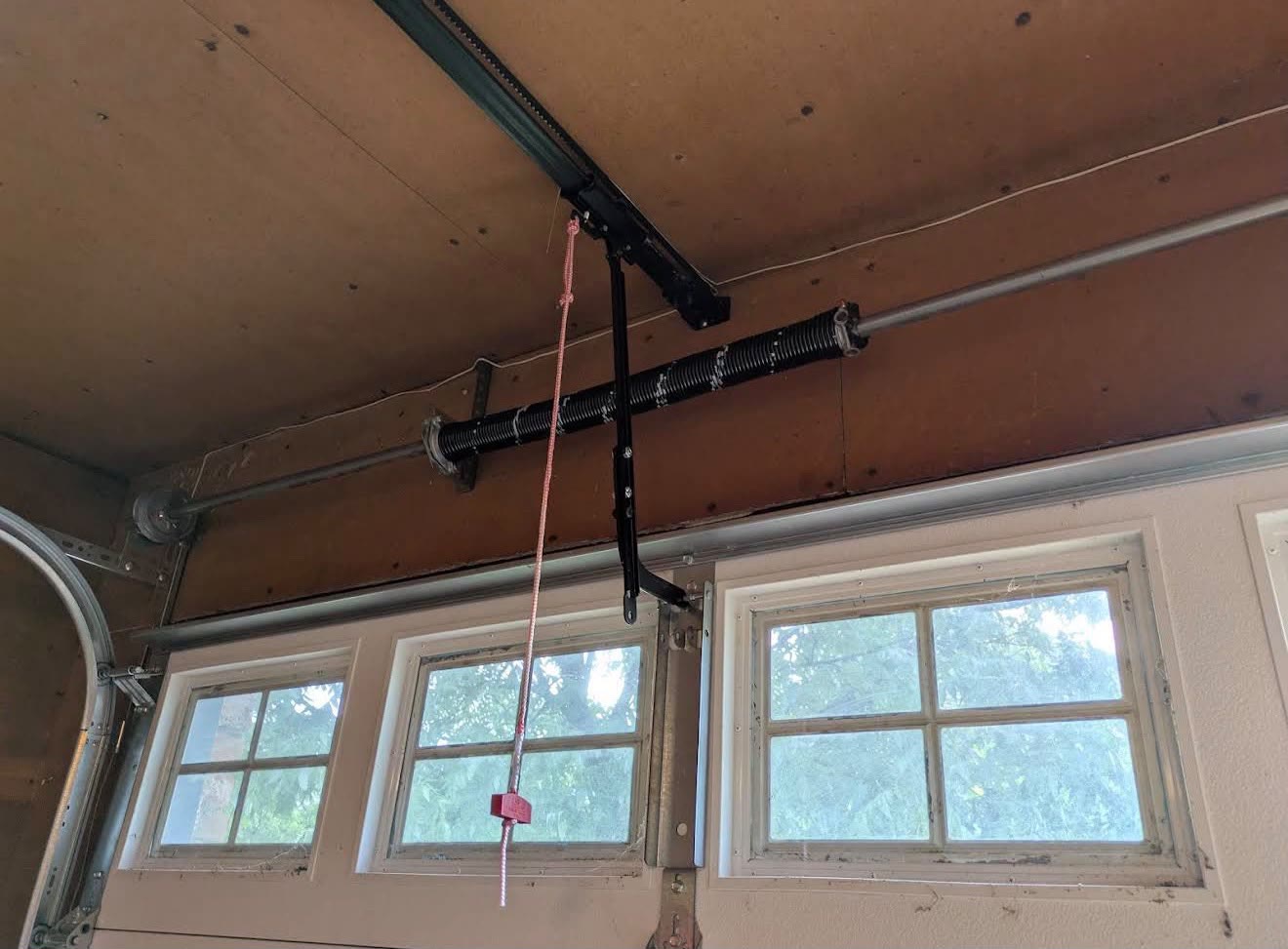
A torsion spring sits on a steel shaft above the door opening. Installing it means winding it a specific number of turns, commonly around seven and a half for a seven foot door, which twists the spring steel and stores mechanical energy in it. Cables run from drums at each end of that shaft down to brackets at the bottom corners of the door. As the door closes, the door's own weight winds the spring tighter; as it opens, the spring unwinds and returns that stored energy to the drums, which pull the cables and lift the door. The system is designed so that the spring's torque and the door's weight cancel out, which is why a healthy door can be lifted with about ten pounds of hand effort despite weighing well over a hundred.
Why a broken one is dangerous to work on
The danger is not the broken spring, which has already released. The danger is everything else still under load. On a two spring door, the intact spring is still fully wound. The cables are still anchored to bottom brackets that are under the full tension of that counterbalance, which is why those brackets carry a warning label from the factory. Winding or unwinding a torsion spring is done with steel winding bars inserted into the holes of the winding cone; if a bar is the wrong diameter, if the set screws are not properly seated, or if a hand slips, the bar comes out of the cone at speed with several hundred pounds of torque behind it. Emergency departments see these injuries regularly, and they are typically hand, wrist, facial, and dental. Screwdrivers and lengths of rebar used in place of proper winding bars are how most of them happen.
Torsion and extension springs are different systems
Torsion springs mount on a shaft above the opening and are standard on most doors installed in the last few decades. Extension springs run horizontally along the tracks on each side, stretch as the door closes, and contract to help lift it. Extension springs are still common on older and lighter doors, and they carry a specific hazard: without a safety cable threaded through the center of the spring and anchored at both ends, a failing extension spring becomes a whipping length of steel across the garage. If your door has extension springs and no safety cables, adding them is inexpensive and we will recommend it whether or not the spring has failed.
Cycle life, and what the numbers actually mean
A cycle is one full open and one full close. Standard springs are commonly rated at 10,000 cycles. High cycle springs, built with heavier wire and greater length, are available at 20,000, 25,000, and higher ratings. The arithmetic is worth doing for your own household. A family using the garage as the main entrance easily runs six cycles a day, which is about 2,190 a year, which spends a 10,000 cycle spring in roughly four and a half years. A retired couple using it twice a day is looking at closer to fourteen years on the same spring. Neither is a defect. If your door failed early, the useful question is whether the spring was correctly sized for the door in the first place.
Why we replace both springs, not just the broken one
On a two spring door, both springs were installed on the same day and have taken the same number of cycles. When one reaches the end of its fatigue life, the other is within a short distance of the same point. Replacing only the failed spring gives you a door with one new spring and one old one, an unequal torque distribution across the shaft, and a second service call in the near future for the same problem. There is also a sizing consequence: springs are selected as a matched pair for the door weight, and a mismatched pair never balances the door correctly across its travel. Replacing both at once costs less than two visits and produces a door that actually balances.
Sizing is measurement, not estimation
A torsion spring is defined by four values: wire diameter, inside diameter, overall length, and wind direction. Those combine to determine how much torque the spring produces per turn. Selecting a replacement means knowing the door's weight, either by weighing it on a scale with the springs disconnected or by calculating from section construction, glazing, and hardware. A spring undersized for the door leaves the door heavy at the floor and burns cycles fast. A spring oversized for it leaves the door wanting to fly open and makes the opener fight it on the way down. Both feel roughly acceptable on the day of installation, and both shorten the life of everything they are attached to.
Please do not attempt this one yourself
A torsion spring holds several hundred pounds of stored energy even when the door is down. Releasing that energy without the correct winding bars is how people lose fingers. If a spring has snapped, leave the door closed and call us.
Signs you need this
- A loud bang from the garage, often heard from inside the house, with the door working fine right up until that moment.
- A visible gap of two to three inches in the coil of the spring above the door.
- The opener strains, moves the door a few inches, and stops or reverses.
- The door is extremely heavy to lift by hand and will not stay up when released.
- The door rises crooked, with one side lagging behind the other.
- The top section flexes or bends when the opener tries to lift the door.
- The cables have gone slack or come off the drums after the failure.
- A gap has opened between coils on an intact spring, or the coils show rust pitting.
Book this service
Call (469) 891-6883 or request a visit online.
The visit
What we actually do
Confirm the failure and secure the door
We identify which spring broke, check whether the intact spring is still under load, and secure the door so it cannot move while work is underway. The opener stays disconnected for the duration.
Measure the door and the existing springs
Wire diameter, inside diameter, length, and wind direction are recorded from the existing springs, and the door weight is established. Those numbers determine the replacement rather than a visual match.
Controlled removal
Any remaining tension is unwound with proper winding bars, cables are released from the drums, and the old springs come off the shaft. Bearings, drums, and the shaft itself are inspected while they are accessible, since this is the only convenient time to see them.
Install and wind to calculated turns
New springs of the correct specification are installed as a pair, cables are set in the drums with equal tension so the door lifts square, and the springs are wound to the turn count the door requires rather than to a default.
Balance test and opener reset
The door is lifted by hand and checked at several points in travel to confirm it holds position. The opener is reconnected, travel and force are reset to the corrected door, and the safety reversal is tested.
On the job
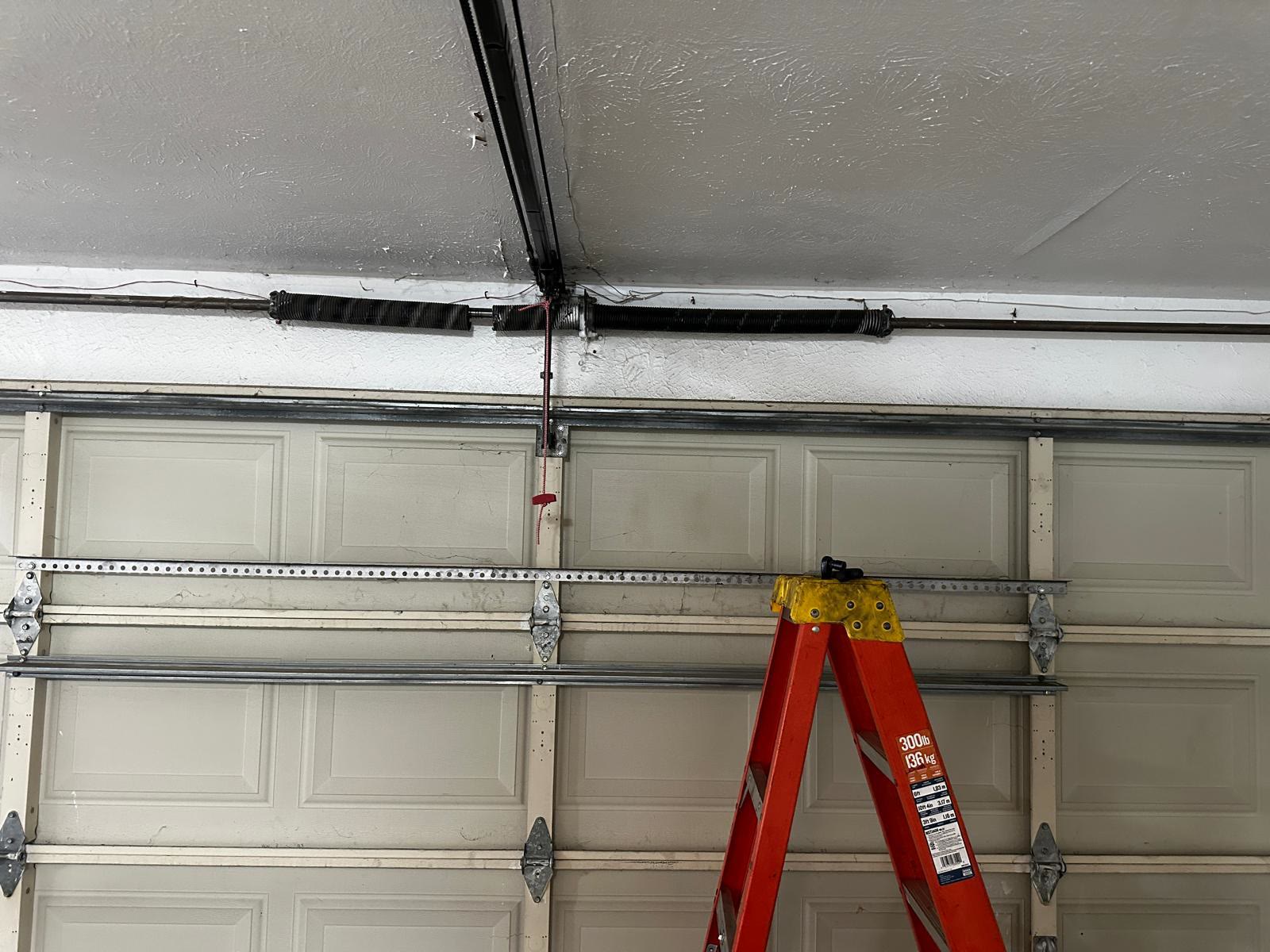
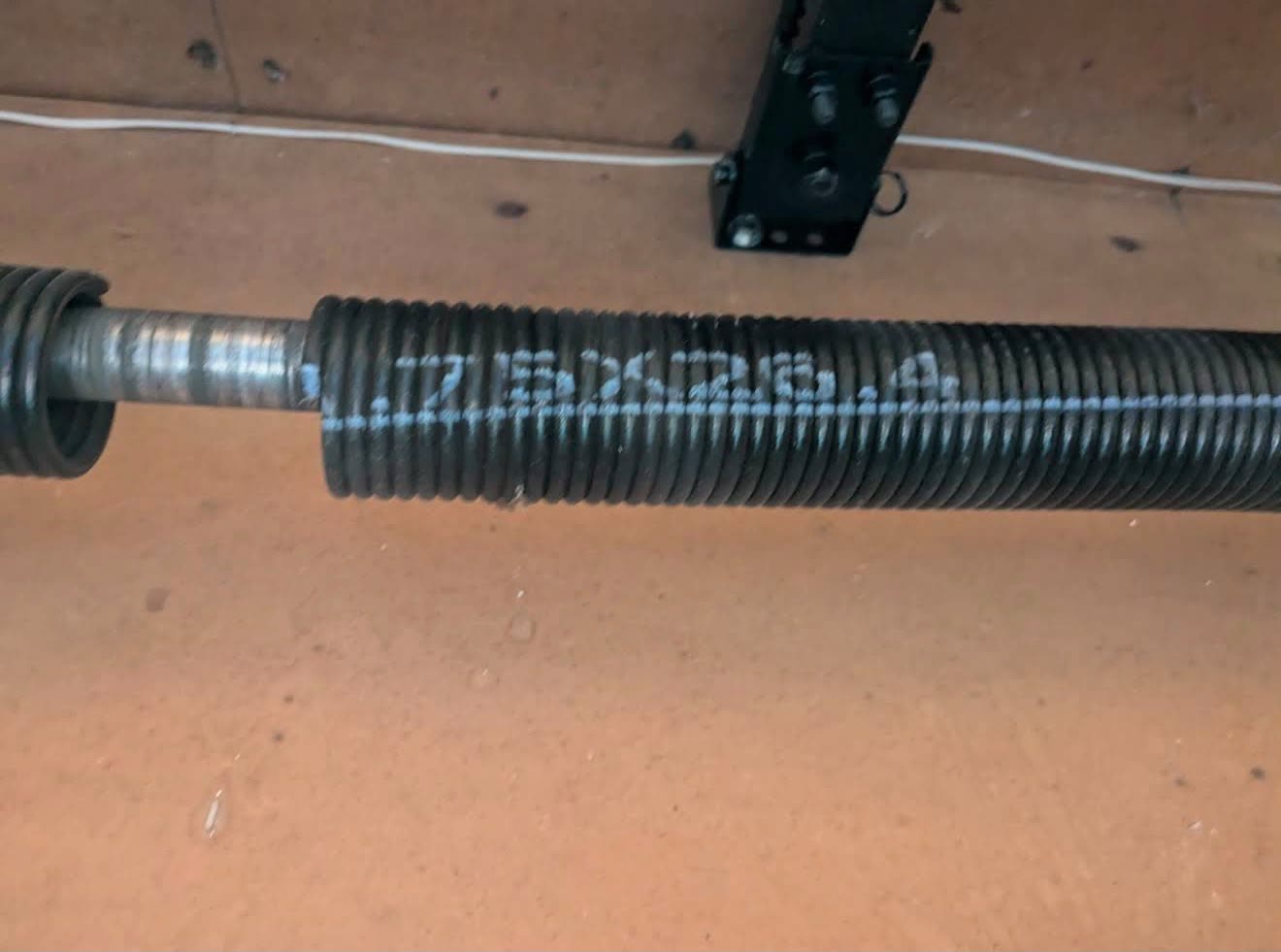
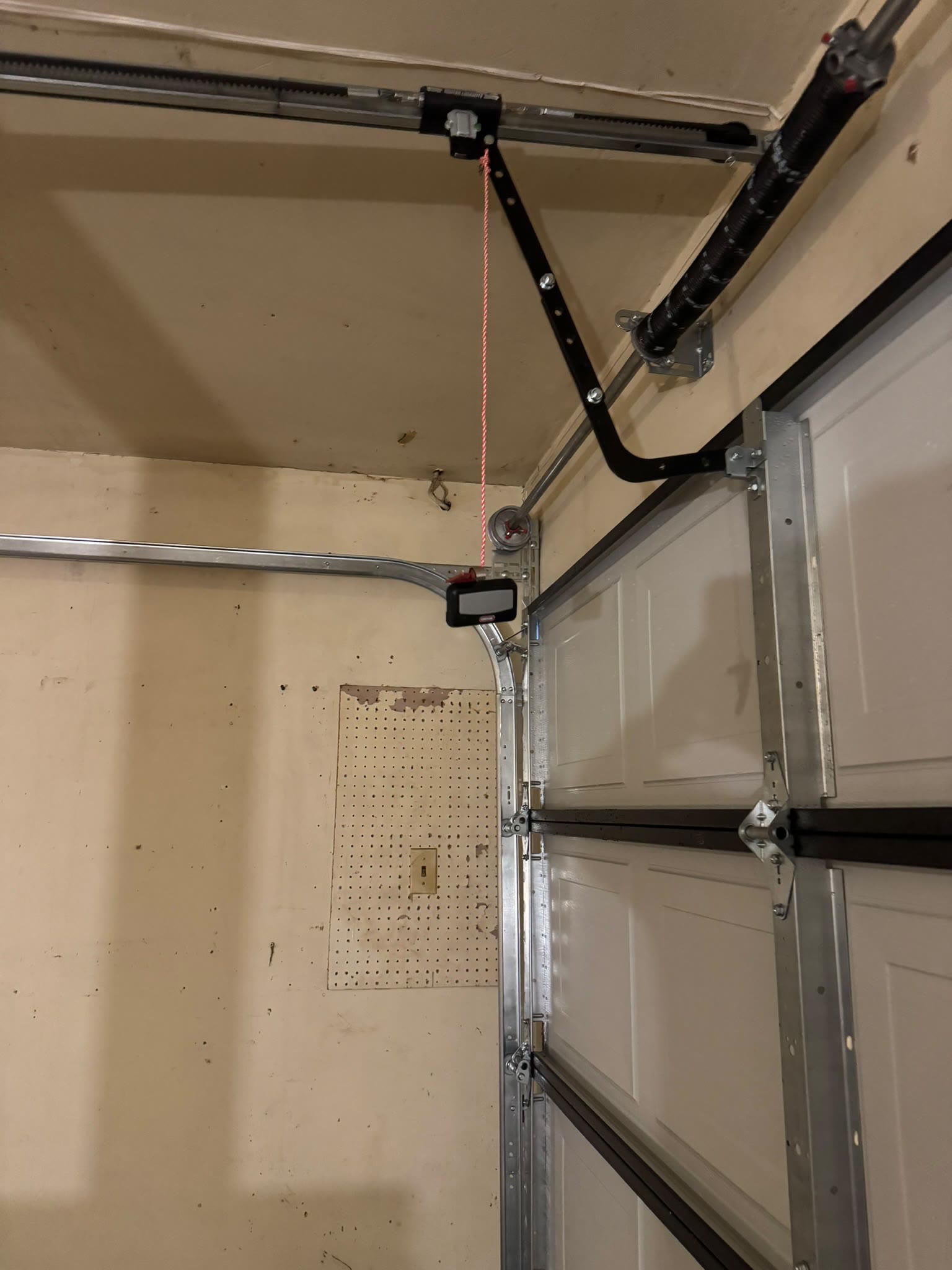
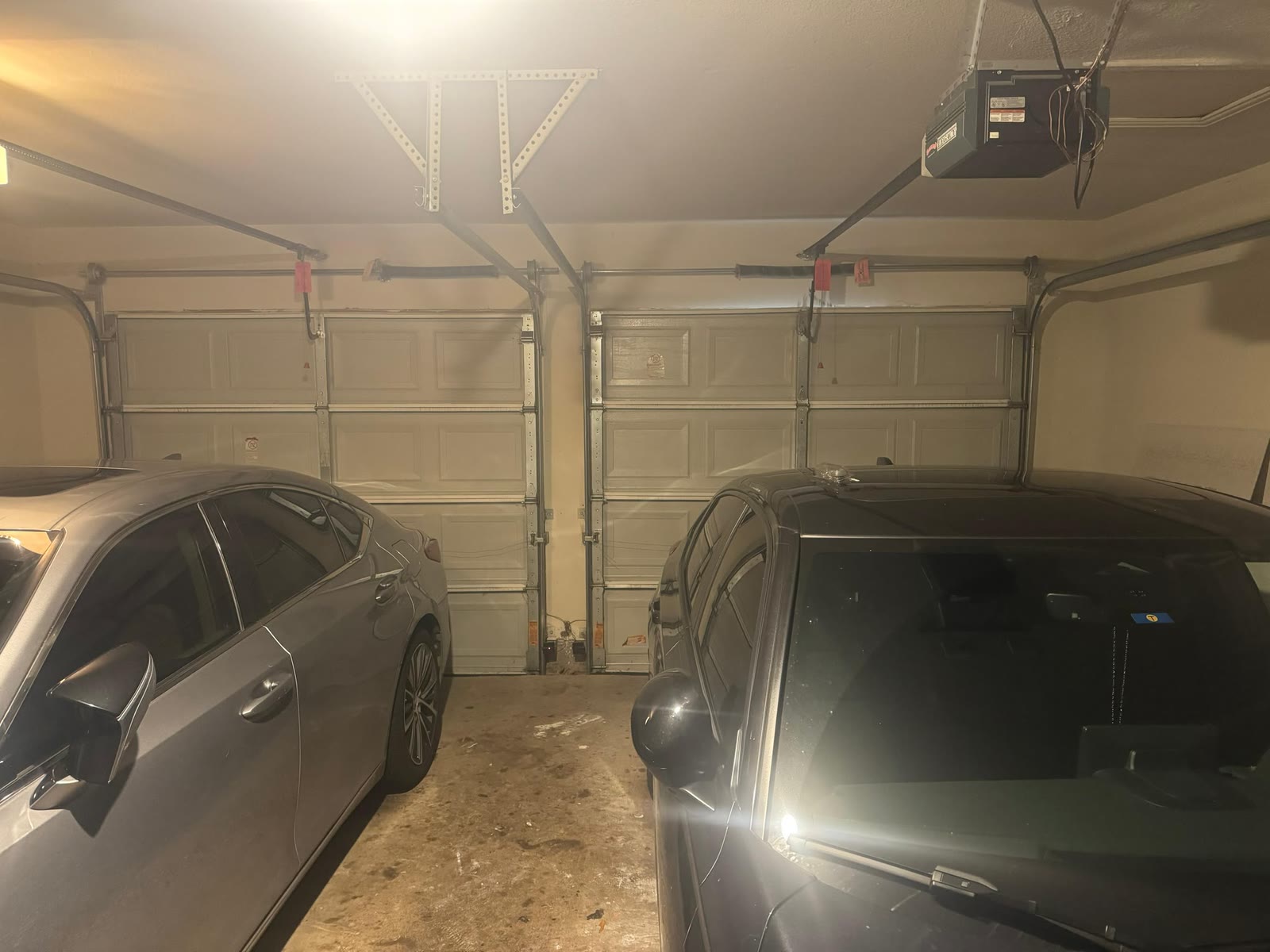
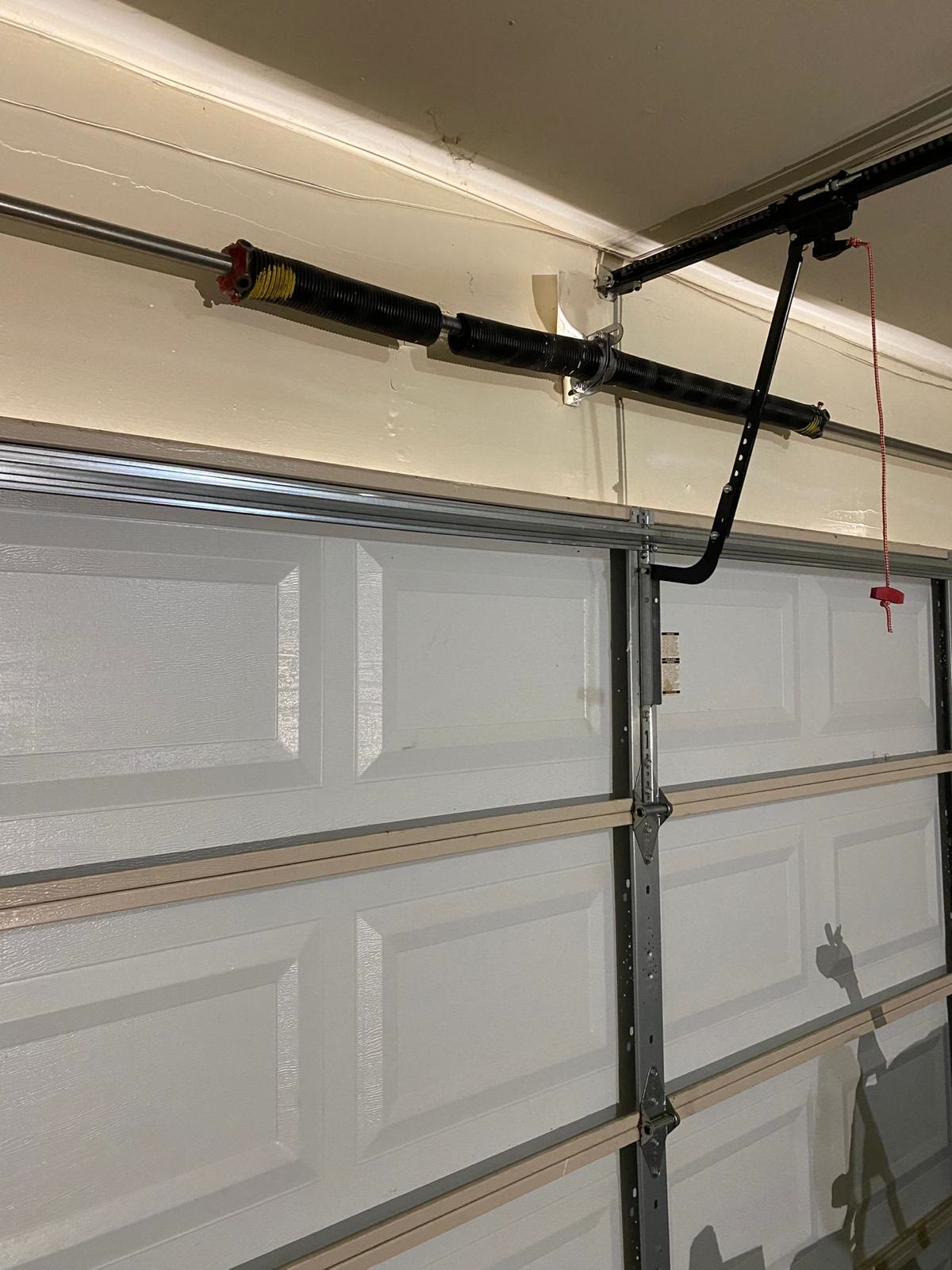
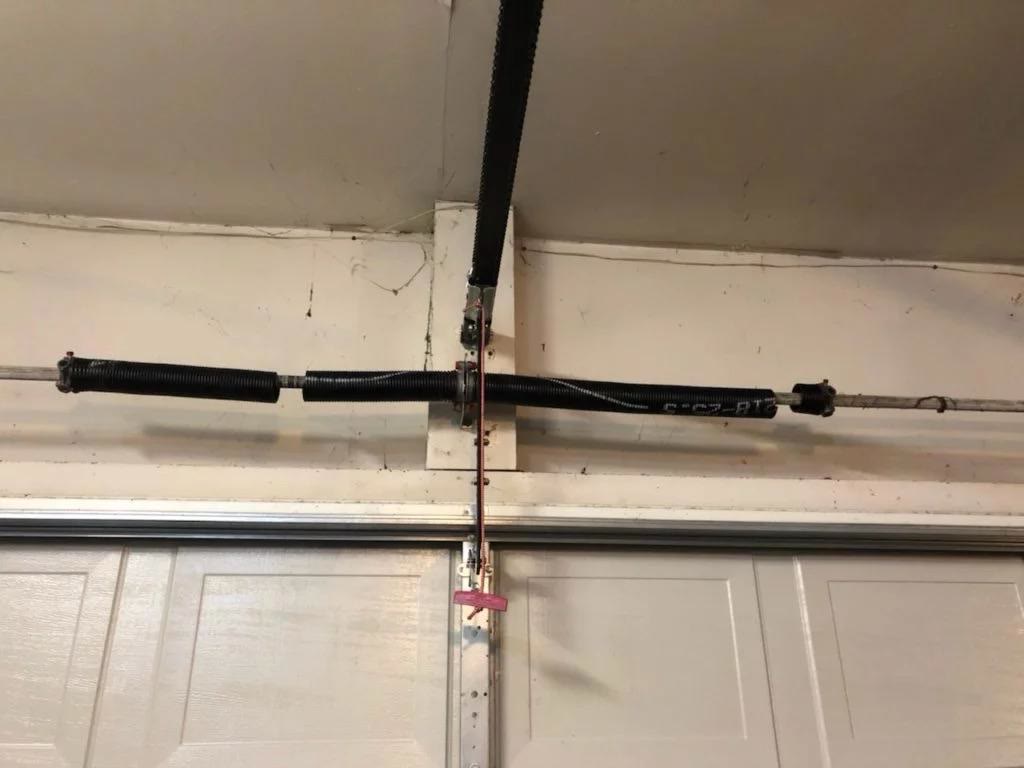
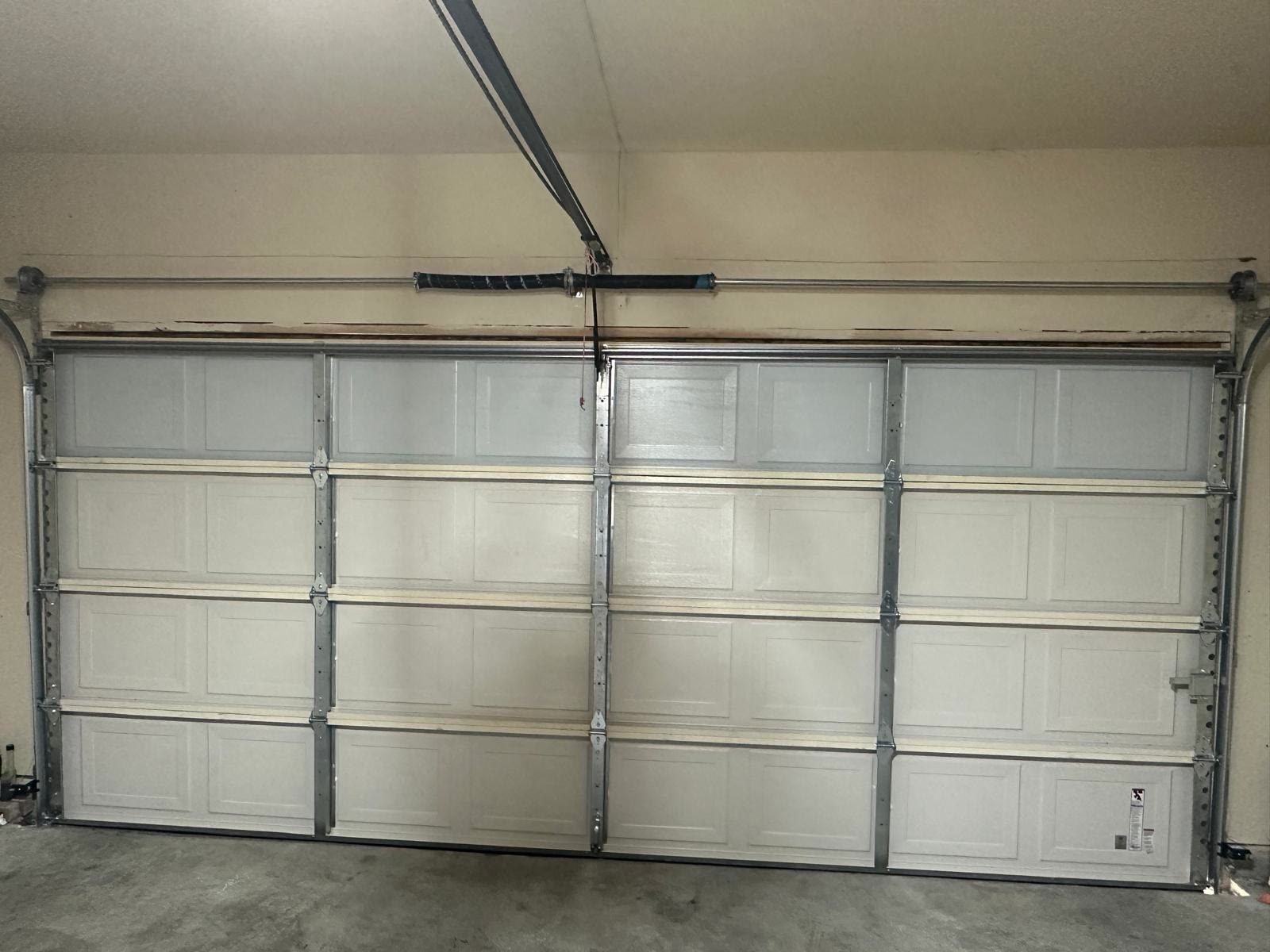
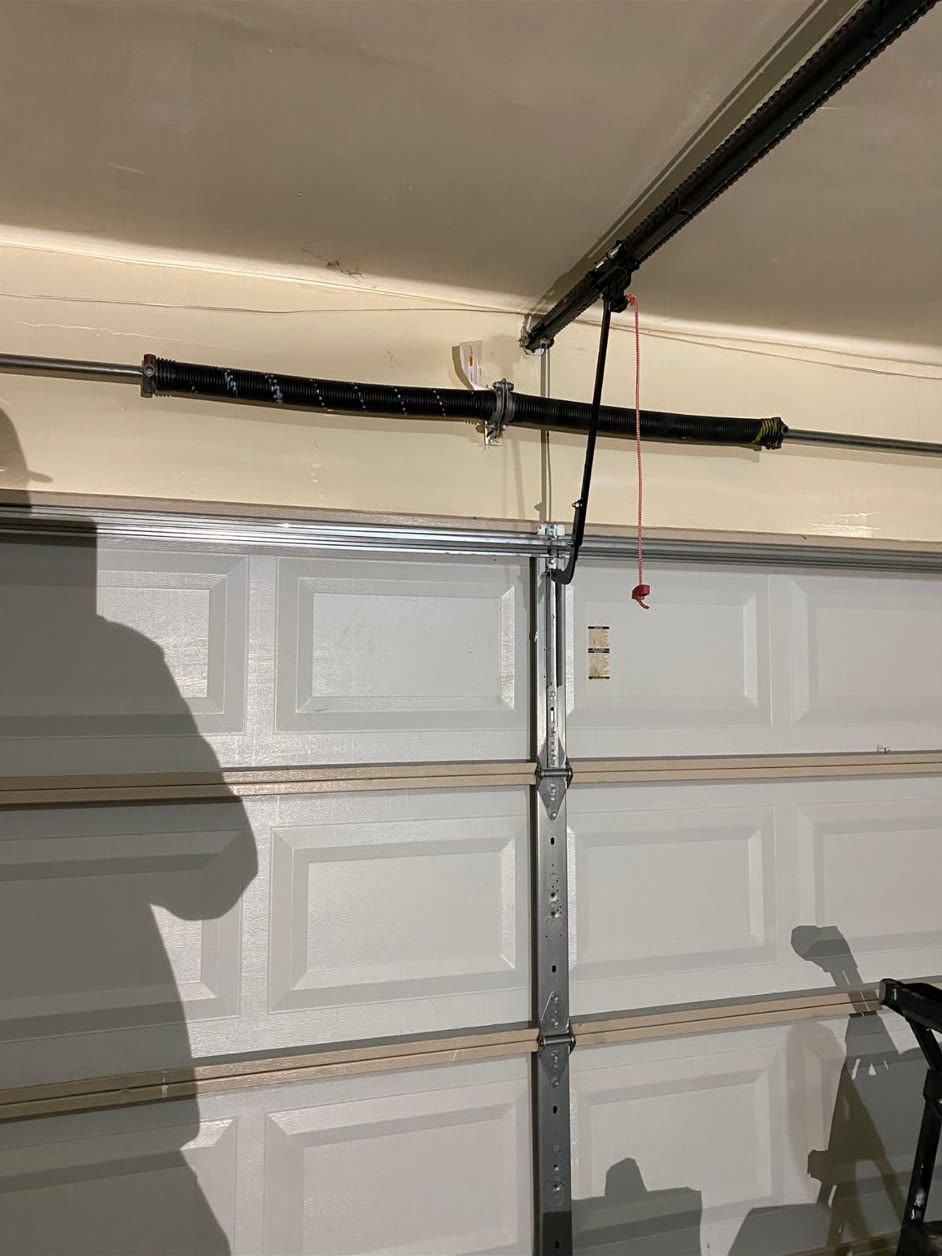
Broken Spring Repair in the field
Questions
Broken Spring Repair FAQs
Can I replace a torsion spring myself?
We will not encourage it, and this is the one place on this site where the recommendation is unqualified. Winding a torsion spring requires correctly sized steel winding bars, properly seated cone set screws, and a technique that keeps your body out of the arc of the bars. Improvised tools slipping under several hundred pounds of torque cause hand, wrist, and facial injuries every year. Almost everything else on a garage door is a reasonable DIY project. This is not.
Why do I have to replace both springs?
Because both have taken the same number of cycles and the second one is close behind the first. Beyond that, springs are sized as a matched pair against the door weight, and a new spring paired with a fatigued one distributes torque unevenly across the shaft, so the door never balances properly through its travel. Two visits also cost more than one.
How long should a new spring last?
Divide the spring's cycle rating by your daily cycles and multiply out. A standard 10,000 cycle spring lasts roughly four to five years at six cycles a day, or fourteen years at two. If your household is at the high end of usage, high cycle springs at 20,000 or more are a reasonable upgrade and the price difference is modest relative to a second replacement.
Can I still get my car out with a broken spring?
Sometimes, with help, and carefully. With the opener released, the door weighs its full weight, which on a double door is often over 200 pounds. Two adults can usually manage it and it should be propped securely with something solid, never a person's hands, while a vehicle passes underneath. Do not run the opener, because that is how a spring failure becomes a cable, drum, and opener failure.
Did I do something to cause this?
Almost certainly not. Springs fail from metal fatigue accumulated over a counted number of cycles, and the failure typically lands on a cold morning because the steel is slightly less forgiving then. The two things that genuinely shorten spring life are a spring undersized for the door at installation and corrosion pitting on the coil, and neither is caused by how you use the door.
Will you replace the cables at the same time?
We inspect them and tell you what we find. Cables that show fraying at the drum wrap or at the bottom bracket are worth replacing while the spring work already has the system apart, because the labor overlaps almost entirely. Cables in good condition do not need replacing simply because a spring failed.
Does a broken spring damage the opener?
Running the door on a broken spring will, given enough attempts. The opener suddenly has to move the full weight of the door, and what fails is the drive gear, the trolley, the opener arm, or the top section where the arm attaches. One or two attempts before you realize what happened is usually harmless. Repeated cycling is not.
Do you carry springs on the truck or does it take a second visit?
Common residential wire sizes and lengths are carried, so the large majority of replacements are completed on the first visit. Unusual sizes, very heavy custom doors, and some high cycle configurations occasionally need to be ordered, and we tell you at diagnosis if yours is one of them.
Where
Broken Spring Repair near you
Book a visit that fits your day
Replacement of torsion or extension springs sized to the measured weight of your door, with both springs replaced together rather than one at a time.