Service
Garage Door Installation in Dallas & the east metroplex
The cost of a new garage door in Dallas spreads across four decisions: steel gauge, insulation type, hardware grade, and whether the opening needs standard lift or a low headroom conversion. Two of those four are invisible from the driveway and are exactly where a cheap installation saves money at your expense.
- Same-day service available
- 10+ years serving Dallas
- Free on-site estimates
- 15% off current repairs
The five measurements that decide what fits
Opening width and height are the obvious two. The three that actually determine the hardware are headroom, backroom, and side room. Standard lift track needs roughly twelve inches of clear headroom between the top of the opening and the ceiling, plus more if a trolley opener is going on the same ceiling; low headroom conversion kits bring that down to around four and a half inches by splitting the cable drums and running a second track. Backroom needs the door height plus about eighteen inches of clear depth for the horizontal track. Side room needs about three and three quarter inches on each side of the opening for the vertical track and hardware. When one of those is short, the answer is a different track configuration, not a smaller door.
Steel gauge and construction, in plain terms
Steel thickness is expressed as a gauge number that runs backwards: 24 gauge is thicker and stronger than 25 or 27. A single layer door is one skin of steel with nothing behind it. A two layer door adds insulation bonded to the back. A three layer, sometimes called sandwich construction, puts a second steel skin behind the insulation, which is what makes the section rigid rather than merely warm. Rigidity matters more than most buyers expect, because a stiff section resists the twisting force that opener arms and hinges apply thousands of times, and it takes a hail strike without deforming the whole panel.
Insulation, and what R value actually buys you in Texas
Polystyrene board insulation is cut and fitted into the section and typically lands somewhere around R-6 to R-9. Injected polyurethane foam expands to fill the cavity and bonds both skins together, which is why polyurethane doors reach R-12 to R-18 and are structurally stiffer at the same time. In this climate the summer case is stronger than the winter one. A garage that stays twenty degrees cooler in August is a usable space, and if a bedroom or bonus room sits above it, the insulated door reduces the load on that room's air conditioning for the entire cooling season.
The counterbalance has to be calculated for the new door
Springs are matched to weight, and a new door rarely weighs what the old one did. An insulated three layer door can weigh eighty pounds more than the single layer door it replaces. Reusing the existing springs on a heavier door means the counterbalance never reaches equilibrium, the opener carries the difference on every cycle, and the springs burn through their cycle life early. We weigh the assembled door or calculate from section construction and hardware, then select wire size, inside diameter, and spring length to match. It is the least visible part of the installation and the part that determines how the door feels for the next decade.
The parts of an installation people forget to ask about
The bottom seal has to match the slab, and in this area slabs are rarely flat, so an oversized U shaped or T shaped astragal may be needed to close a gap on one side without buckling on the other. Perimeter weatherstrip on the jambs and header keeps out dust and rain driven sideways. Track should be fastened to solid framing, not to loose jamb boards, and rotten jamb material has to be replaced before the door goes on it. Rollers included with an entry level door are often steel with exposed bearings; upgrading to sealed nylon at installation is inexpensive and is the single biggest change to how quiet the door is.
What happens to the old door
Removal starts with unwinding the torsion springs using winding bars, which releases the stored energy in a controlled way. Only then do the cables come off the drums and the sections come down from the top, one at a time, so that no section is ever carrying the weight of the ones above it. The old sections, track, springs, and hardware leave with us. Steel goes to recycling rather than to your curb.
Signs you need this
- Multiple sections are dented, and the dents have started to crease rather than just dimple.
- The bottom section has rusted or swollen where it sits against a wet slab.
- You can see daylight around the perimeter even with the door fully closed and the seal in good condition.
- The door flexes visibly in the middle as it starts to lift.
- Hinges have torn out of the section and the surrounding steel is cracked.
- The garage is unusable in summer, and the door is the largest uninsulated surface in it.
- The door still uses one piece tilt up construction with no sections, which limits parts availability and headroom.
- Repair estimates over the past two years add up to a meaningful share of a replacement.
Book this service
Call (469) 891-6883 or request a visit online.
The visit
What we actually do
Measure and specify
We take opening, headroom, backroom, and side room measurements, inspect the jambs and header, and note whether the existing opener is worth carrying over. You get options at more than one construction level with the tradeoffs explained rather than a single recommended package.
Order and schedule
Stock sizes and finishes are usually available quickly. Custom widths, specialty finishes, and window inserts add lead time, and we give you that lead time up front rather than after the deposit.
Controlled removal
Existing spring tension is unwound with winding bars, cables are released from the drums, and sections come down from the top in order. Old track, hardware, and springs are removed and hauled away.
Install and counterbalance
Sections go up from the bottom with hinges and rollers set as they stack, track is fastened to solid framing and aligned, then the shaft, drums, and springs are installed and wound to the calculated turn count for the finished door weight.
Commission the door
We run the door by hand to confirm balance, connect and adjust the opener travel and force, verify photo eye placement within six inches of the floor, test the auto reverse against an obstruction, and walk you through the manual release before we leave.
On the job
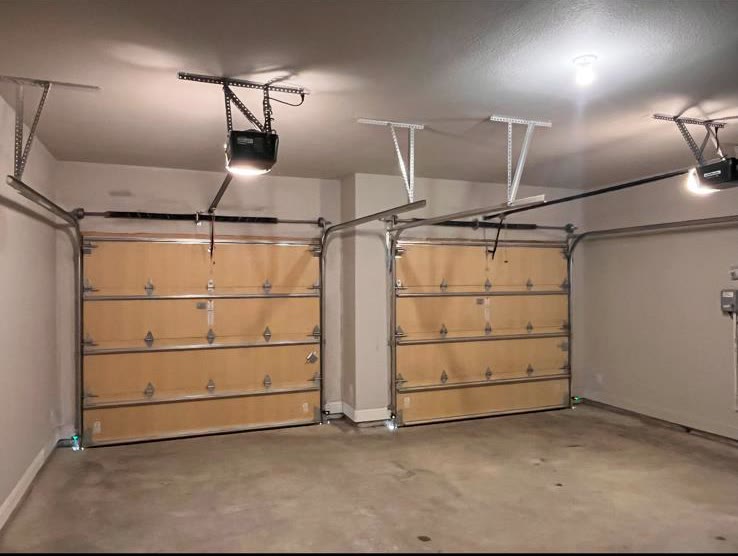
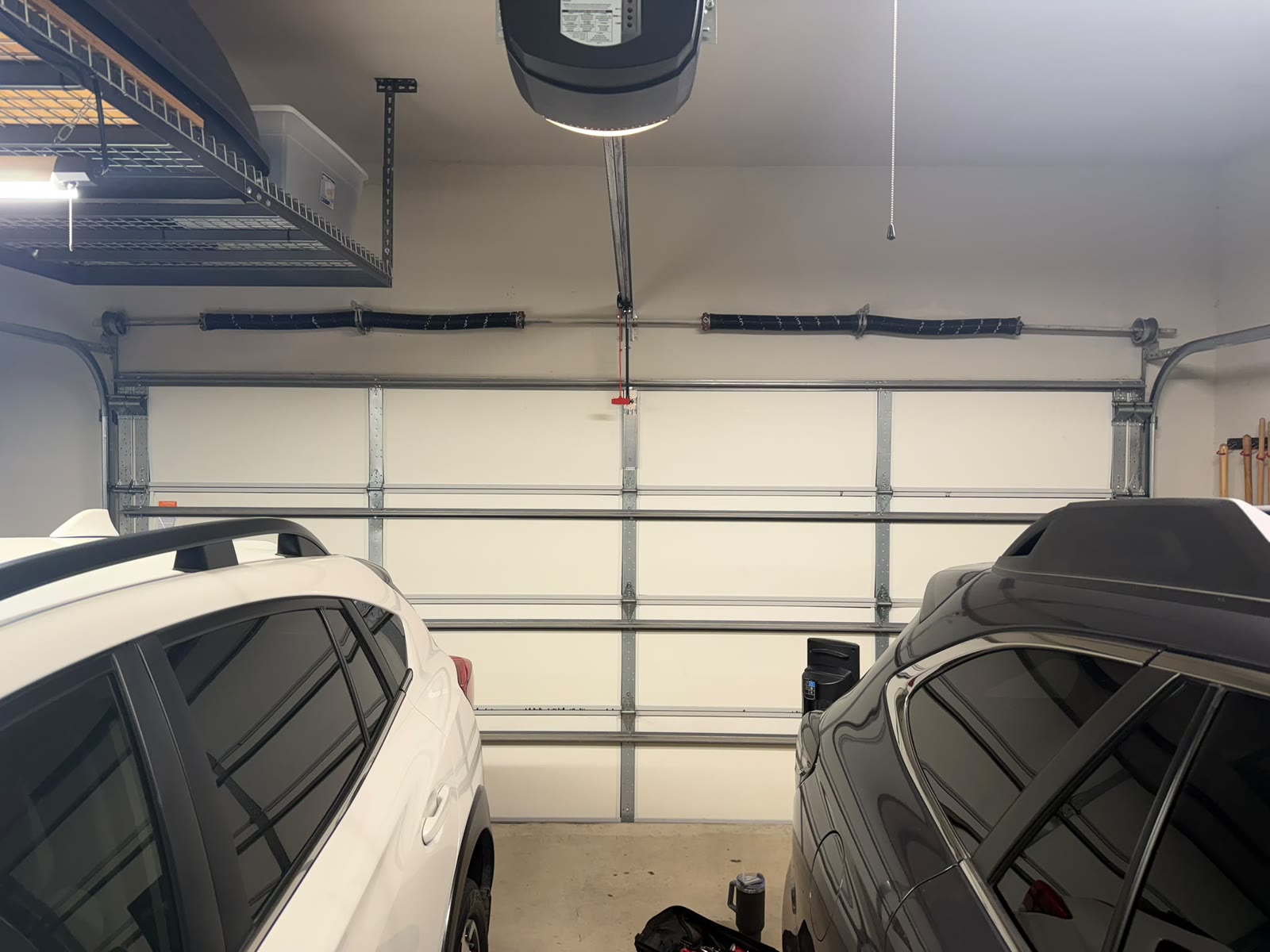
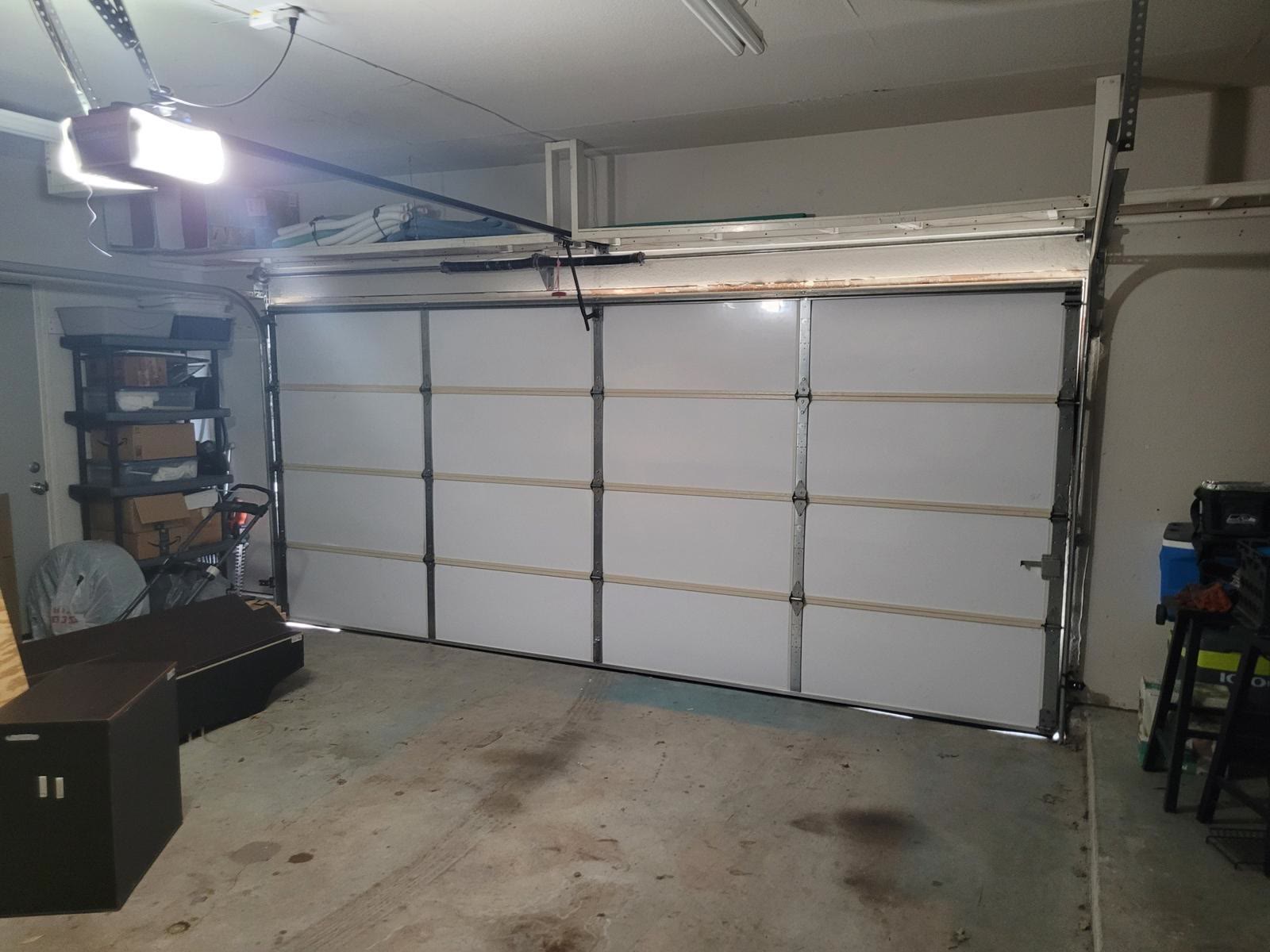
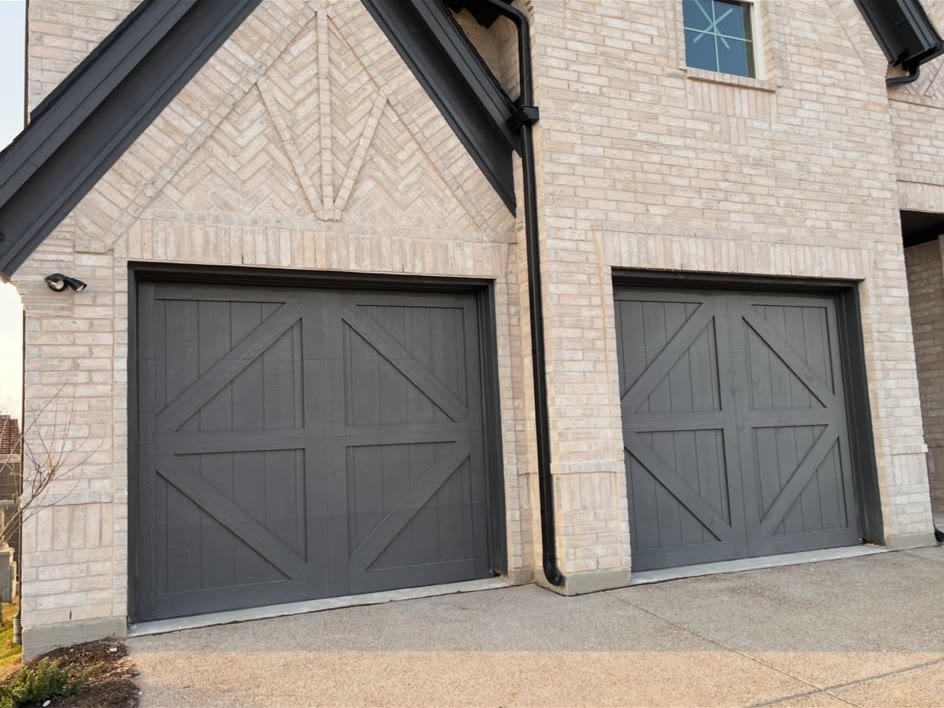
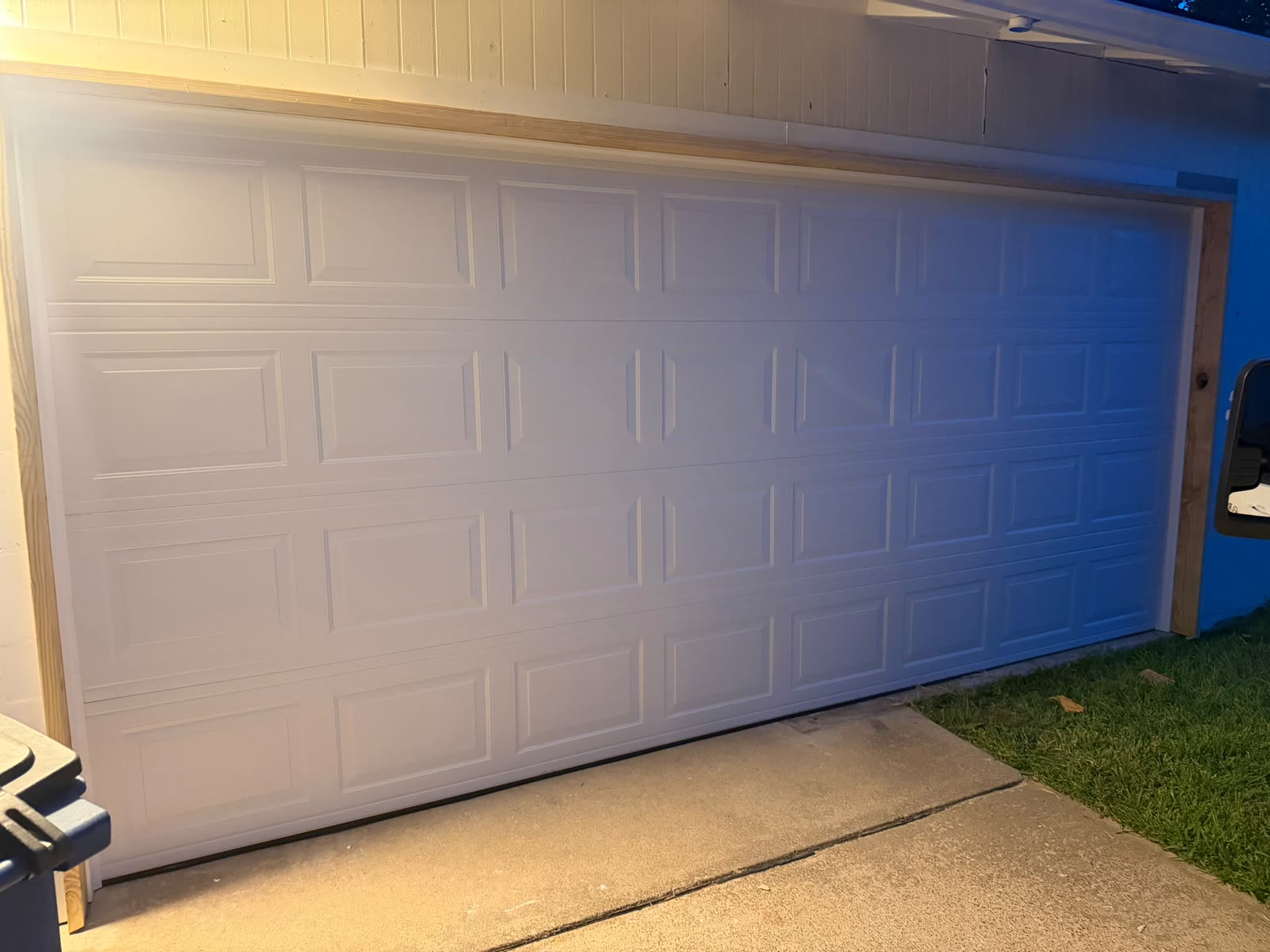
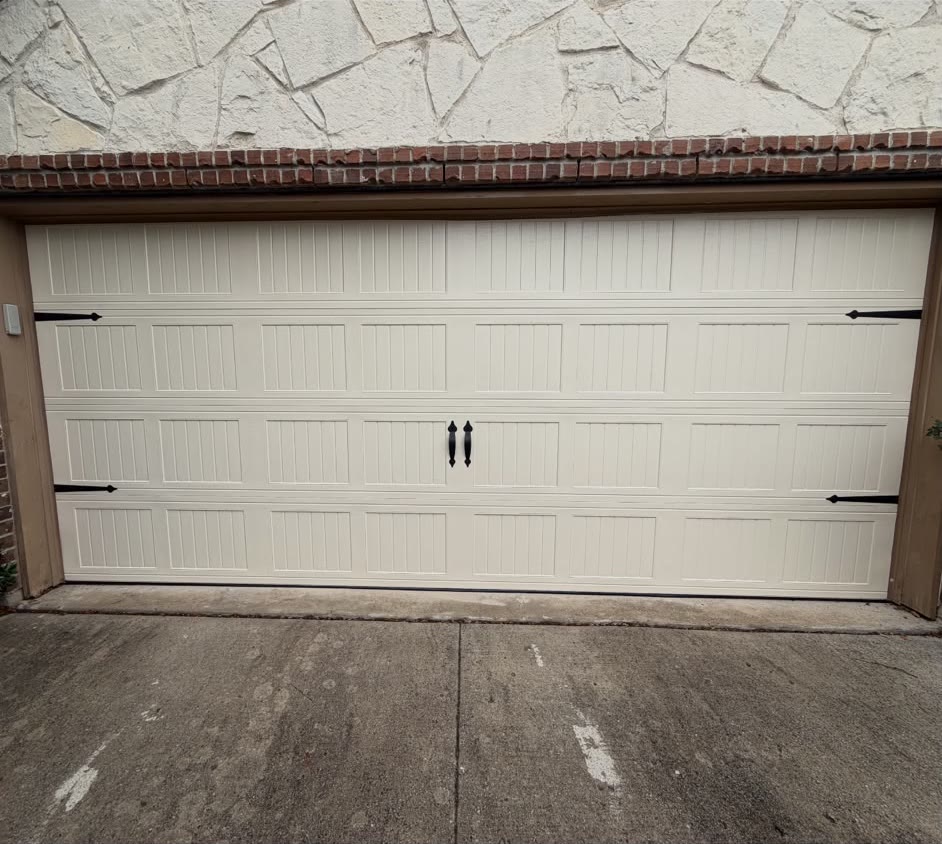
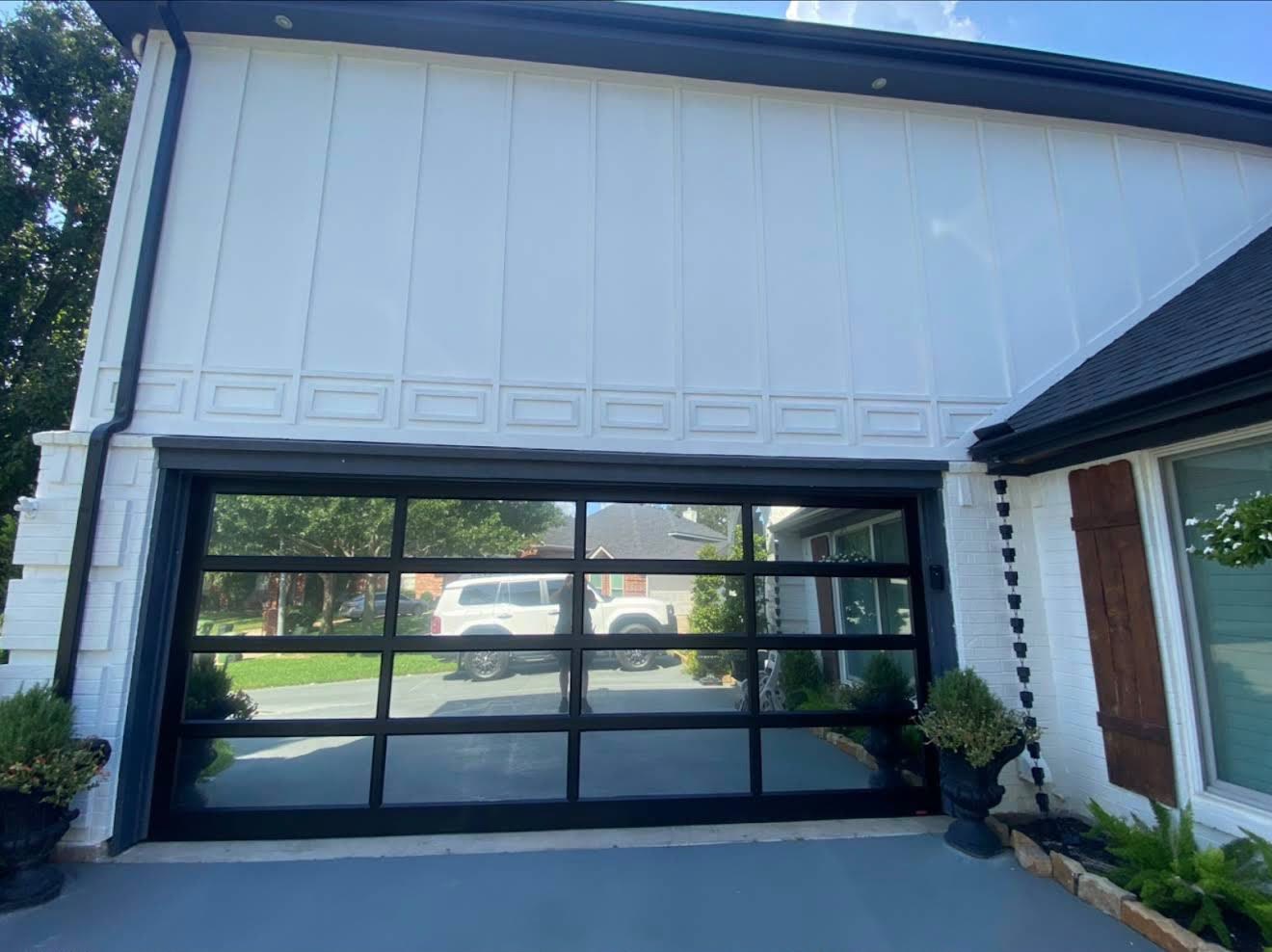
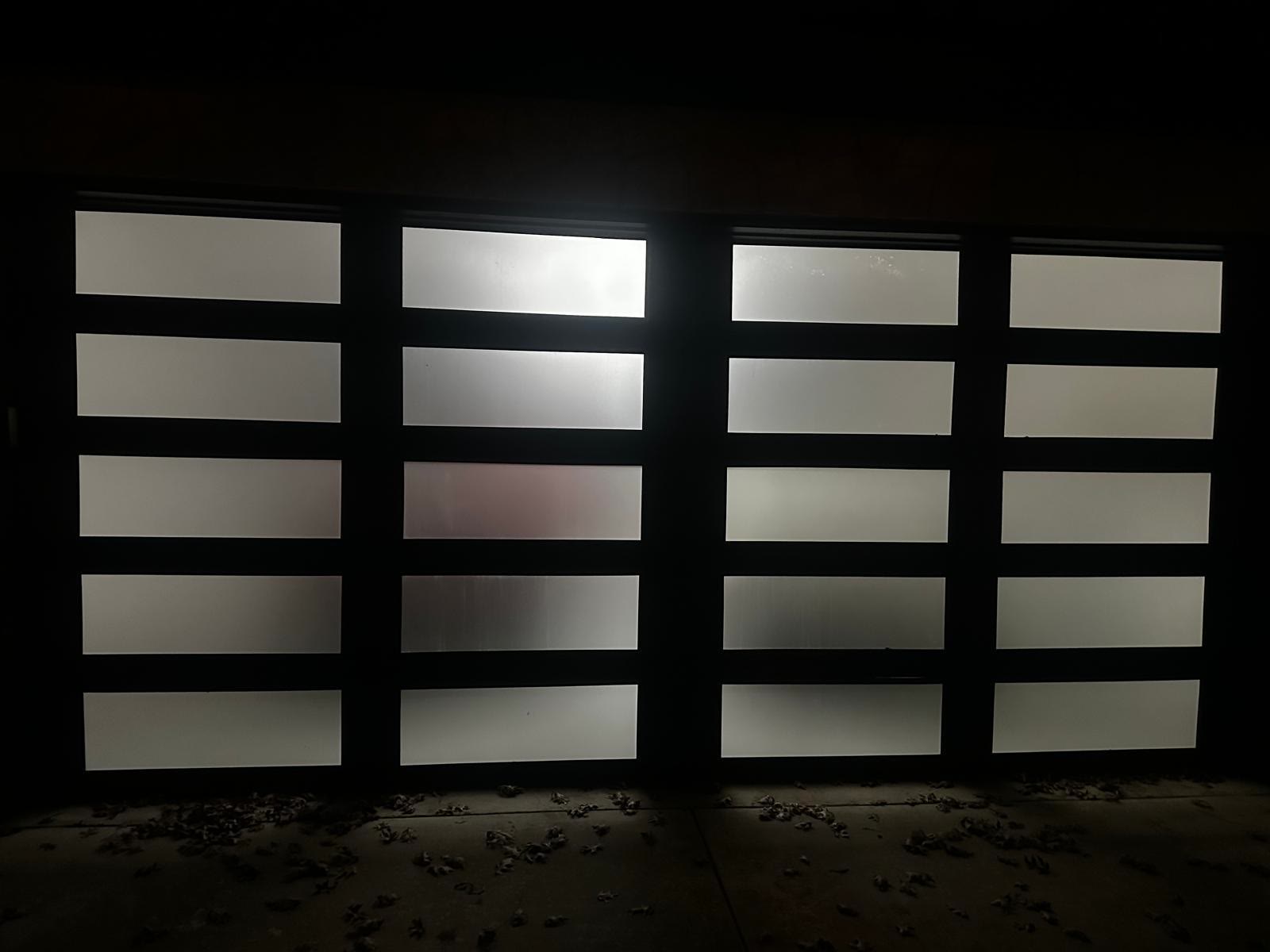
Garage Door Installation in the field
Questions
Garage Door Installation FAQs
Can I keep my existing opener with a new door?
Usually, provided the opener is in good mechanical condition and has working photo eyes. The considerations are weight and attachment. A much heavier insulated door asks more of an older half horsepower unit, and the opener arm needs a properly reinforced top section, which may mean adding a strut. If the opener predates photo eye safety reversal entirely, we recommend replacing it regardless of the door.
How much headroom do I really need?
Standard lift track wants about twelve inches above the opening. If you have less, a low headroom conversion using double track and split drums can work in roughly four and a half to six inches, and a jackshaft style opener mounted beside the shaft removes the ceiling rail entirely. Both add cost, so it is worth measuring before you fall in love with a configuration.
Is an insulated door worth it if the garage is not heated or cooled?
It depends on how you use the space and what is above it. If the garage is purely for parking and no conditioned room shares a wall or ceiling with it, the payback is comfort during the hours you are actually out there, which for many people is not much. If there is a room above, a workshop inside, or an interior door into the kitchen, the insulated door measurably reduces heat load and it is the better buy.
How long does the installation take?
A standard single or double door replacement on sound framing is generally a same day job of four to six hours including removal. Add time for jamb repair, low headroom conversion, or a second door. We do not leave a door partially installed overnight.
Will a new door match the rest of my house?
Steel doors come in a range of stamped panel profiles and factory finishes, and overlay carriage house styles are available in steel and composite. What we will tell you honestly is that a factory color and a hand painted trim color rarely match perfectly, and if an exact match matters, a paintable primed door finished on site is the more reliable route.
Do you replace only the door, or the track too?
Track is replaced with the door. Reusing old track on a new door is a false economy: the vertical track carries the door's alignment, existing track is worn at the roller contact surfaces and often slightly out of plumb, and any misalignment transfers straight into the new sections and rollers.
What warranty comes with a new door?
Manufacturers publish their own warranty terms by model, and they vary considerably on sections, hardware, springs, and finish. We give you the manufacturer's written terms for the specific door you select rather than a verbal summary, because those documents are where the real coverage limits live.
Is it possible to install a garage door myself?
Section assembly and track hanging are within reach of an experienced DIY builder. Winding the torsion springs is not, and that is not a marketing position. Winding bars under several hundred pounds of torque, seated in a cone set screw, will break arms and jaws when they slip. If you install a door yourself, hire the spring work out.
Where
Garage Door Installation near you
Talk to a technician now
New door selection and installation measured to your actual opening, with the counterbalance calculated for the finished door weight.