Service
Garage Door Repair in Dallas & the east metroplex
A door that shudders halfway up, reverses on its own, or refuses to move at all is telling you which component gave out, and the symptom almost always narrows to one of five parts. We read that symptom on site in Dallas, confirm it against the hardware, and repair the part that actually failed rather than the part that is easiest to sell.
- Same-day service available
- 10+ years serving Dallas
- Free on-site estimates
- 15% off current repairs
Your door is a counterbalance system, not a motor
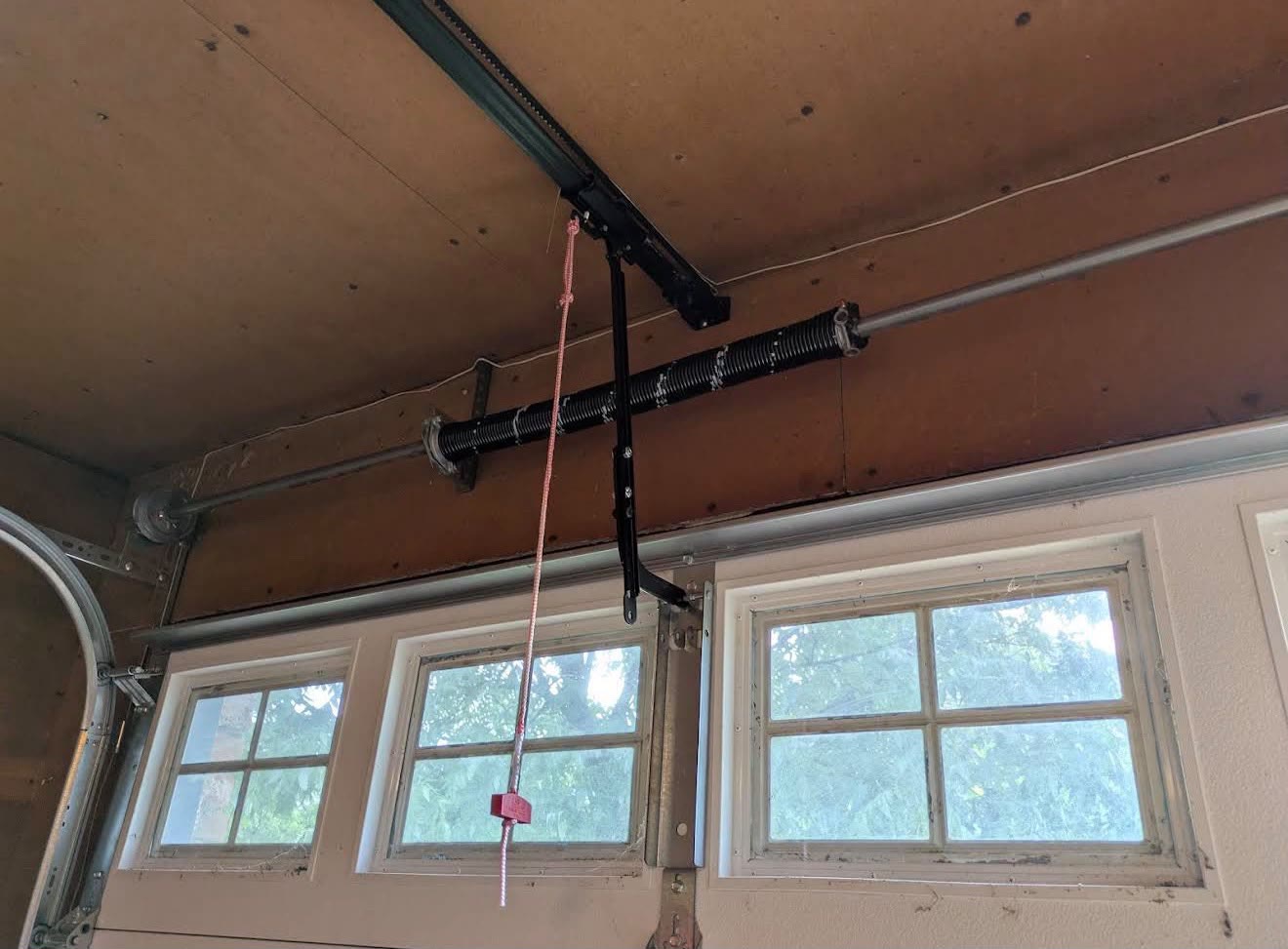
The opener does not lift the door. A half horsepower motor cannot raise 200 pounds of steel on a chain; what it does is push and pull a door that the springs have already made nearly weightless. The springs carry the load, and the opener only overcomes friction and provides direction. This single fact explains most of what goes wrong. When a spring loses tension or breaks, the opener suddenly has to move the full weight of the door, and it either stalls, strips its drive gear, or trips its own force protection. The opener is usually the victim of the failure rather than the cause of it, which is why replacing an opener on a door with tired springs buys a few months and then repeats the problem.
The balance test we run before anything else
Pull the red release handle with the door closed, then lift the door by hand. A correctly balanced door takes roughly ten pounds of effort to start moving and will hold its own position when you let go at waist height. If it slams back down, the springs no longer have enough tension. If it flies up and pins itself open, they have too much. If it stops moving smoothly and grabs at a certain point in travel, the problem is in the track or the rollers rather than the counterbalance. That test costs nothing and rules out entire categories of failure before a single tool comes off the truck.
Five components account for most of what we see
Torsion or extension springs are first, because they take the entire load every cycle. Lift cables are second, since they carry that load in tension and fail at the drum or the bottom bracket where they bend and rub. Rollers and hinges are third; nylon rollers with sealed bearings last about a decade, and stem wear puts the door out of square. Fourth is the opener itself, usually a stripped plastic drive gear on a chain unit or a logic board taken out by a power surge. Fifth is the safety and travel system: photo eyes knocked out of alignment, dirty lenses, and close limit or force settings that no longer match the door.
Why the same symptom has several possible causes
Consider a door that reverses two inches before it touches the floor. It could be the photo eyes, misaligned by a bicycle handlebar or blinded by low afternoon sun. It could be a close limit set slightly too far, so the opener senses the door has hit something when it has actually reached the floor and kept pushing. It could be a binding roller adding resistance partway down that the force setting reads as an obstruction. It could be a bottom seal that has hardened in the cold. Replacing the opener would fix exactly none of those. Diagnosis is not a formality; it is the difference between a small adjustment and a large invoice.
When we tell you not to repair it
Some doors are past the point where repair is the honest recommendation. Track that has been folded rather than merely bent will never carry a roller smoothly again. Sections with cracked stiles around the hinge plates will keep tearing out no matter how many hinges are replaced, because the steel that anchors them has failed. A door built with springs sized wrong from the original installation will keep eating springs until the counterbalance is recalculated. And when three or more sections of a sectional door are damaged, the cost of sections plus labor approaches the cost of a new door with a fresh warranty from the manufacturer. We would rather say that out loud than sell you two repairs on the way to the same conclusion.
What North Texas does to garage door hardware
This metro is hard on doors in specific, identifiable ways. Summer attic temperatures above a west facing door drive lubricants out of bearings and harden the rubber bottom seal until it no longer conforms to the slab. Expansive clay soil moves foundations seasonally, so a slab that met the door evenly three years ago now leaves a wedge of daylight on one side, and homeowners respond by cranking the close force until something binds. Hail dents skins and, more importantly, can deform the top section where the opener arm attaches. And blowing dust in an unsealed garage works its way into roller bearings and end bearing plates, where it grinds them out years early.
Signs you need this
- The door rises a few inches, hesitates, and settles back down on its own.
- You heard a loud bang from the garage, and since then the opener strains without moving the door.
- One side of the door sits visibly higher than the other when it is closed.
- The door reverses an inch or two before it reaches the floor, every time.
- The motor runs through its full cycle while the door does not move at all.
- Grinding or scraping noises from the tracks at the same point in every opening.
- The door is noticeably heavier to lift by hand than it was a year ago.
- The remote works from a few feet away but not from the end of the driveway.
Book this service
Call (469) 891-6883 or request a visit online.
The visit
What we actually do
Phone triage
We ask what you heard, where in the travel it stops, and whether the door moves freely by hand. Those three answers usually identify the failed system before dispatch, which is how the right springs, cables, and drums end up on the truck for your visit.
Balance and safety check
The opener comes off the door first. We lift by hand, watch where the door wants to fall or rise, and check the spring for a visible gap, the cables for slack, and the bottom brackets for movement. Nothing is quoted before this is done.
Component level diagnosis
Springs are measured for wire size, inside diameter, and length rather than guessed at. Cables are inspected at the drum and the bottom bracket, where they fray first. The opener is checked for drive gear wear, capacitor condition, limit positions, and force settings. We show you what we found.
Price before work
You get the full number for parts and labor, along with the reason each item is on the list, before a wrench turns. If part of the work can reasonably wait, we tell you which part and how long it can wait.
Repair, cycle, and retest
After the repair the door runs a full set of cycles under the opener while we watch for hesitation. We reset travel and force, verify the photo eyes stop the door, and confirm the auto reverse triggers on contact before we leave.
On the job
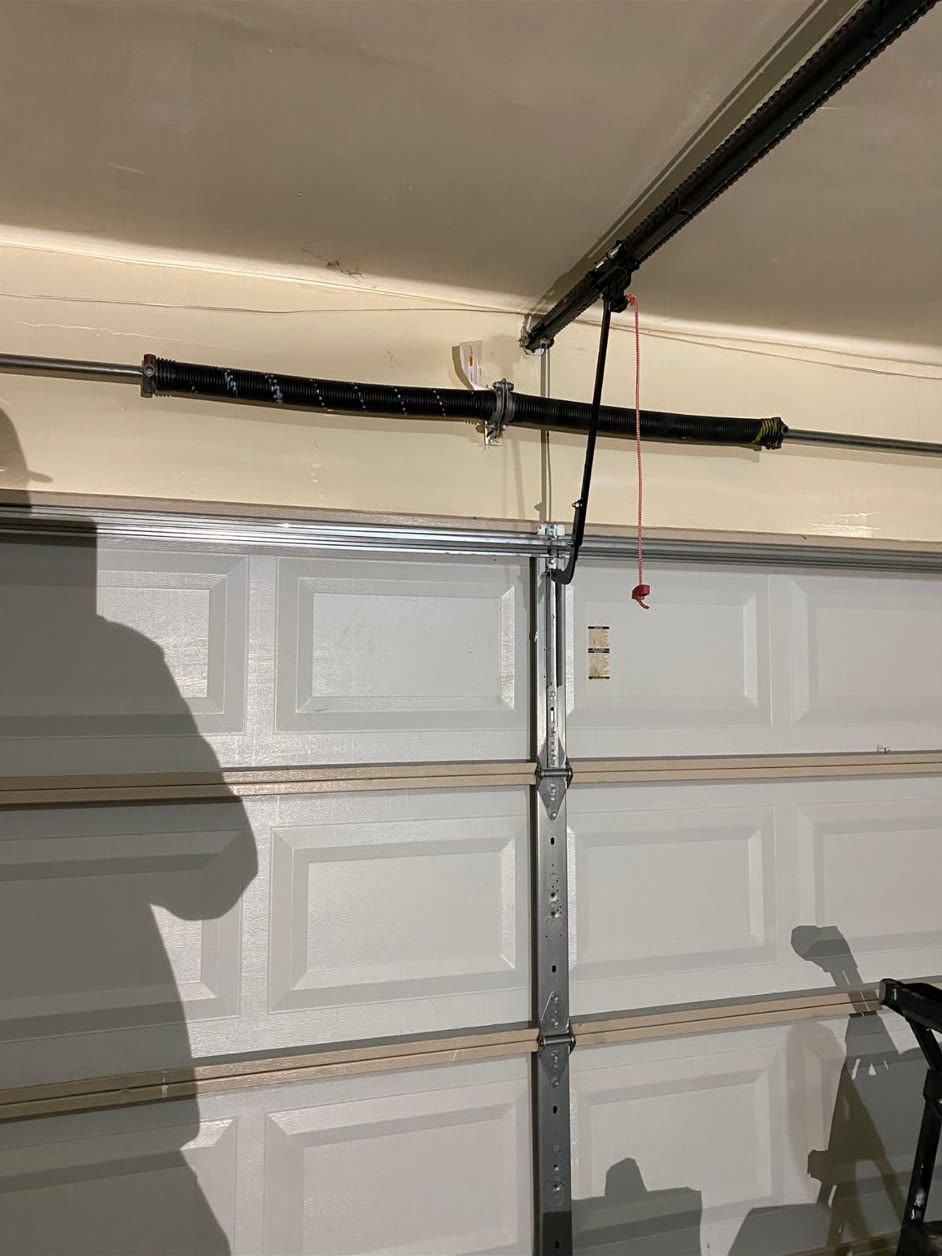
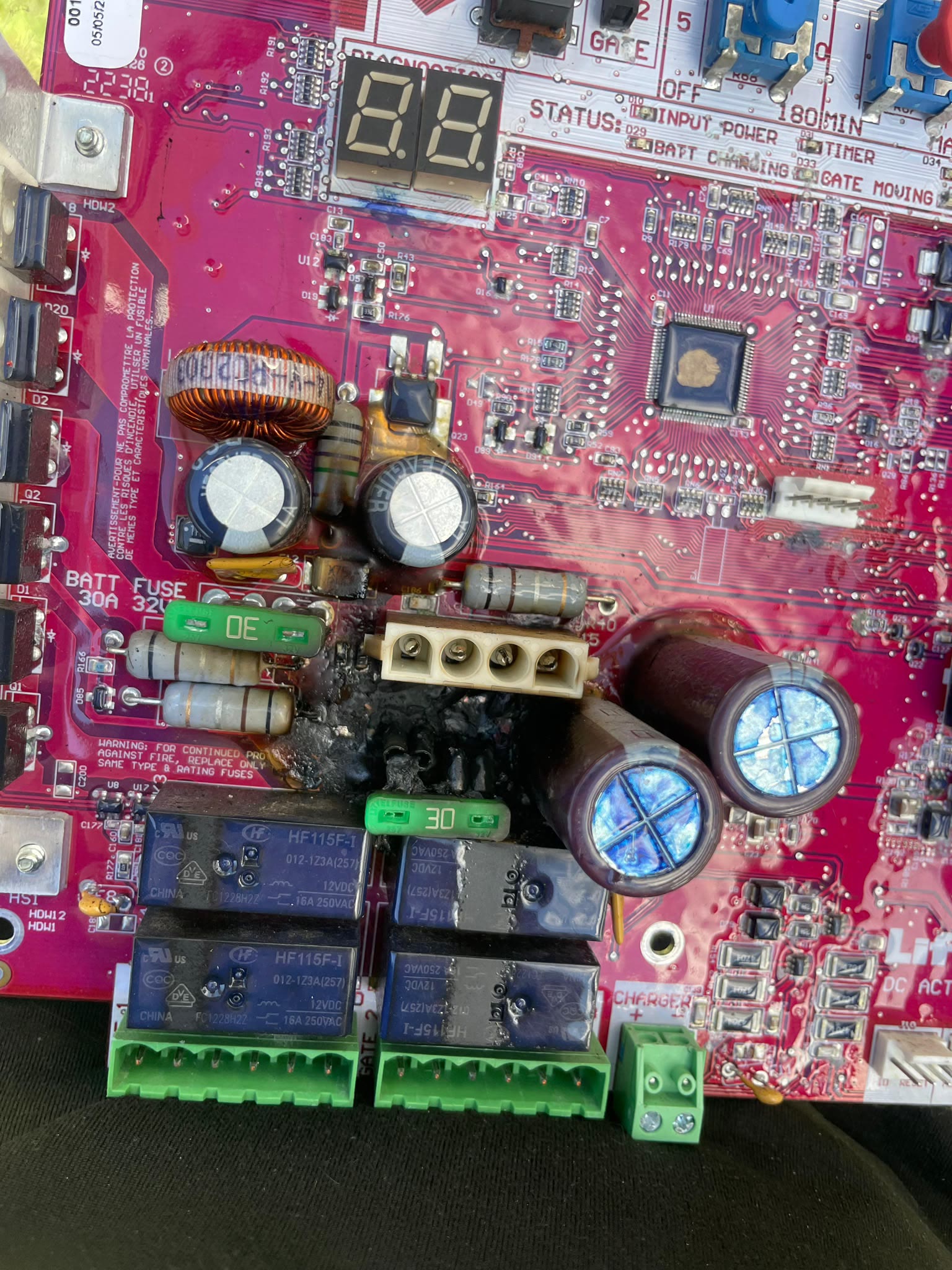
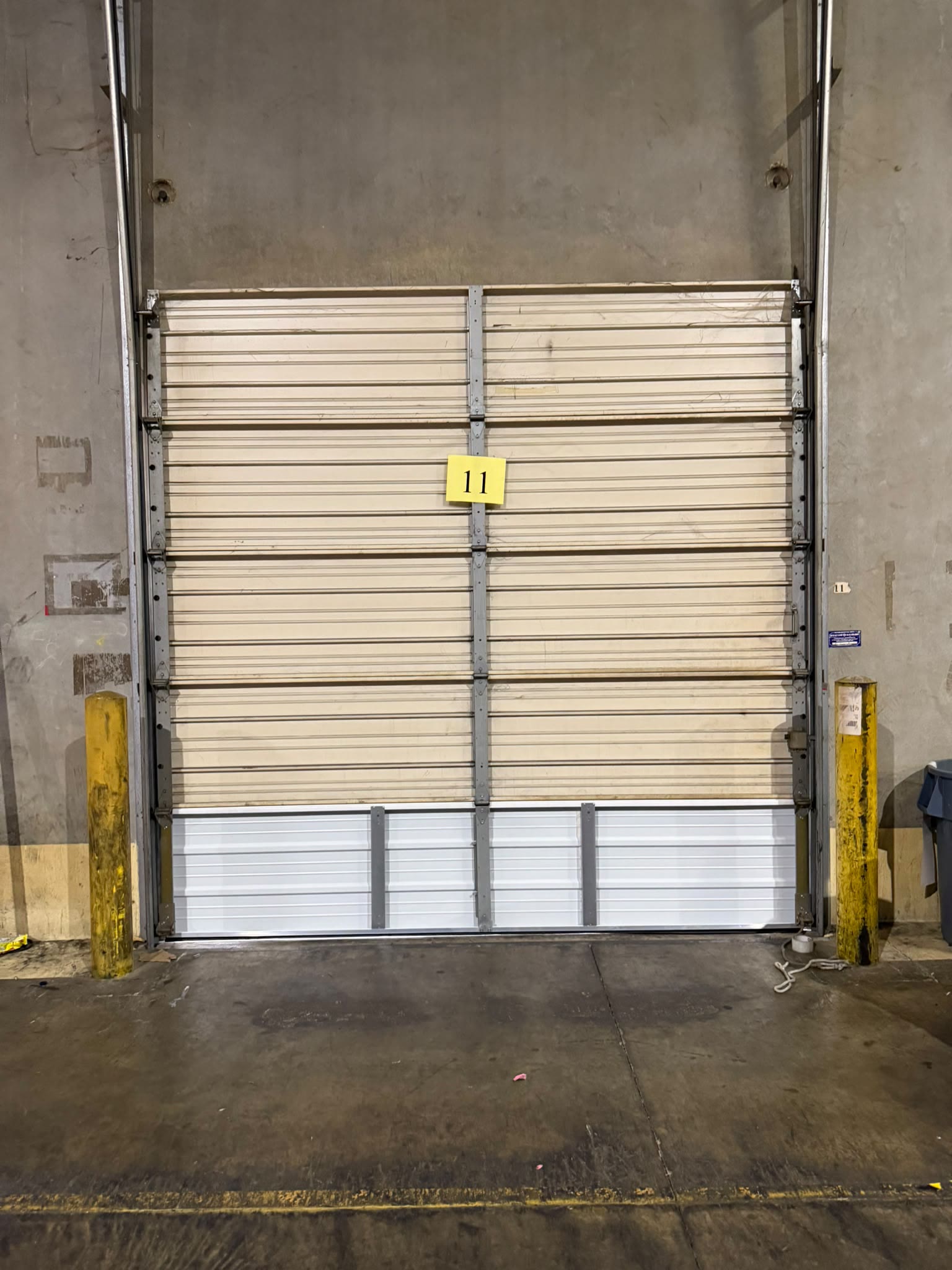
Garage Door Repair in the field
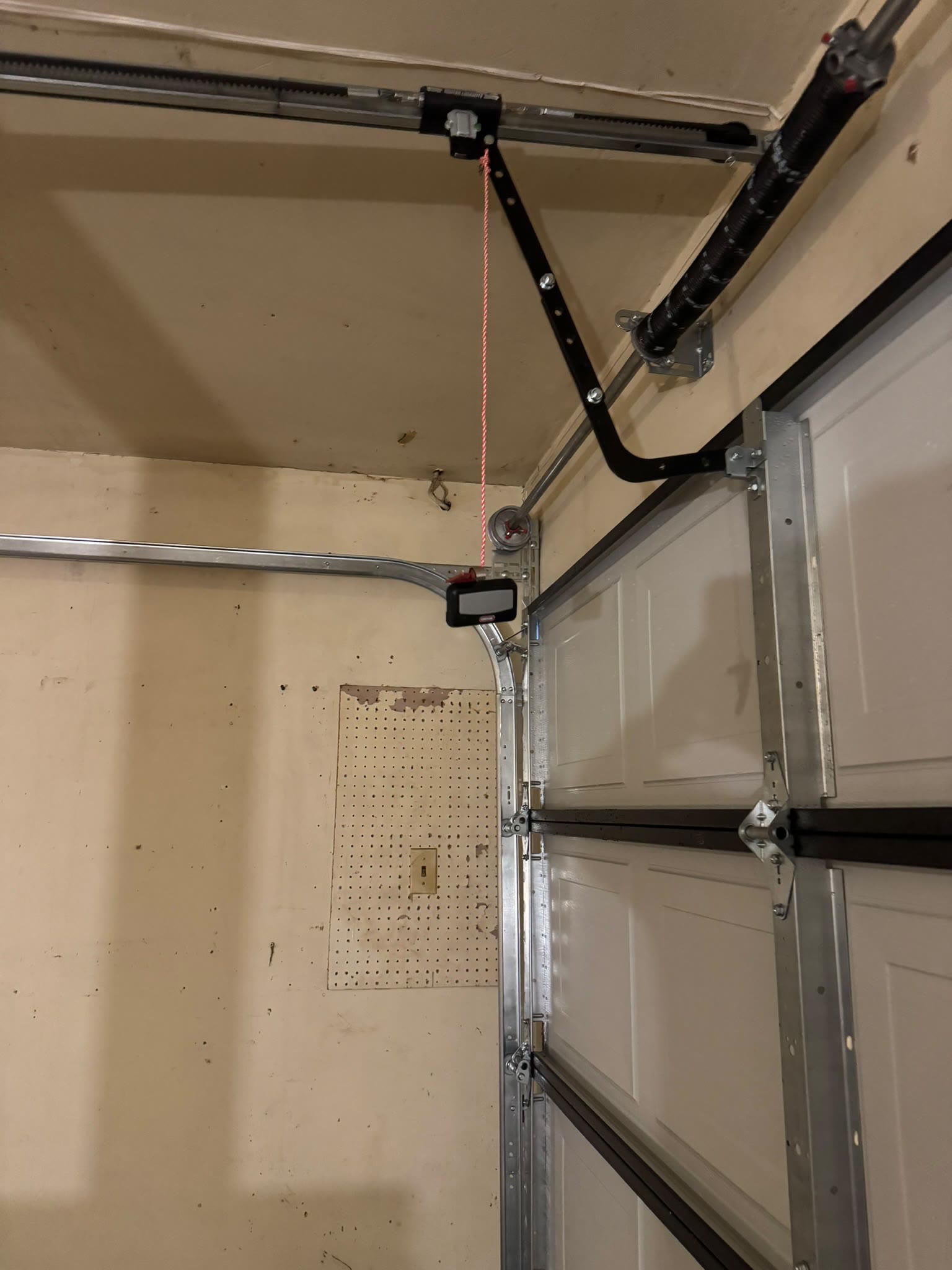
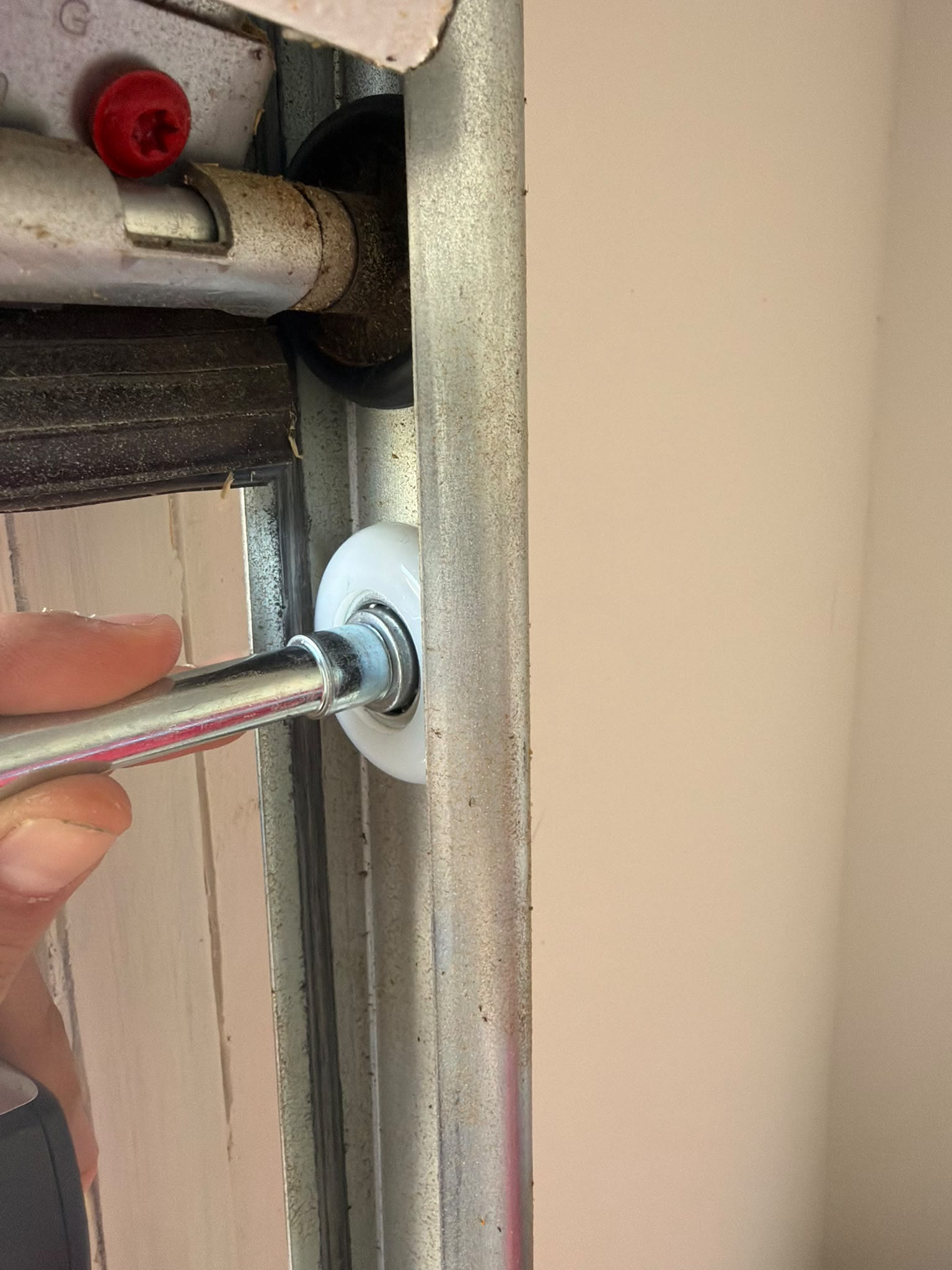
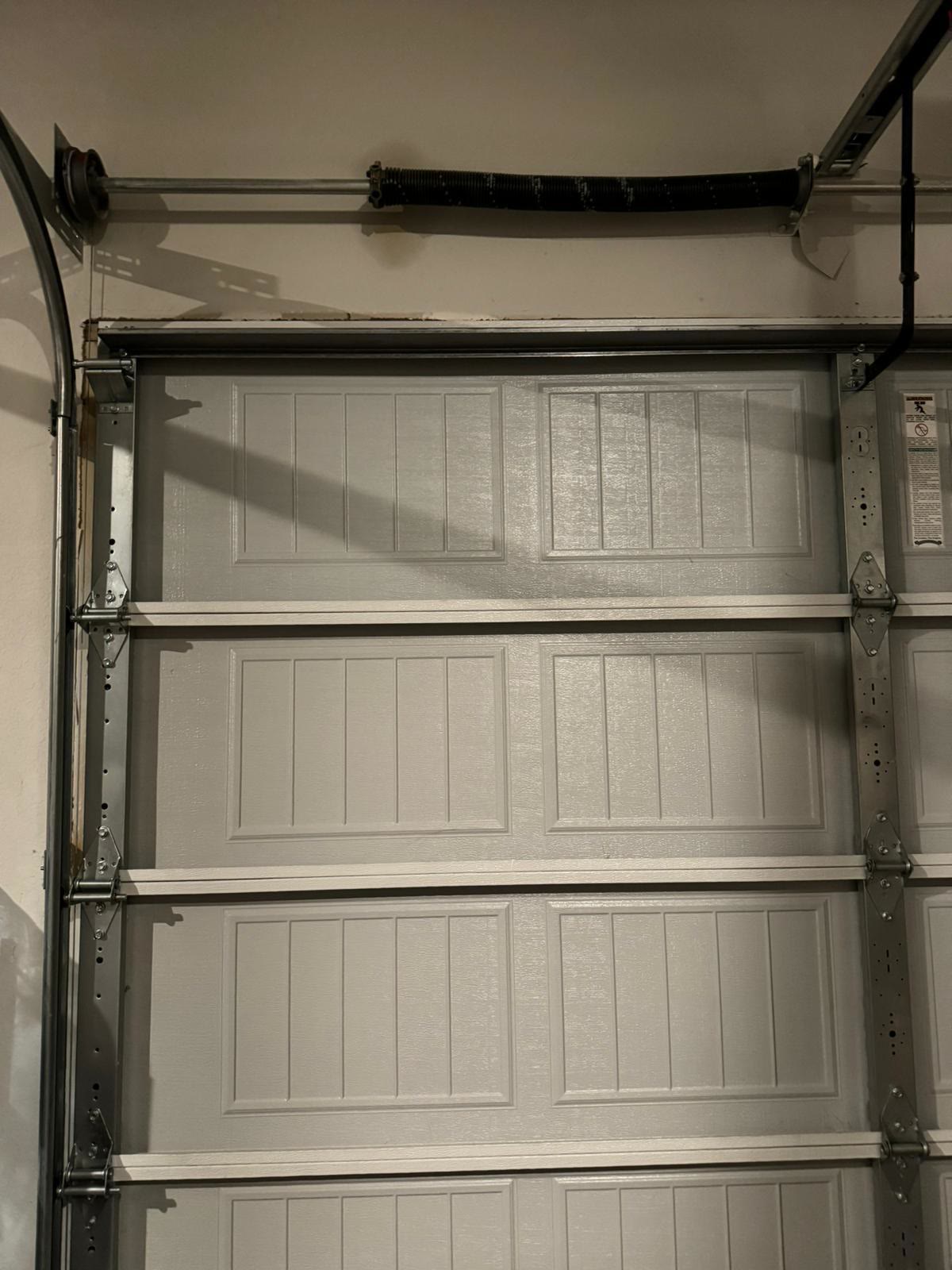
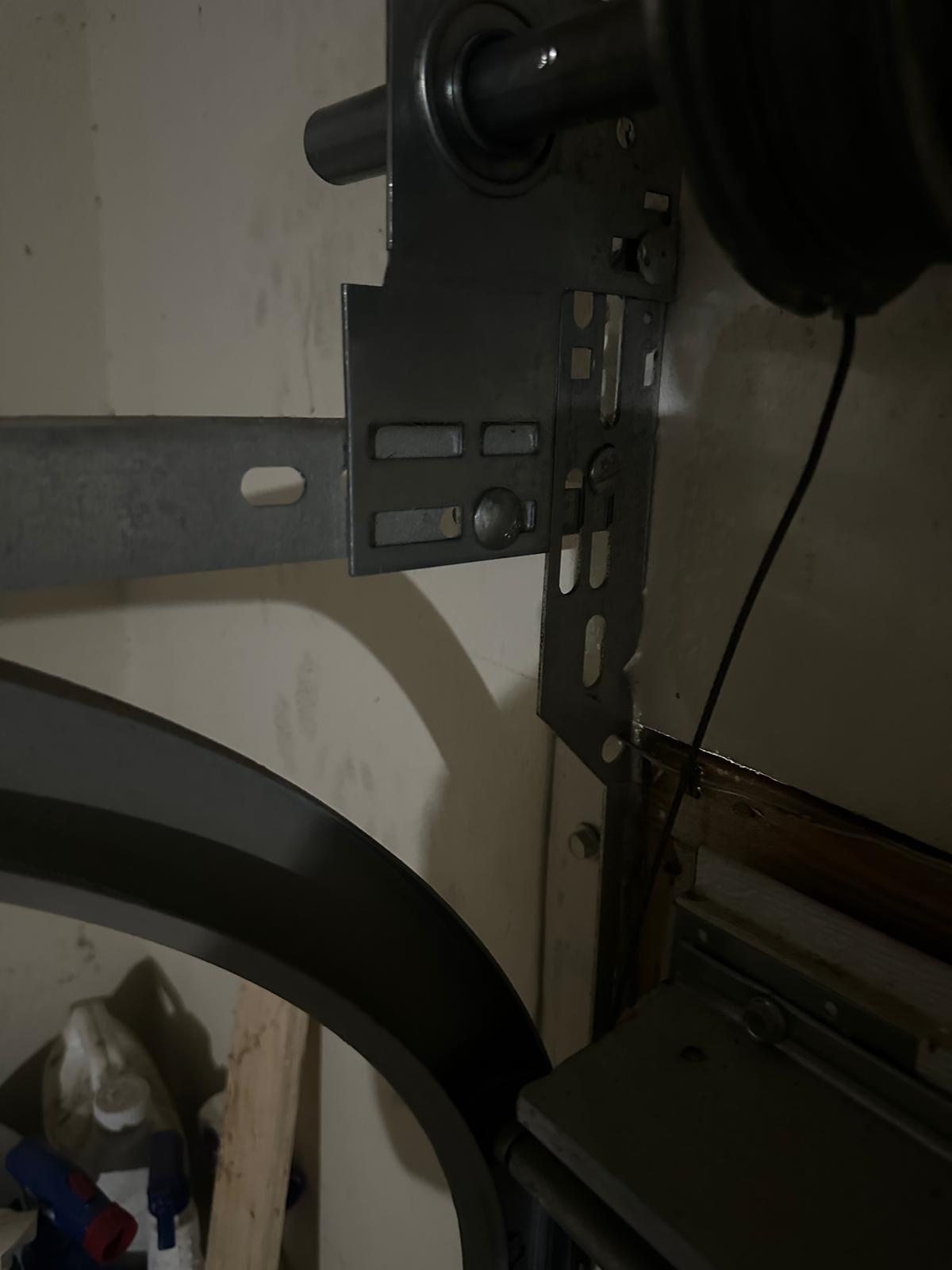
Questions
Garage Door Repair FAQs
My remote stopped working. Do I need a service call?
Probably not. Start with a fresh battery, then check whether the lock or vacation button on the wall control has been pressed, which disables all remotes by design. If the wall button opens the door and the remote does not, it is a remote or a reprogramming issue, and most units reprogram in under a minute using the learn button on the motor head. Call us if the wall button also fails, because that points to the logic board.
Can I keep using the door until you get here?
If a spring is broken, a cable is hanging, or the door sits crooked in the tracks, do not run the opener. Each additional cycle in that condition drags a heavy door on one cable, twists the shaft, and can pull rollers out of the track. If the door is simply noisy or slightly slow, normal use until the appointment is fine.
Why does my door work fine in summer and fail in winter?
Cold changes the door without changing the opener's settings. The rubber bottom seal stiffens and stops compressing, steel contracts slightly, and grease thickens in the bearings. The opener meets more resistance than it was calibrated for and interprets that as an obstruction, so it reverses. The fix is usually a travel and force adjustment plus fresh lubrication, not new equipment.
How long does a typical repair take?
Most single system repairs, including spring replacement, cable replacement, roller sets, and opener gear kits, run between one and two hours on site. Full opener replacement usually runs two to three. Work that involves straightening or replacing track takes longer because the door has to be secured and the alignment reset section by section.
Do you charge for the estimate?
On site estimates are free. We do not quote firm prices over the phone for anything beyond a straightforward spring or cable job, because too many symptoms have multiple causes and a number given blind is either padded to cover the worst case or revised upward on arrival. Neither is fair to you.
Is it worth repairing a door that is twenty years old?
Often, yes. The steel sections themselves outlast the moving parts by a wide margin, and a twenty year old door with new springs, cables, rollers, and hinges operates like a much newer one. The case for replacement is structural: cracked sections, rusted bottom fixtures, or a door so poorly insulated that it is a comfort problem in a garage you actually use.
Will the same part just fail again?
Not if the underlying cause is corrected. A spring that broke at the end of its rated cycle life is normal wear. A spring that broke after two years was undersized for the door weight, and replacing it with the same wrong spring guarantees a repeat. We weigh the door or calculate from the section type and hardware before selecting replacement springs.
Need this handled today?
A single visit that identifies which component actually failed, then repairs that component instead of replacing parts on a guess.