Service
Garage Door Maintenance in Dallas & the east metroplex
The end of a North Texas summer is a sensible time to service a door, because three months of attic heat above the opening drives lubricant out of the bearings and hardens the bottom seal. Getting ahead of that in Dallas means the first cold snap does not turn into a door that reverses off the floor.
- Same-day service available
- 10+ years serving Dallas
- Free on-site estimates
- 15% off current repairs
What a tune up actually adjusts
Four things get changed, and the rest is inspection. First, spring tension is corrected so the door balances, which means it holds position at waist height rather than drifting up or falling. Second, fastener torque is restored on hinges, track brackets, end bearing plates, and drum set screws, all of which loosen from cyclic vibration. Third, moving parts are lubricated with the right product in the right places: lithium or synthetic grease on springs, bearings, and hinge pivots, and nothing at all on the track surfaces, which are supposed to stay clean and dry so rollers roll rather than slide. Fourth, the opener's travel limits and force settings are reset to match the door's actual current behavior, not the behavior it had when it was installed.
Balance is the measurement everything else depends on
A door out of balance by twenty or thirty pounds does not announce itself. The opener absorbs the difference, so the door still opens and closes and nothing seems wrong. What is happening underneath is that every cycle loads the drive gear, the trolley, the top section, and the opener arm with force they were never meant to carry, and the springs themselves are working outside their design range. Doors that come to us with a stripped opener gear or a cracked top section have usually been running out of balance for a year or more. Correcting tension is a matter of adding or removing turns on the spring with winding bars, and it is the highest value ten minutes of the visit.
Where lubricant belongs and where it does not
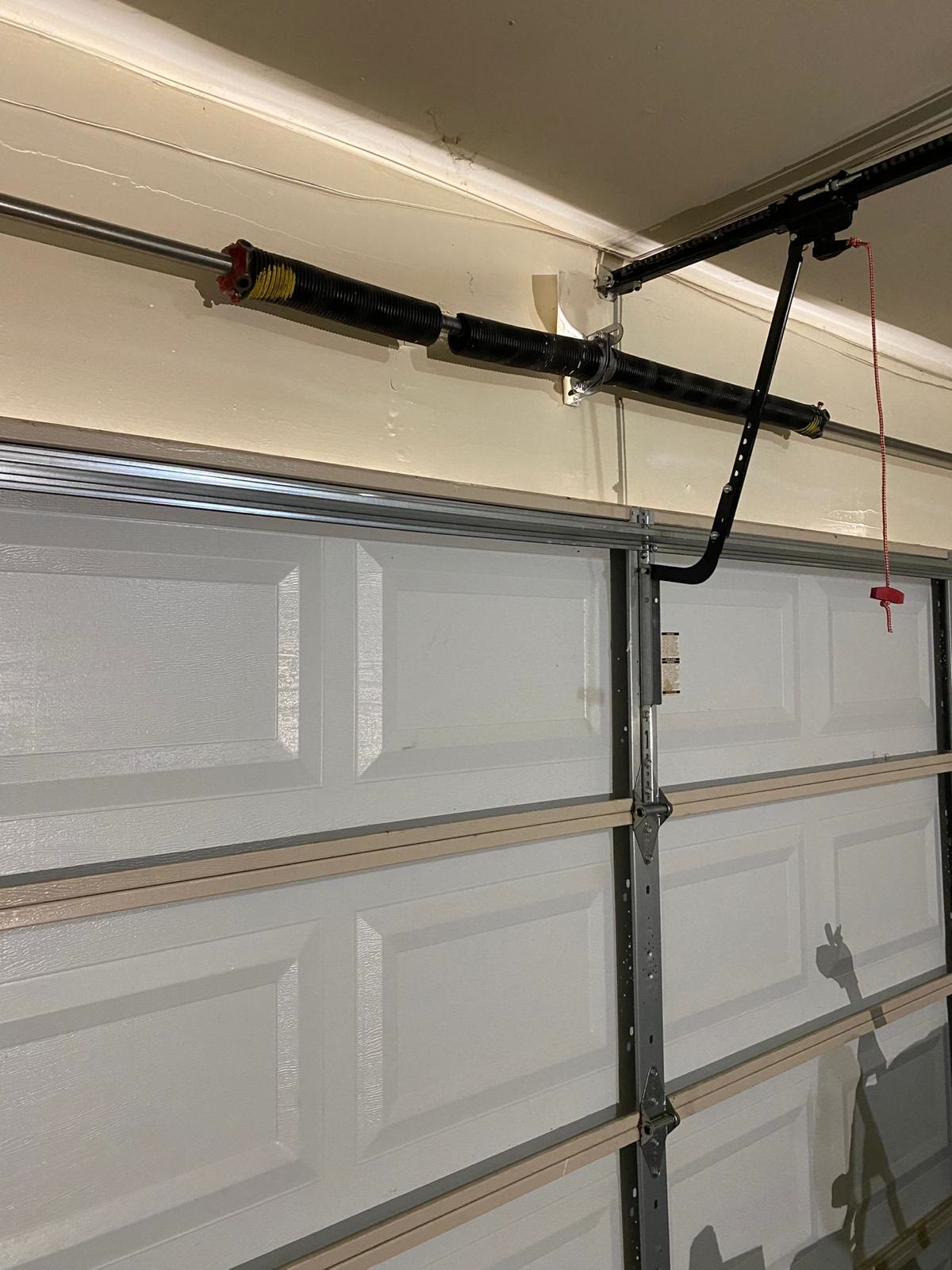
Springs get grease because coil on coil friction is what makes an old torsion spring squeal and what accelerates fatigue at the contact points. Hinge pivots, roller stems, and the sealed or unsealed bearings in the end plates and center bracket get lubricant for the same reason. The track does not. Grease in the track collects dust, turns into an abrasive paste, and causes the roller to skid instead of turn, which flat spots the roller and wears the stem. If the previous service left the tracks glistening, that is a sign of a technician working from a checklist rather than an understanding.
The safety tests, and why they matter more than the lubrication
Two independent systems are supposed to stop a closing door. Photo eyes mounted no more than six inches above the floor break an infrared beam and reverse the door before it reaches an obstruction; they drift, they get bumped, and they can be defeated by direct sun on the receiver. The second system is mechanical force sensing: the opener should reverse when the closing door meets resistance. We test that against a solid object on the floor, and we test the photo eyes by breaking the beam mid travel. An opener that fails either test is not a nuisance, it is a hazard, and the reason those systems exist is that doors have killed children.
What inspection finds before it becomes a service call
Cable strands beginning to fray where the cable wraps the drum, visible as a fuzzy section or a single lifted wire. Bearing races that have gone gray and gritty. Hinge plates where the steel around the fastener has started to elongate into an oval. Spring coils with rust that has bloomed rather than surface bloomed, since corrosion pits are where fatigue cracks start. Rollers with visible play at the stem or a flat spot on the wheel. None of these strand a car in a garage on their own, and all of them are far cheaper to address at the point they are noticed.
A realistic maintenance interval
Annual service is the right cadence for a door that runs four or more cycles a day, which describes most households where the garage is the primary entrance. Doors used a couple of times a week can reasonably go two years. What changes the interval is environment rather than age: doors on unconditioned garages with a lot of blowing dust, doors that face west and cook every afternoon, and doors on homes where the slab has moved and the seal no longer seats evenly all deserve annual attention. We will tell you which category yours falls into.
Signs you need this
- The door has become noticeably louder over the past year without any single event causing it.
- It hesitates or grabs at the same point in travel every time.
- The door drifts down on its own when you stop it halfway with the opener released.
- Springs squeal audibly on opening, which is coil on coil friction.
- You can see fine metal dust or shavings on the floor below the end bearing plates.
- The bottom seal no longer touches the slab evenly across the width of the door.
- The opener sounds like it is working harder than it used to at the same speed.
- It has been more than two years and nobody has tested the auto reverse.
Book this service
Call (469) 891-6883 or request a visit online.
The visit
What we actually do
Hand balance and spring inspection
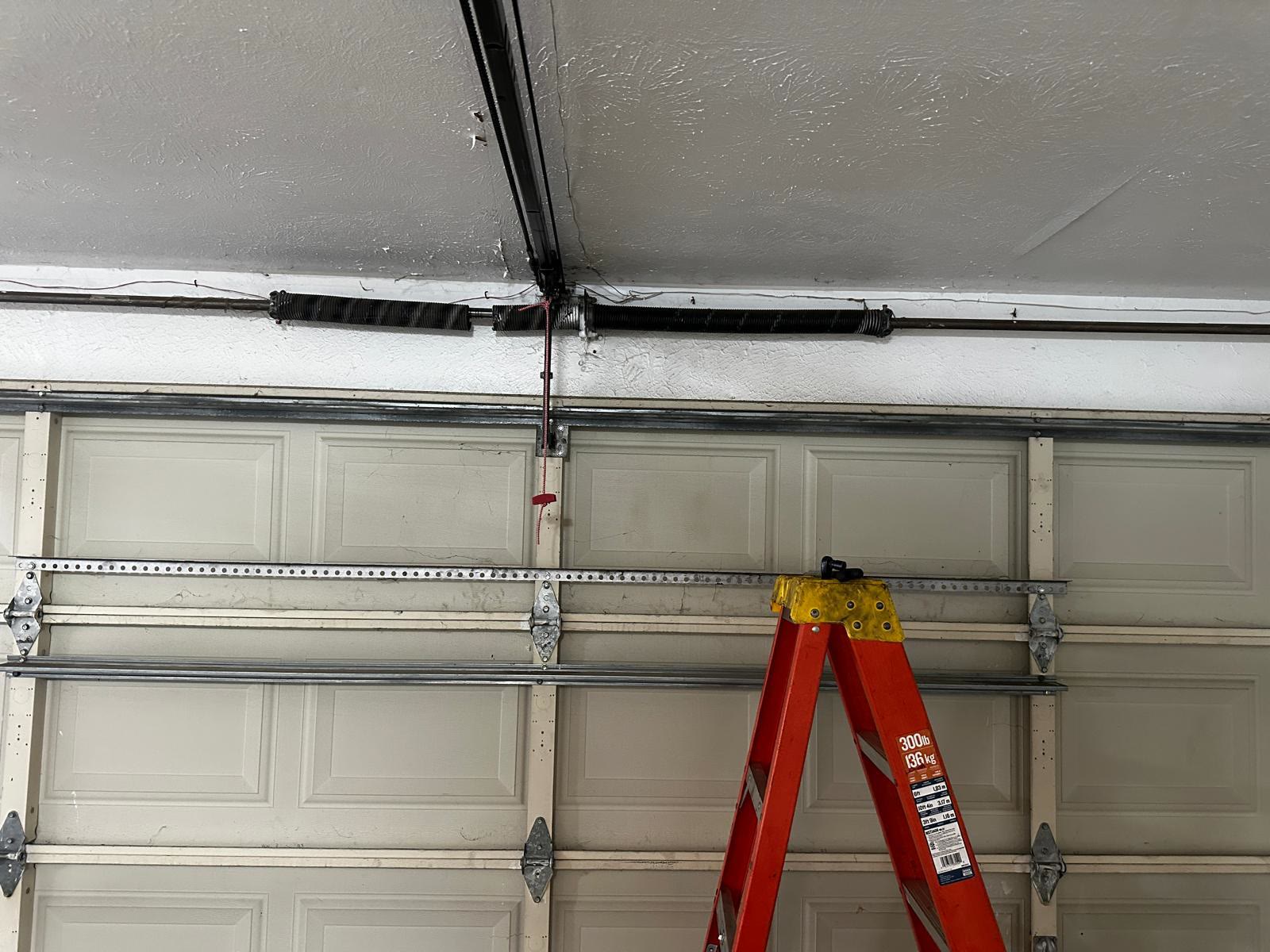
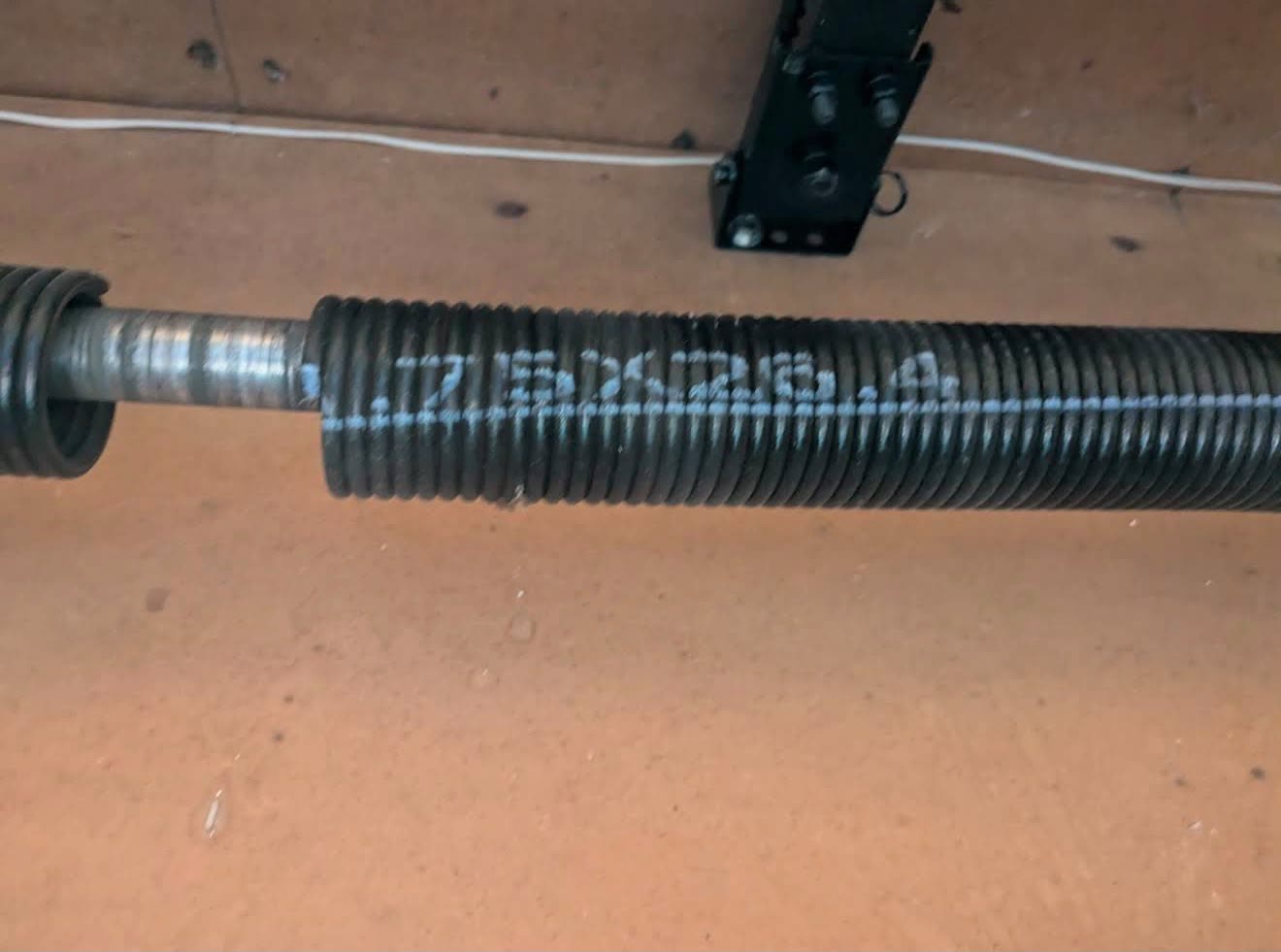
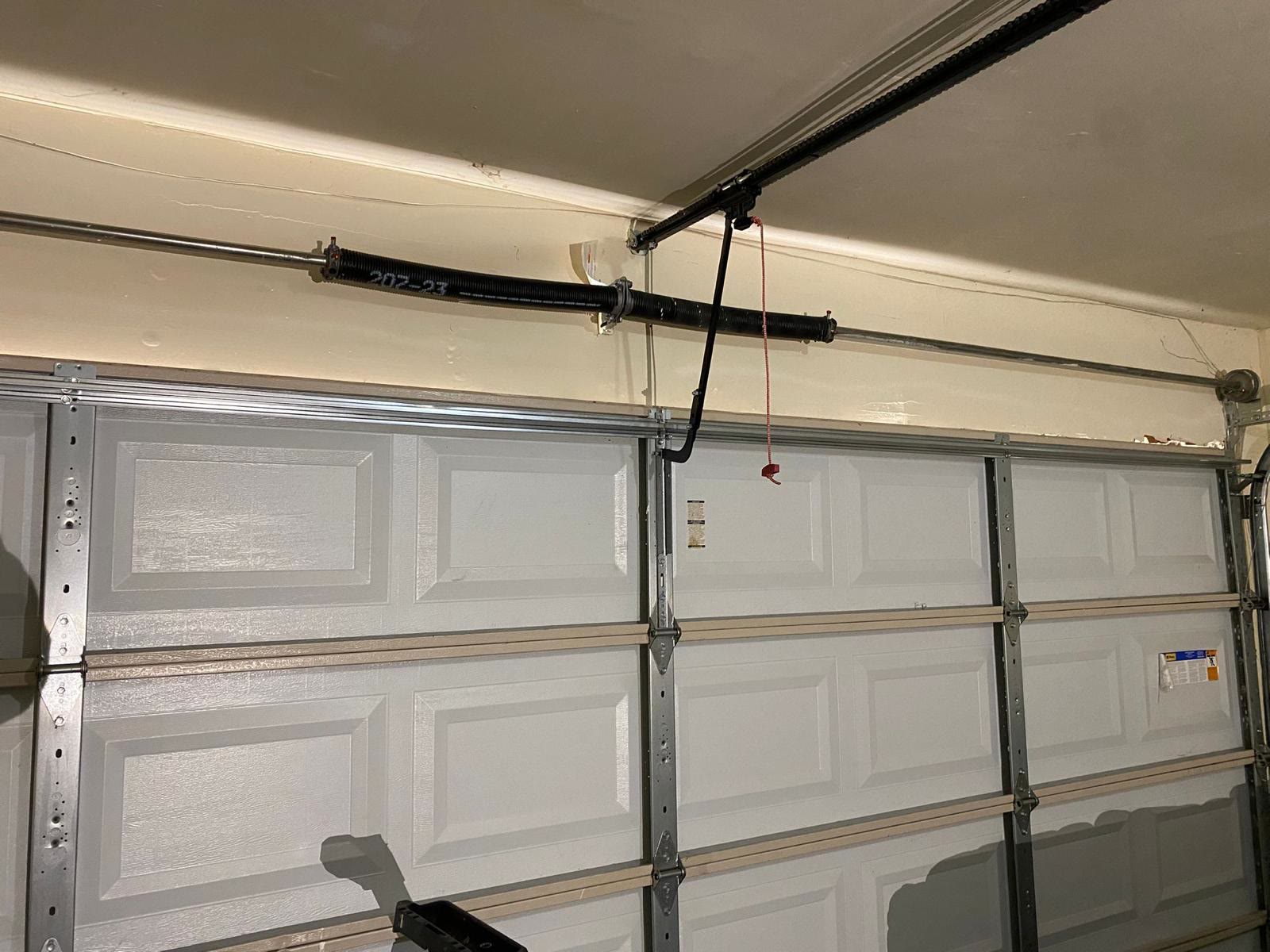
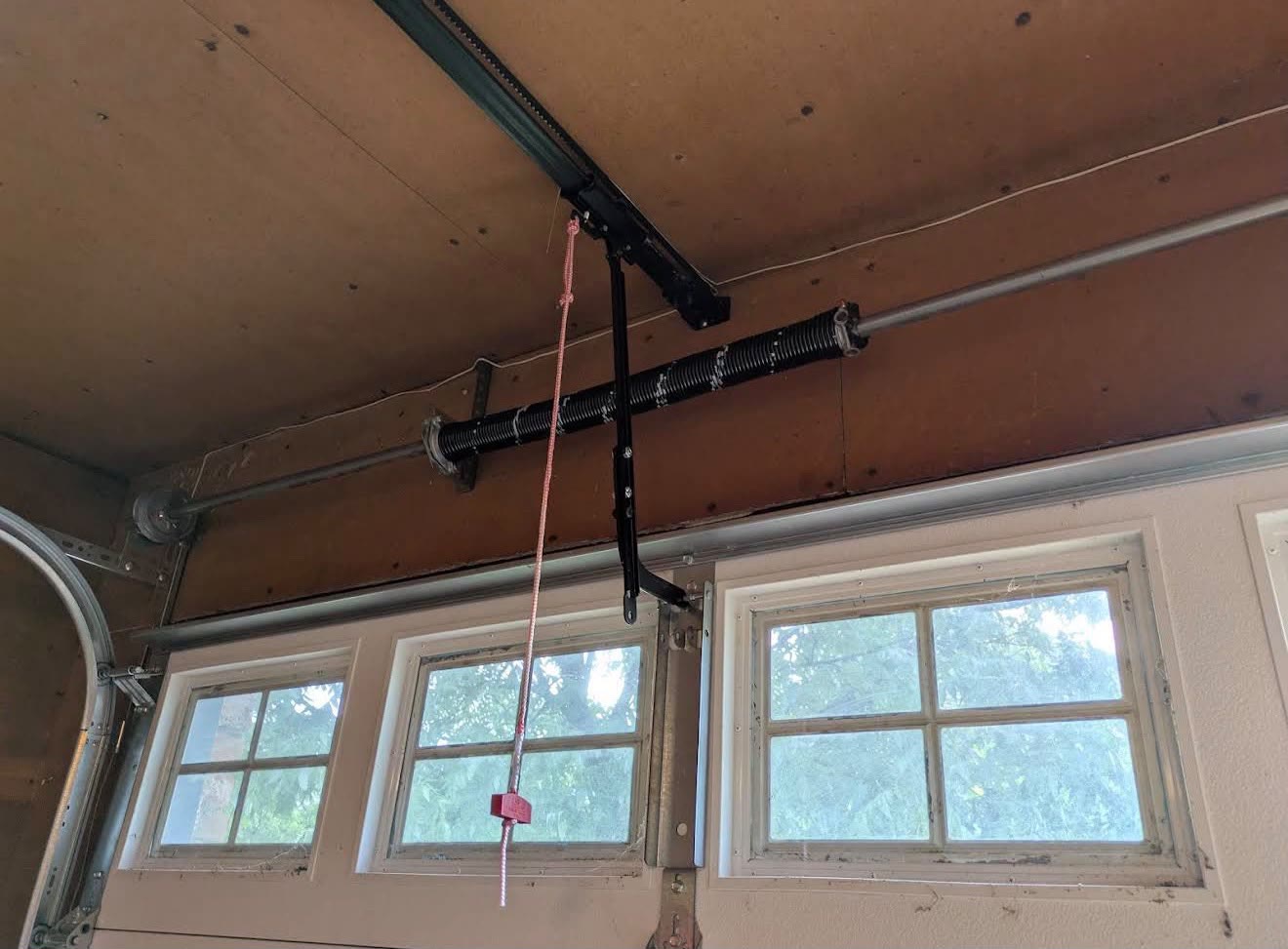
The opener is released and the door lifted by hand to find where it drifts. Springs are checked for gaps, rust pitting, and coil spacing, and we note the wire size and length so we know what is on the door if it fails later.
Hardware pass, bottom to top
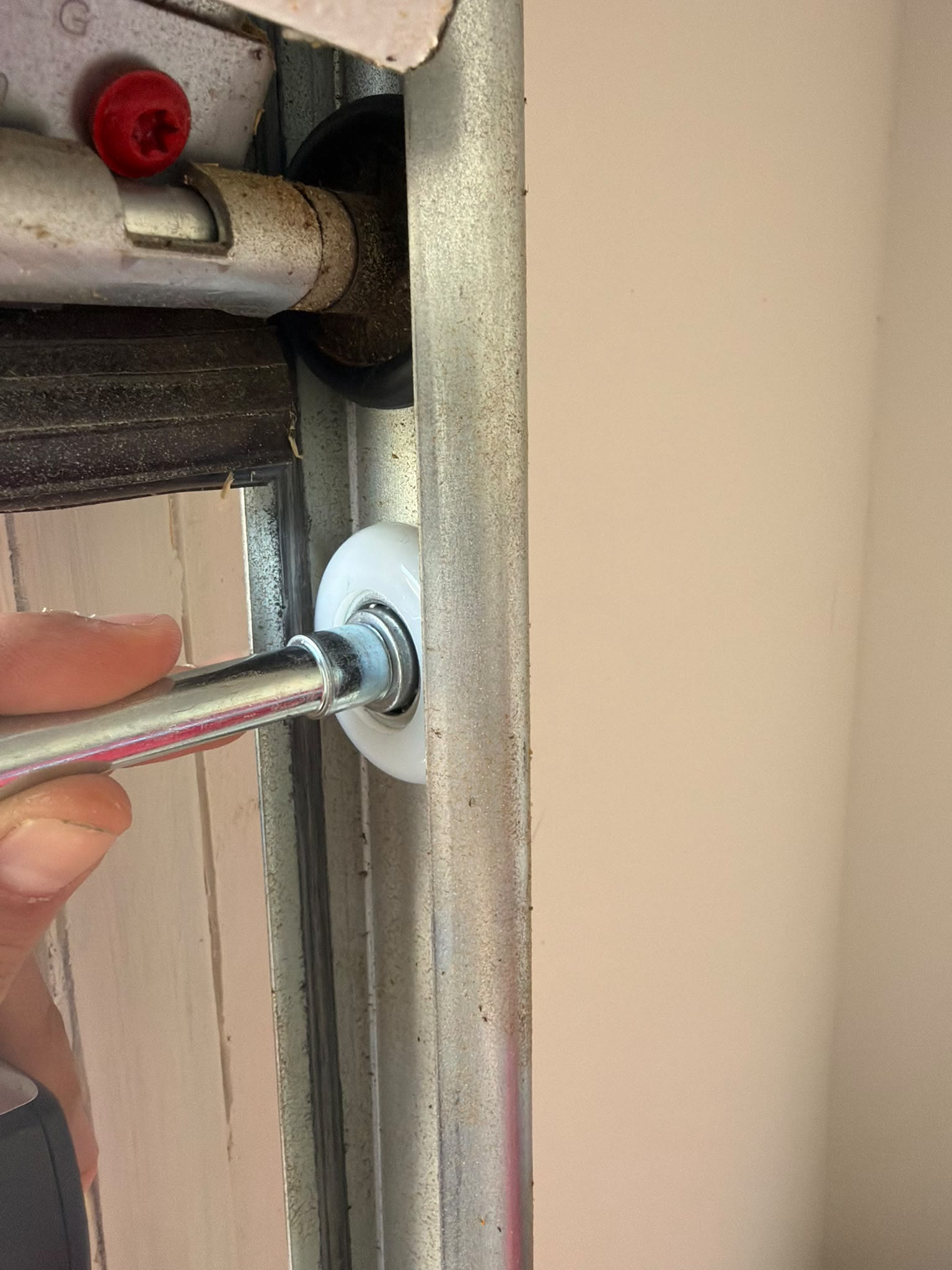
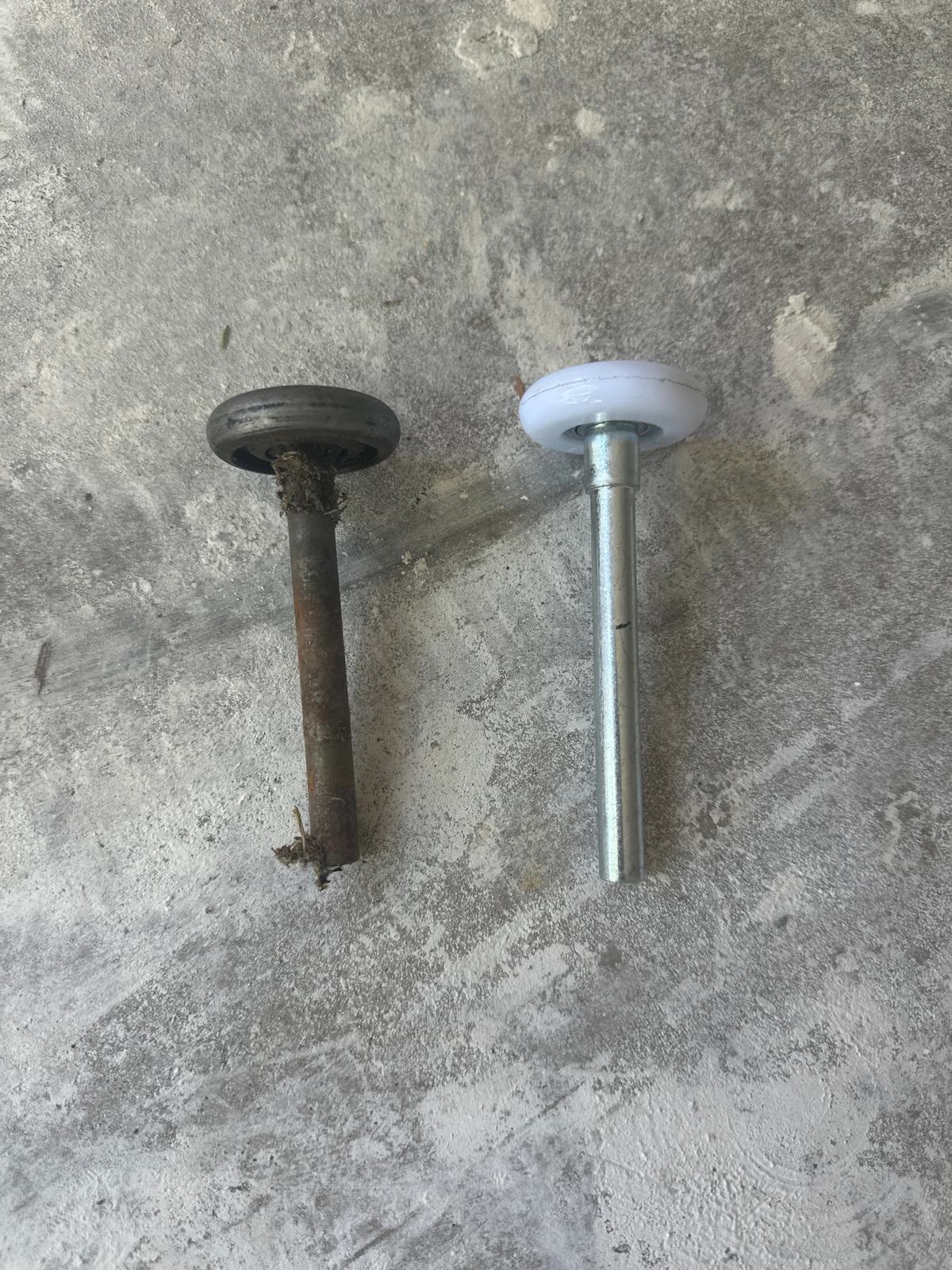
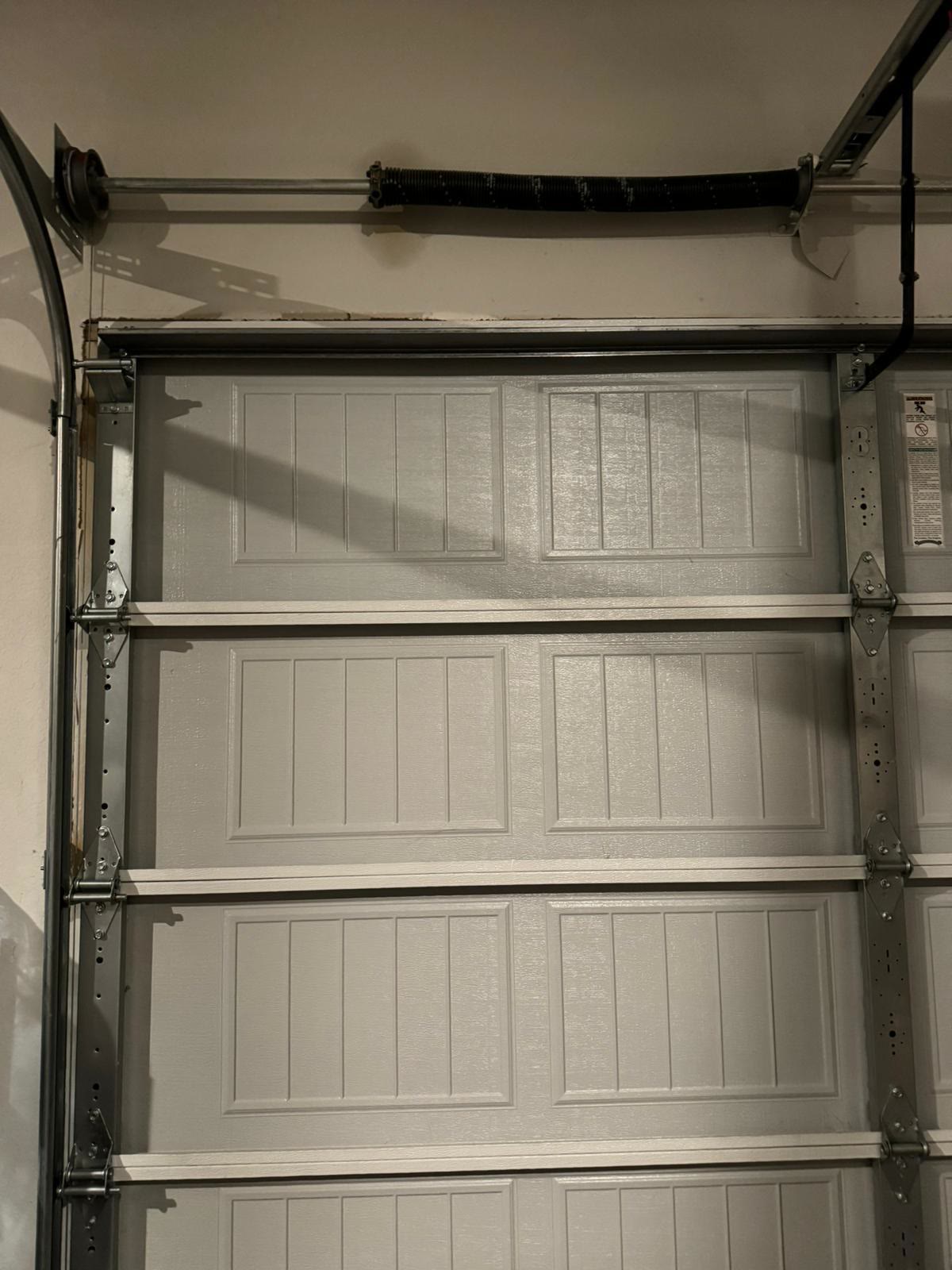
Every hinge, roller, track bracket, bearing plate, and drum set screw is checked for torque, wear, and elongation. Cables are inspected at the drum wrap and the bottom bracket, the two places they fail.
Lubrication
Springs, bearings, hinge pivots, and roller stems are lubricated with the appropriate product. Tracks are cleaned rather than lubricated. Excess is wiped so it does not collect dust.
Counterbalance correction
If the balance test showed drift, spring turns are adjusted with winding bars until the door holds position at waist height and takes roughly ten pounds of effort to move.
Opener and safety commissioning
Open and close travel limits and force settings are reset to the corrected door. Photo eye alignment and height are verified, the beam is broken mid travel to confirm reversal, and the mechanical auto reverse is tested against an obstruction on the floor.
On the job
Garage Door Maintenance in the field
Questions
Garage Door Maintenance FAQs
How often should a garage door be serviced?
Once a year for a door that cycles four or more times daily, every two years for lighter use. Environment matters as much as frequency: west facing doors, dusty unsealed garages, and homes where the slab has shifted all justify the annual interval regardless of how often the door runs.
Can I do this myself?
Much of it, yes, and we would rather you did it than nobody did. Lubricating springs, bearings, hinges, and roller stems, keeping the tracks clean, tightening visible hardware, and testing the photo eyes and auto reverse are all reasonable homeowner tasks. The one thing to leave alone is spring tension. Winding bars under load are what send people to the emergency room.
What lubricant should I use?
A lithium or synthetic garage door lubricant on springs, bearings, hinge pivots, and roller stems. Not a penetrating spray such as WD-40 as a lubricant, because it cleans and displaces rather than lubricating and leaves the part drier than it found it. And nothing on the track surfaces.
Does maintenance actually extend the life of the springs?
It extends it measurably but does not change the fundamentals. A spring is rated for a number of cycles and that count is spent whether or not it is greased. What lubrication and correct balance prevent are the things that make a spring fail early: coil on coil friction, corrosion pitting, and operating outside the tension range it was sized for.
My door works fine. Is maintenance a waste of money?
On a door under about three years old that balances correctly and runs quietly, largely yes, and we will say so on site. The value appears once the hardware has accumulated cycles, and it is highest on doors that show one of the early signs: new noise, hesitation, drift when stopped halfway, or a seal that no longer meets the slab evenly.
Will you try to sell me parts during the visit?
We will report what we found and rank it: what needs attention now, what can reasonably wait a season, and what is simply worth knowing about. Worn rollers and frayed cables get replaced when you agree to it, and if nothing needs replacing we finish the service and leave.
How long does the visit take?
About an hour on a standard double door in normal condition. Longer if the door needs significant retensioning, if hardware has to be replaced, or if the opener requires more than routine limit and force adjustment.
Where
Garage Door Maintenance near you
Need this handled today?
A scheduled service that rebalances the counterbalance, retensions hardware loosened by vibration, and resets the opener's safety systems.