Service
Broken Cable Repair in Dallas & the east metroplex
Cable work is normally a same visit repair, generally an hour or a little more, because cables come in standard diameters and lengths that the truck carries. In Dallas the additional time, when there is any, goes into checking the drums and shaft for damage the failed cable caused on its way out.
- Same-day service available
- 10+ years serving Dallas
- Free on-site estimates
- 15% off current repairs
What the lift cables do and where they run
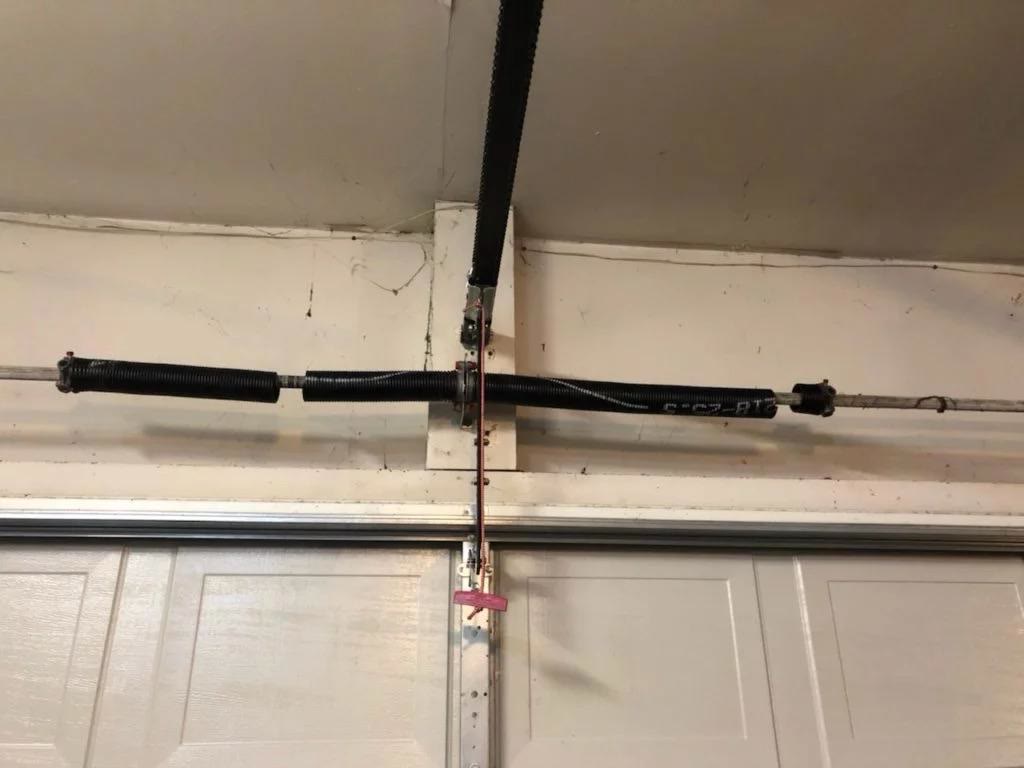
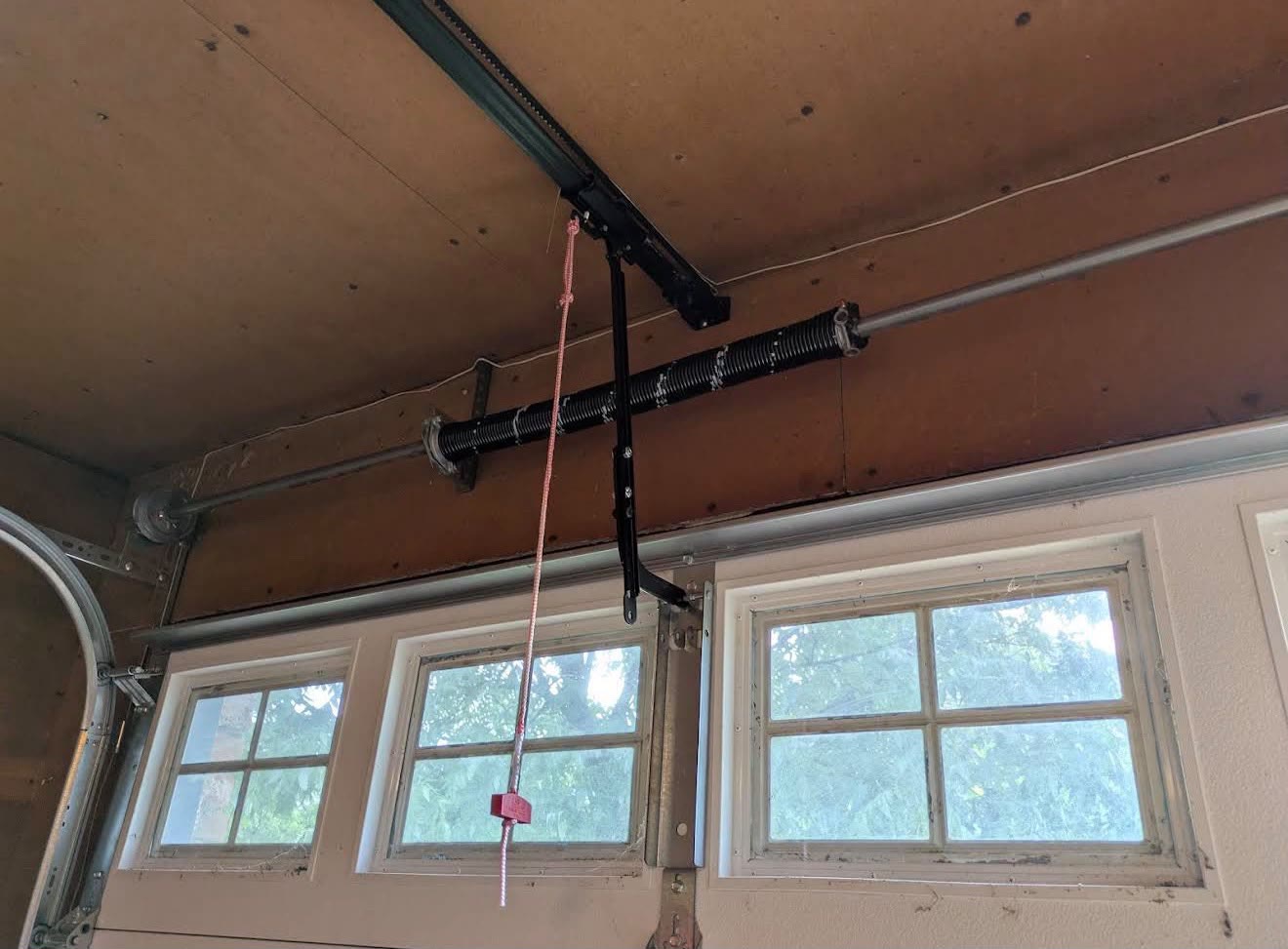
On a torsion door, a grooved drum sits at each end of the spring shaft above the opening. A steel aircraft cable winds around each drum, runs down the inside of the vertical track, and terminates at a bottom bracket bolted to the lowest corner of the door. When the springs unwind, they rotate the shaft, the drums take up cable, and the cable lifts the door. The cables carry the entire weight of the door in tension. They are not a secondary or a safety component; they are the connection between the counterbalance and the door itself, and when one fails that side of the door has nothing holding it.
Why cables fray at the drum
A cable does not wear evenly along its length. It wears where it bends under load. At the drum, the cable wraps a tight radius, and each cycle it lays into the groove, takes the full tension, and unwinds again, flexing the individual strands against each other and against the drum surface. Any misalignment makes it worse: a drum set screw that has crept loose lets the drum shift on the shaft, the cable then rides on the drum flange rather than seating in the groove, and it saws against the edge. The same principle applies at the bottom bracket, where the cable loops through a fitting and takes a sharp turn under full load. Those two points account for nearly every cable failure we see.
The other failure mode: a cable that came off rather than broke
If a closing door lands on an obstruction, whether that is a garbage can, a joist of lumber, or a car bumper, the door stops but the drums keep turning for a moment. The cable goes slack, comes out of its groove, and then re tensions in the wrong place, often wrapping over itself or dropping between the drum and the bearing plate. Nothing is broken at that point, but the door will lift unevenly and can jam. This is also why a door that sits crooked after someone left something in the doorway needs to be looked at rather than forced back into service. Re seating that cable and re setting drum tension is the actual repair.
The bottom bracket is where people get hurt
Both bottom brackets are under the full tension of the counterbalance whenever the door is closed, because that is exactly where the cables pull. Factory labels on those brackets warn against removing them, and the warning is accurate. If the bolts are backed out while the springs are wound, the bracket departs the door under load with the cable attached. Correct sequence is to unwind the springs with winding bars first, so the cables go slack, and only then work on the bracket. This is the same reason a broken cable is not a job to improvise on a Saturday: the intact side is still fully loaded.
Equal tension is what makes the door lift square
Replacing a cable is only half the job. Both cables have to be seated in their drums with the same number of wraps and the same tension, so that both bottom corners of the door lift at the same rate. If one drum is set even slightly differently, the door racks in the tracks on every cycle, which wears the rollers on the lagging side, marks the track, and eventually puts the door out of square permanently. Setting that tension involves loosening the drum set screws with the shaft locked, taking up the slack evenly on both sides, and re tightening onto the flats of the shaft. It is a fussy step and it is the difference between a repair that lasts and one that comes back.
What we check while the system is apart
Cable failure often leaves evidence elsewhere. The drum grooves may be scored where the cable rode out of place. The shaft can be scarred where a cable wrapped it. The bottom bracket rollers may be bent from the door dropping on one side. The vertical track frequently has a bright gouge or a bowed section where a roller was pulled sideways against it. Bearings get inspected because they are only accessible during this work. We report what we find with the reasoning, and we separate what needs replacing from what is simply cosmetic damage.
Please do not attempt this one yourself
A torsion spring holds several hundred pounds of stored energy even when the door is down. Releasing that energy without the correct winding bars is how people lose fingers. If a spring has snapped, leave the door closed and call us.
Signs you need this
- One corner of the door hangs lower than the other, whether open or closed.
- A cable is visibly loose, hanging slack, or coiled off the drum.
- You can see broken strands sticking out of the cable, often described as fuzzy or whiskered.
- The door lifts unevenly and binds partway up.
- Loud scraping or popping from one side of the door during travel.
- The door will not close fully on one side and leaves a wedge of daylight.
- There is a bright scrape or a bow in the vertical track on one side.
- The door stopped on an object recently, and it has not run correctly since.
Book this service
Call (469) 891-6883 or request a visit online.
The visit
What we actually do
Secure the door before anything else
The door is clamped or blocked in position so it cannot drop or shift, and the opener is disconnected. On a crooked door this is the step that prevents the repair from becoming an incident.
Determine broken versus derailed
A snapped cable and a cable that came off its drum look similar from the driveway and are different repairs. We identify which happened and, if it derailed, what stopped the door in the first place, because the underlying cause matters.
Release tension and remove
Springs are unwound with winding bars so the cables go slack, then the bottom bracket end is freed and the old cable is removed from the drum. The drum, the shaft, the bearing, and the bottom fixture are inspected while they are accessible.
Install matched cables and set the drums
Cables are replaced as a pair in the correct diameter and length for the door height, seated in the drum grooves, and set to equal tension on both sides with the shaft locked so neither side takes up more than the other.
Rewind, test by hand, then by opener
Springs are wound to the correct turn count, the door is run by hand and checked for square travel at several heights, and only then is the opener reconnected, its travel and force reset, and the safety reversal tested.
On the job
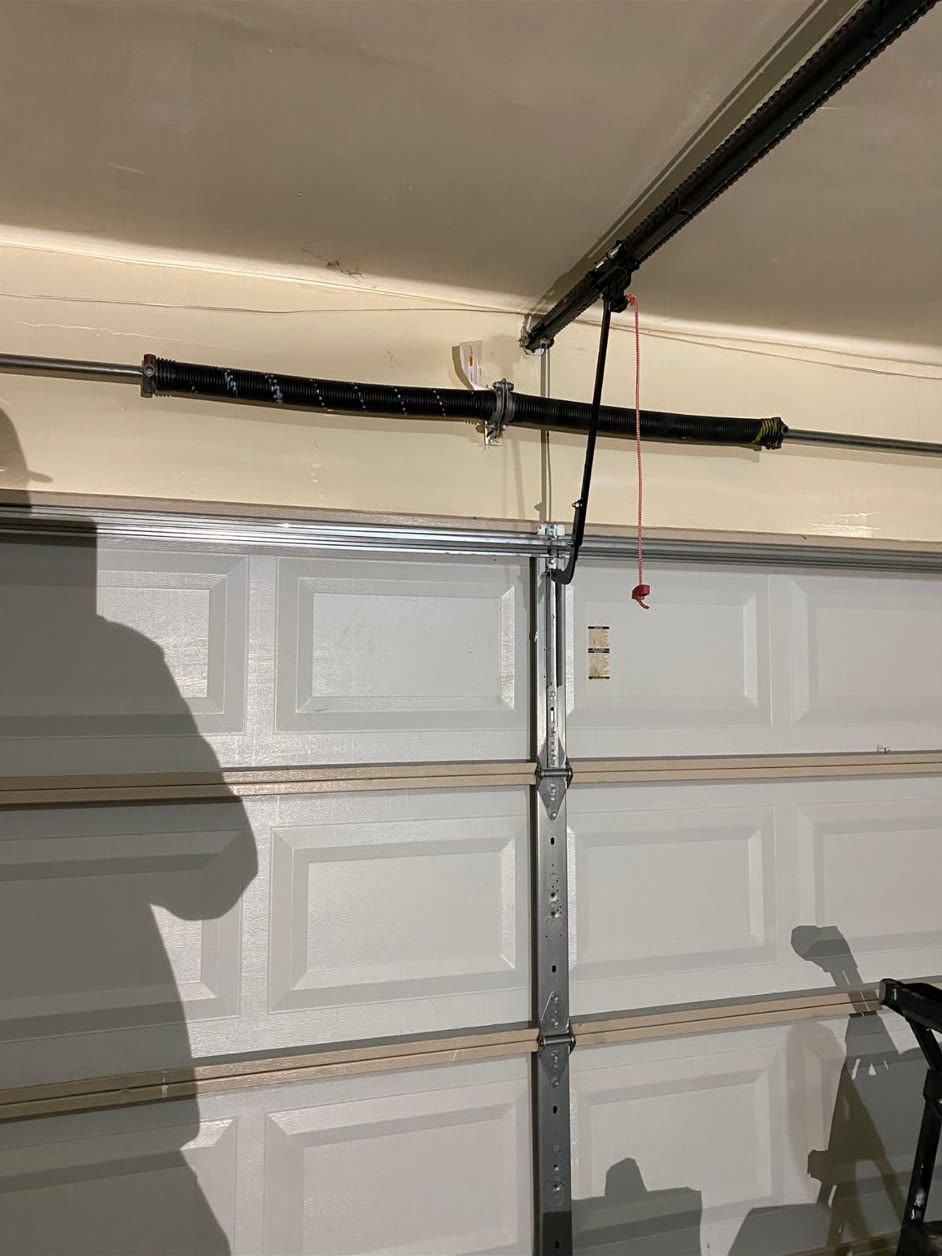
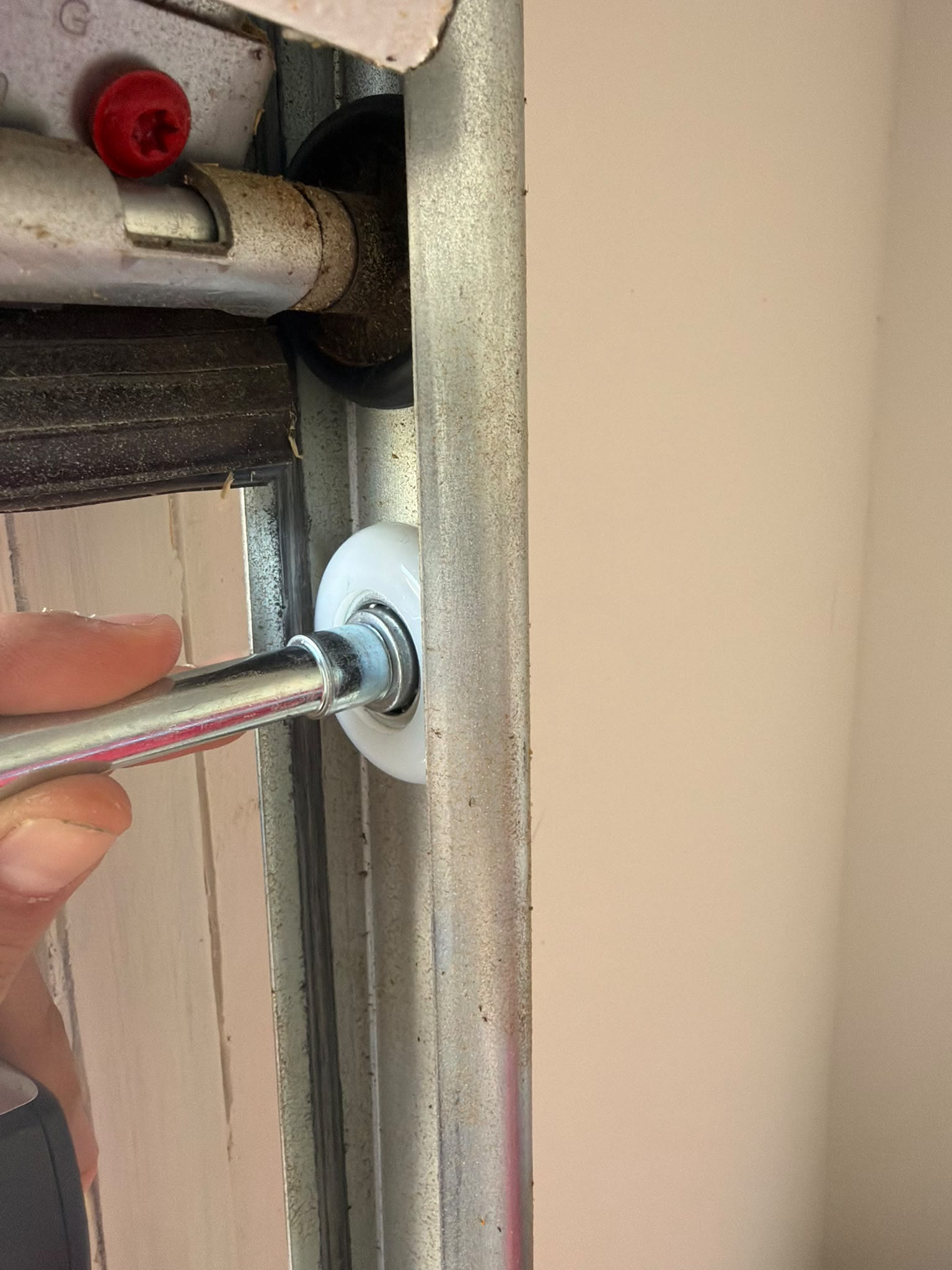
Broken Cable Repair in the field
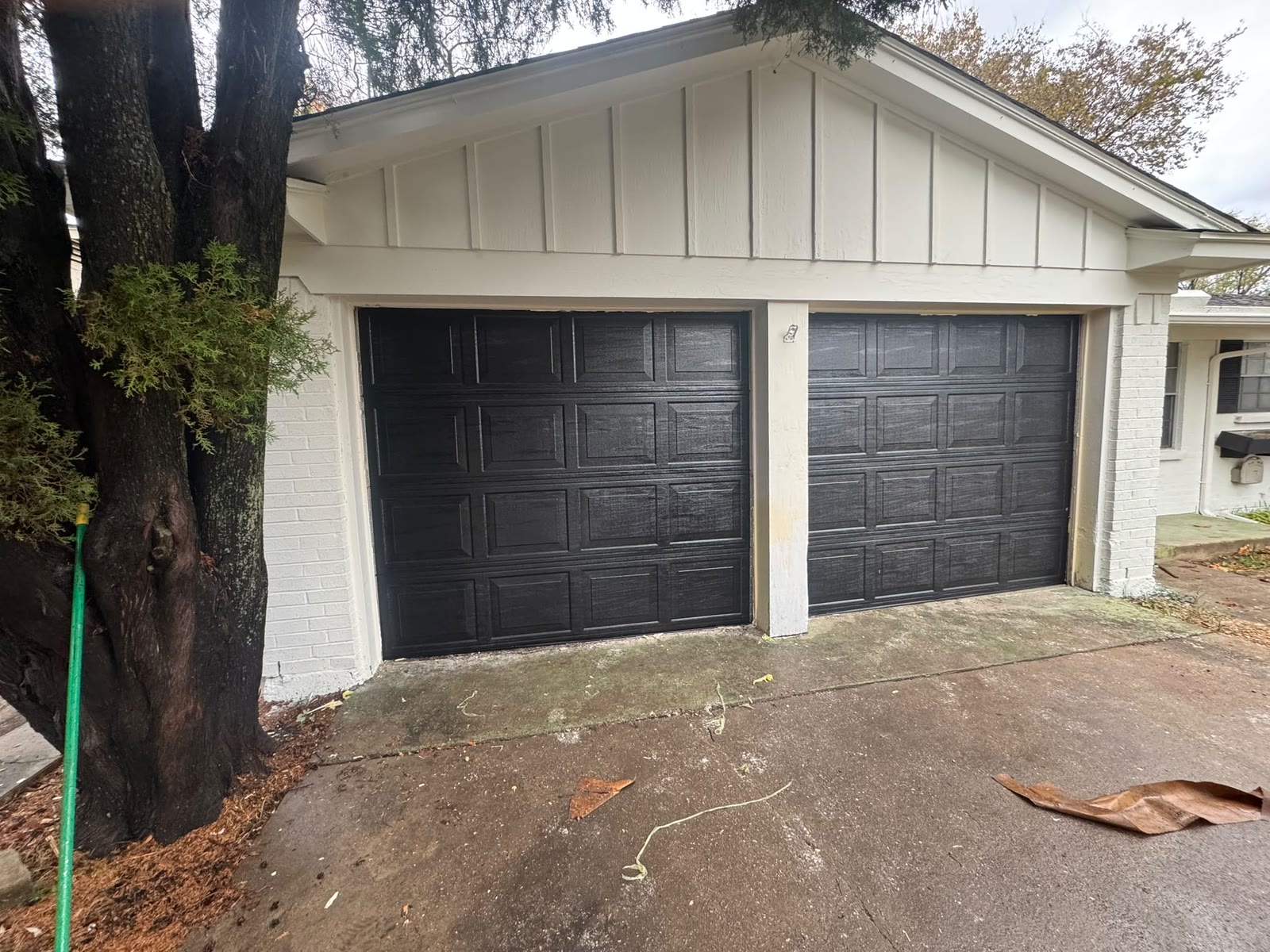
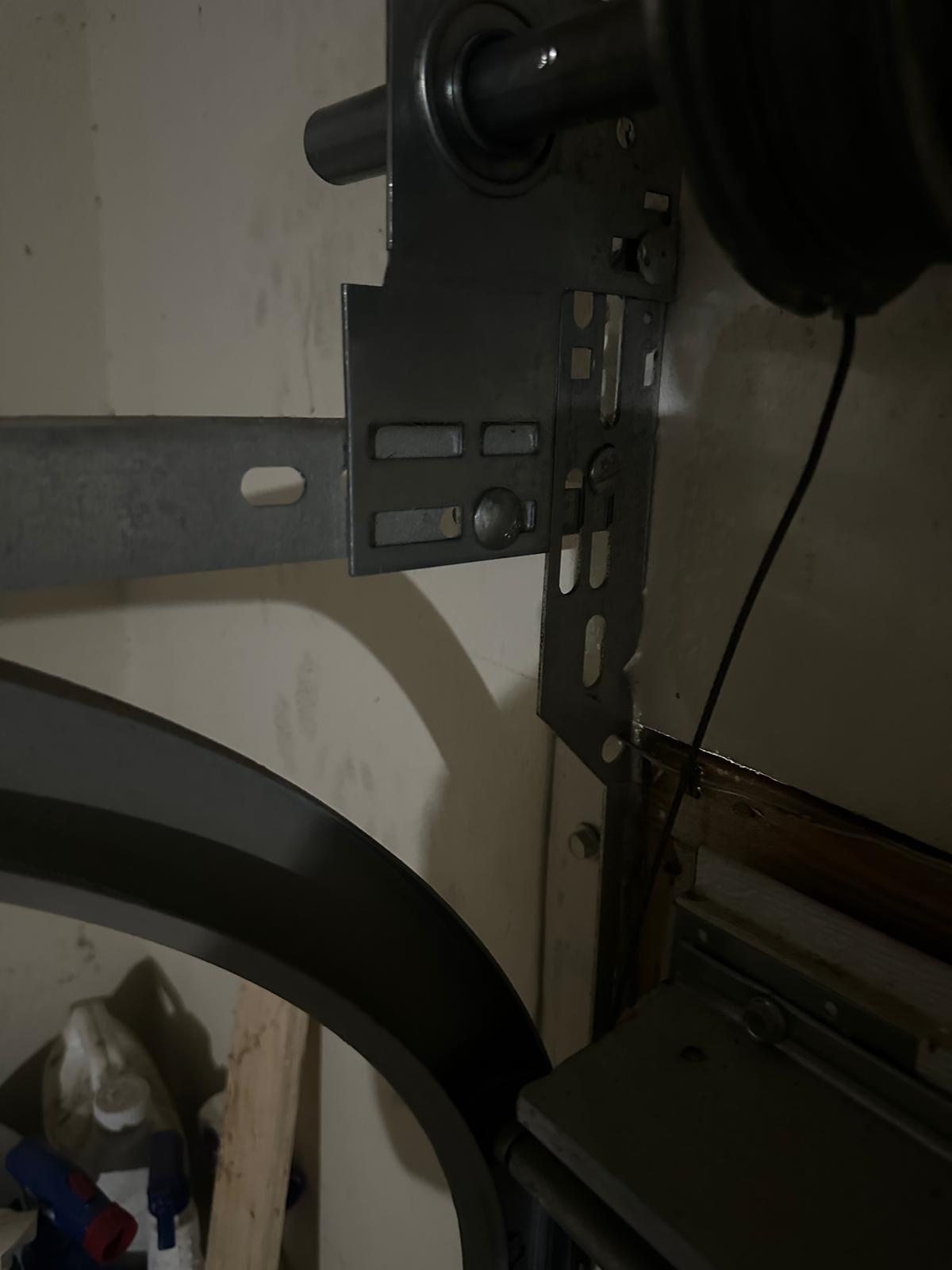
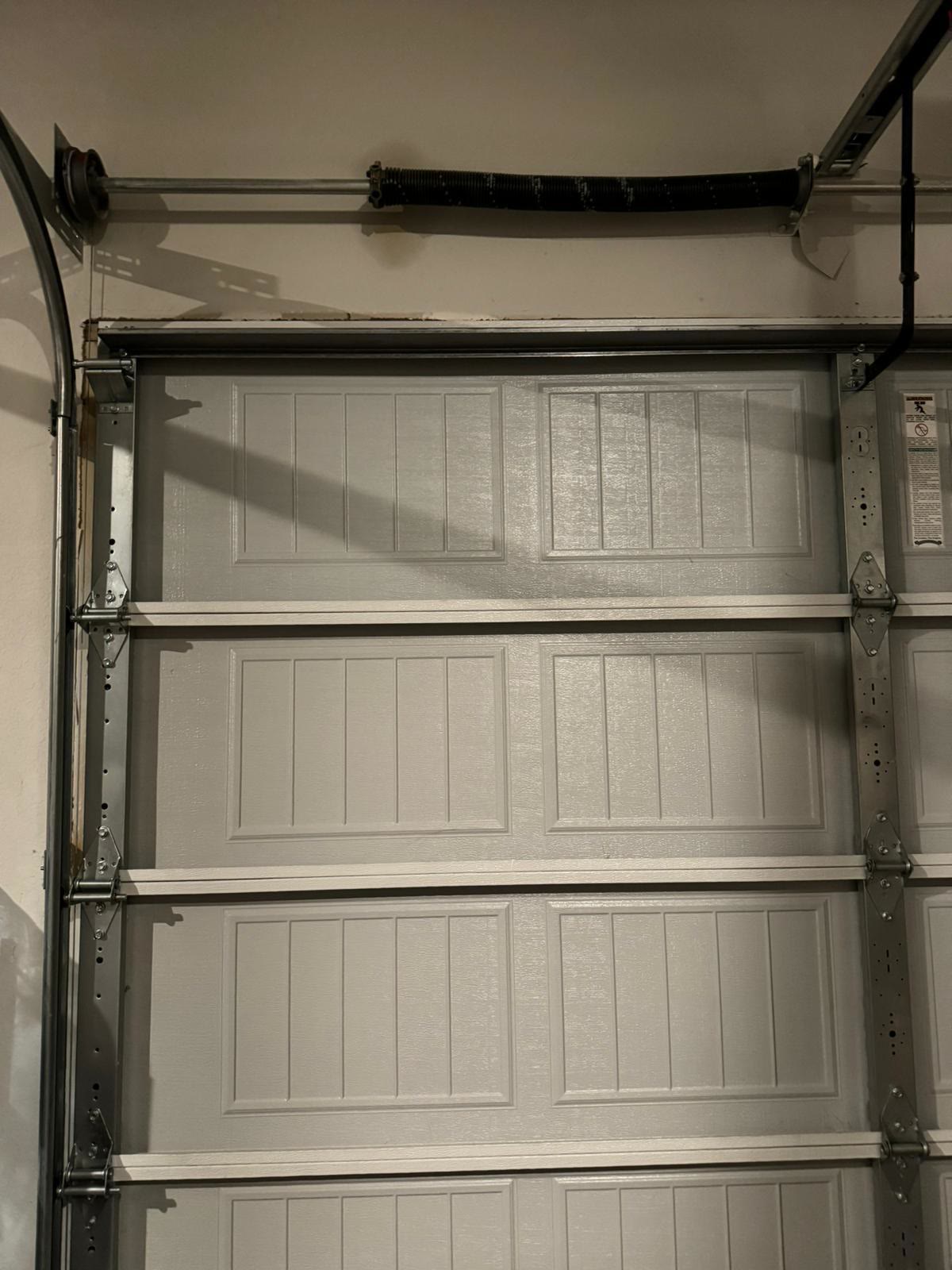
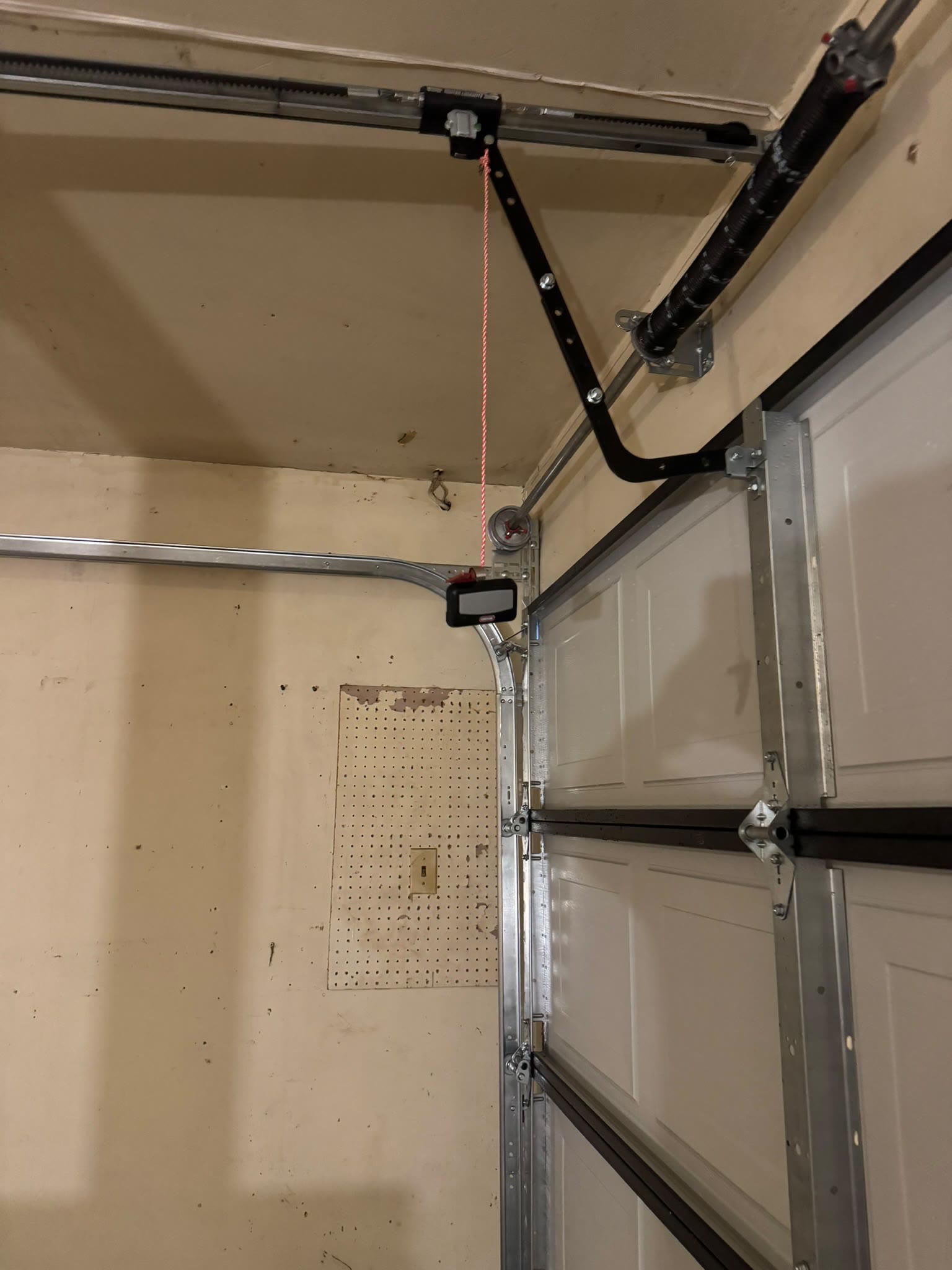
Questions
Broken Cable Repair FAQs
Should both cables be replaced or just the failed one?
Both. They were installed together, they have taken the same number of cycles, and they wear at the same two points. Replacing one leaves a new cable working against an old one of slightly different effective length, which is exactly the condition that racks the door in the track. The material cost of the second cable is small relative to the labor already being performed.
Is a broken cable dangerous?
The door itself becomes unpredictable, which is the practical danger. With one cable gone, the counterbalance is pulling on one corner, the door twists in the tracks, and it can jam partway or come off the track entirely. The other genuine hazard is the repair itself, because the bottom brackets and the intact cable are still under full spring tension until the springs are unwound.
How long does cable replacement take?
Generally one to two hours for a straightforward pair replacement, including unwinding and rewinding the springs and setting drum tension. It runs longer when the failure has bent a bottom bracket, scored a drum, or bowed a section of track, since those have to be corrected before the new cable will run true.
How often do cables need replacing?
There is no fixed interval. Cables typically outlast at least one set of springs, and many doors go a decade or more. What shortens their life is misalignment at the drum, corrosion at the bottom of the run from a wet slab, and repeated events where the door lands on an obstruction and the cable goes slack.
Can I put the cable back on the drum myself?
This is one to leave alone, and not because it is complicated to understand. The springs are wound, the bottom bracket is under load, and correcting drum tension requires locking the shaft while the set screws are loose. If the shaft turns while those screws are out, the counterbalance releases. The physical risk is real and the correct tooling is specific.
Can you replace a cable without touching the springs?
No, not properly. The cable is what transmits spring tension to the door, so the tension has to come off before the cable can be freed at either end. Any method that appears to skip that step is working around a loaded system, which is where injuries come from.
My cable looks fine but the door is crooked. What else could it be?
A drum that has crept on the shaft because a set screw loosened, a bottom bracket that has bent, a roller that has come out of the track on one side, or a door that has gone out of square from long running with unequal cable tension. All of them present the same way from a distance, and all are diagnosable in a few minutes on site.
Where
Broken Cable Repair near you
Book a visit that fits your day
Replacement of frayed or snapped lift cables, with the drum seating and cable tension reset so the door lifts square rather than crooked.