Service
Off-Track Repair in Dallas & the east metroplex
On arrival we secure the door before anything else, using clamps or blocking so it cannot move while we work. Then we release the opener, take the load off, walk the rollers back into the track section by section, and check the alignment of the vertical and horizontal rails in Dallas before the door runs again.
- Same-day service available
- 10+ years serving Dallas
- Free on-site estimates
- 15% off current repairs
How the track system holds a door in place
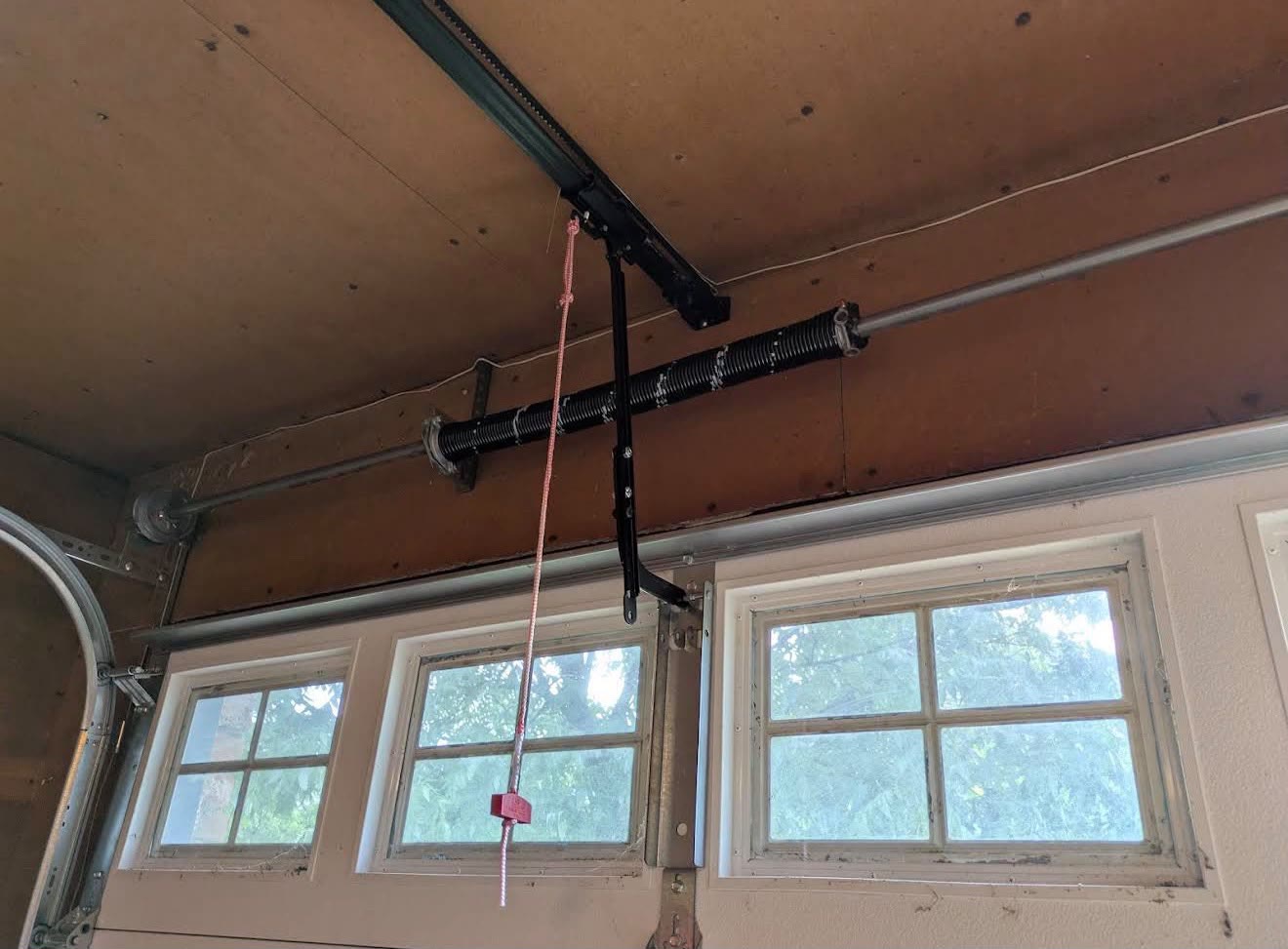
Each section of the door carries rollers on both ends, and those rollers ride inside a channel of formed steel. The vertical track holds the door against the opening; the curve at the top transitions the door onto the horizontal track that carries it back under the ceiling. The track is not structural in the sense of carrying the door's weight, since the cables and springs do that. What it does is constrain the door's path, which means it only takes a small displacement, one roller out of the channel, for the whole assembly to lose its geometry.
Why forcing an off track door makes it worse
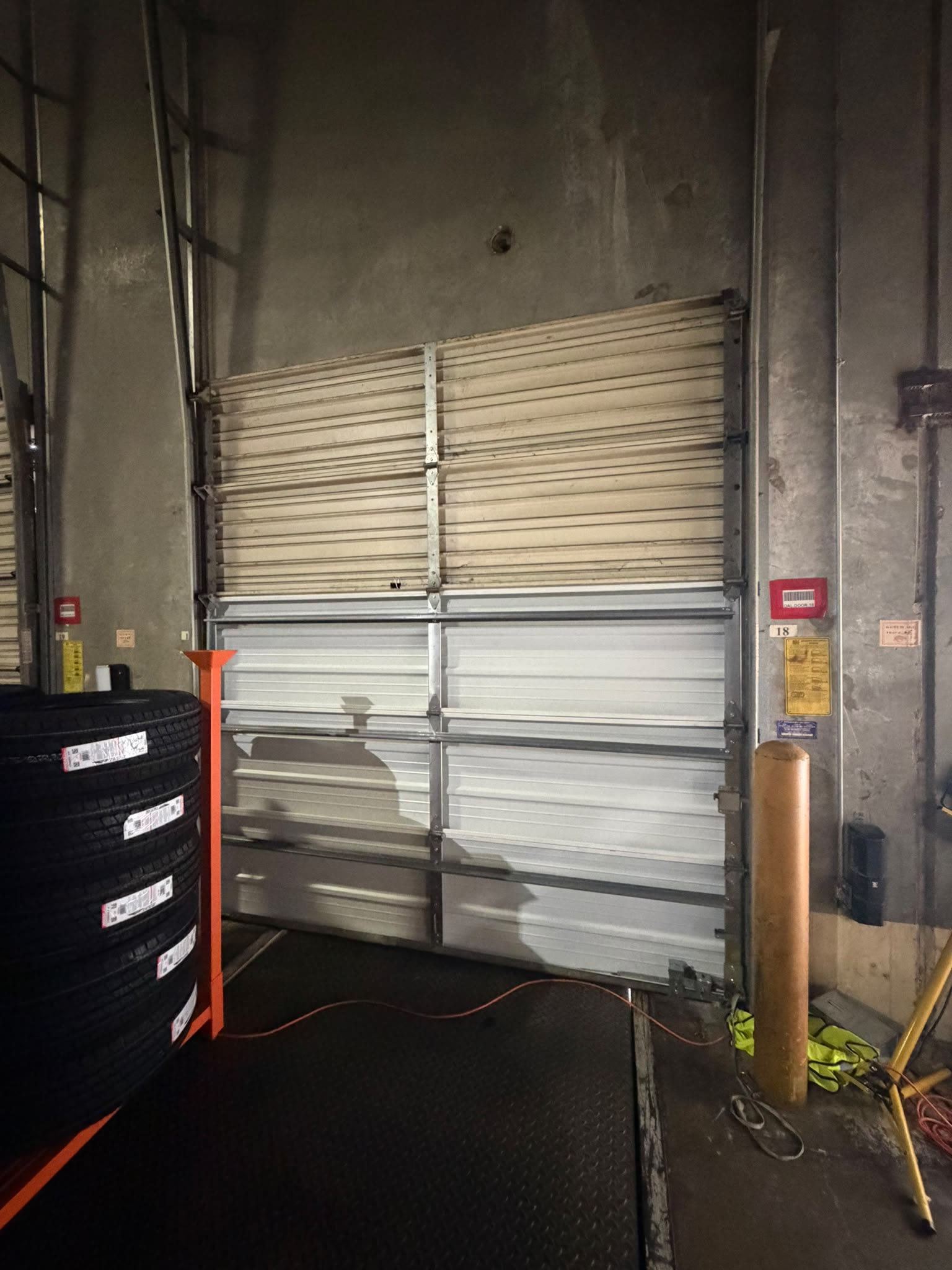
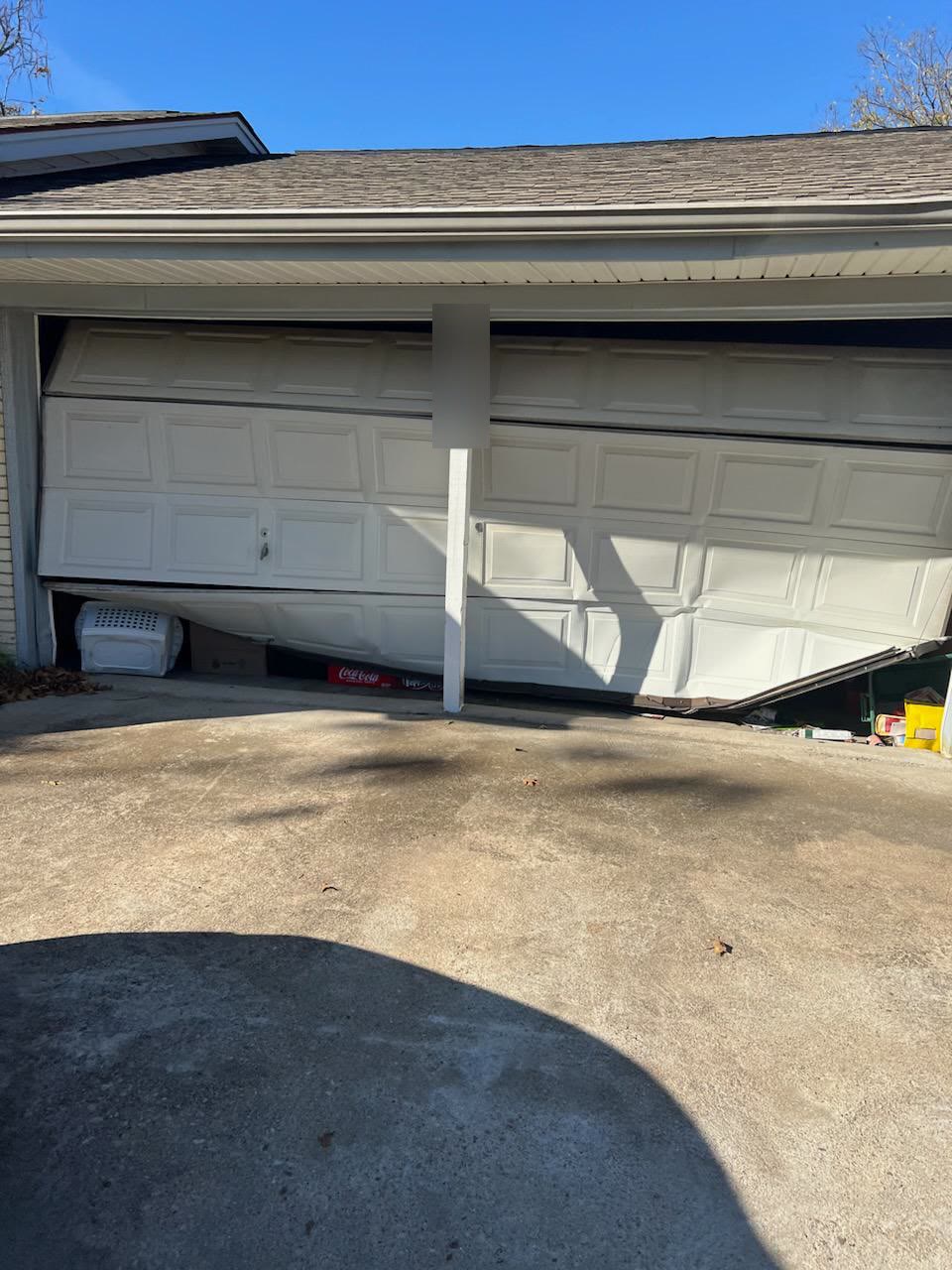
Once a roller is outside the channel, the load path through the door has changed. Running the opener at that point applies force to a door that is no longer free to move where the mechanism expects. What gives way is whatever is weakest: the track folds where the roller is pressing on the outside of it, a hinge tears out of the section leaving elongated holes in the steel, a section creases along its length, or the top section bends where the opener arm attaches. Each of those turns a roller and alignment job into a hardware and section job. The single most useful thing a homeowner can do is stop pressing the button.
The five causes worth ruling out
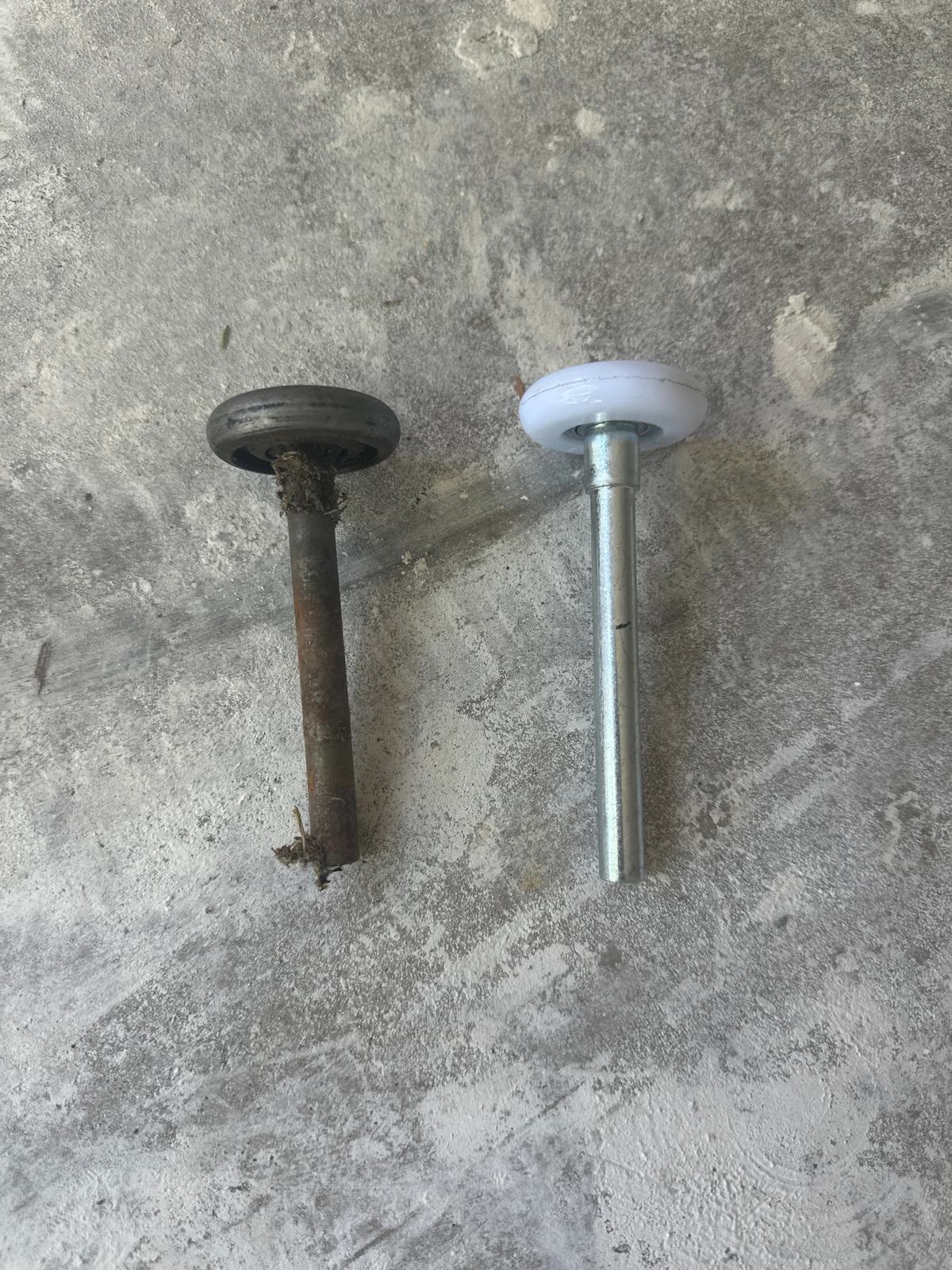
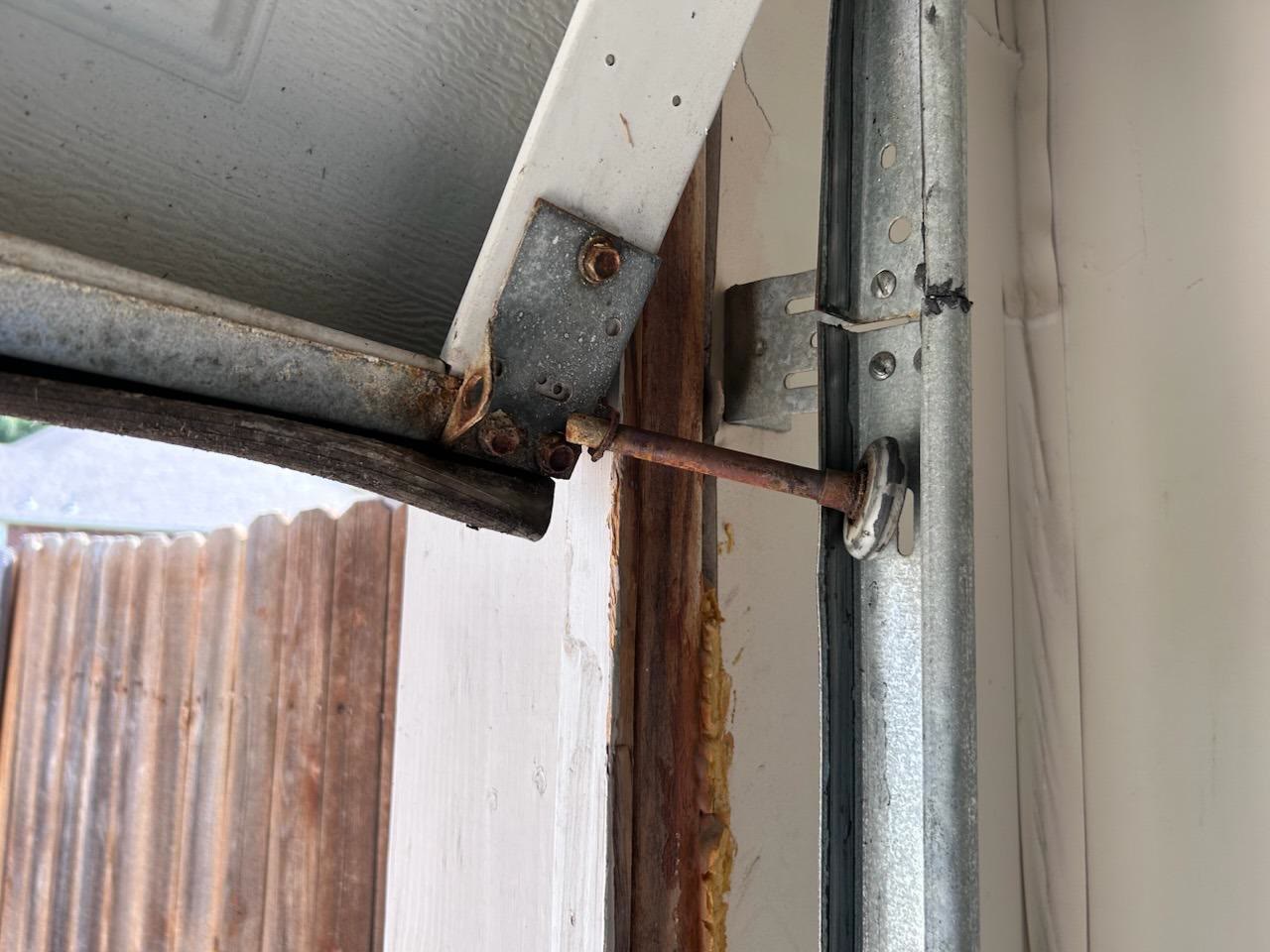
First, cable failure or a cable off its drum, which lets one side of the door drop and pulls the rollers sideways. Second, roller wear, where the stem has worn or the wheel has broken up and the roller no longer sits properly in the channel. Third, loose track fasteners: the lag bolts and brackets holding the track to the jamb and ceiling loosen from vibration over years, the rail shifts outward, and the roller finds the gap. Fourth, bent or damaged track from an earlier impact that was never corrected. Fifth, direct impact, which is the most common single trigger, usually a vehicle or an object left in the opening. The repair is not complete until one of those five has been identified.
What we can straighten and what we replace
Track that is bowed or slightly splayed can often be trued back to alignment, refastened, and returned to service, and that is a normal outcome. Track that has been kinked, meaning the steel has folded and creased rather than flexed, is finished. The crease is a permanent narrowing of the channel, the roller will catch there on every cycle, and it will pull the door out again. The same logic applies to end stiles and hinge plates: metal that has yielded does not return to its original geometry. We will tell you which category each damaged part falls into rather than quietly straightening something that will not hold.
Realigning takes the load off first
Correct sequence matters. The door gets secured so it cannot fall. The opener is disconnected. Where the counterbalance is still loaded and the door is jammed, spring tension is released before the sections are moved, because a jammed door with wound springs is holding energy that will express itself the moment the obstruction clears. Rollers are then walked back into the channel one at a time, usually starting from the section closest to correct. Only after every roller is captured and the rail is trued does the door get run by hand, and only after it runs smoothly by hand does the opener go back on.
After the door is back, the settings need revisiting
A door that has been off track has usually had its cable tension disturbed, and often its balance. Once the mechanical alignment is restored, the drums get reset to equal tension, the spring turns are checked against a hand balance test, and the opener's travel limits and force settings are re established for the corrected door. Skipping that last part is common and it is why some doors come back off track a few weeks later: the opener is still calibrated for a door that no longer exists.
Please do not attempt this one yourself
A torsion spring holds several hundred pounds of stored energy even when the door is down. Releasing that energy without the correct winding bars is how people lose fingers. If a spring has snapped, leave the door closed and call us.
Signs you need this
- Rollers are visibly sitting outside the track channel.
- A section of the door is canted at an angle to the rest.
- The door is jammed and will move neither up nor down.
- There is a visible bend, bow, or crease in the vertical or horizontal track.
- The door came down on an object and has not run right since.
- Loud banging or a metallic pop during travel, followed by the door stopping.
- A gap has opened between the door and the jamb on one side.
- The door leans out at the bottom or has separated from the wall at the top.
Book this service
Call (469) 891-6883 or request a visit online.
The visit
What we actually do
Stabilize the door
Before anything is adjusted, the door is clamped or blocked so it cannot drop or shift further, and the opener is disconnected so nobody can operate it mid repair.
Find the cause, not just the symptom
We check cables and drums, roller condition, track fastener tightness, rail alignment, and evidence of impact. The door does not go back into service until we know which of those put it out.
Release load where required
If the door is jammed with the springs still wound, tension is unwound with winding bars before sections are moved, so that clearing the jam does not release stored energy suddenly.
Reset rollers and true the rail
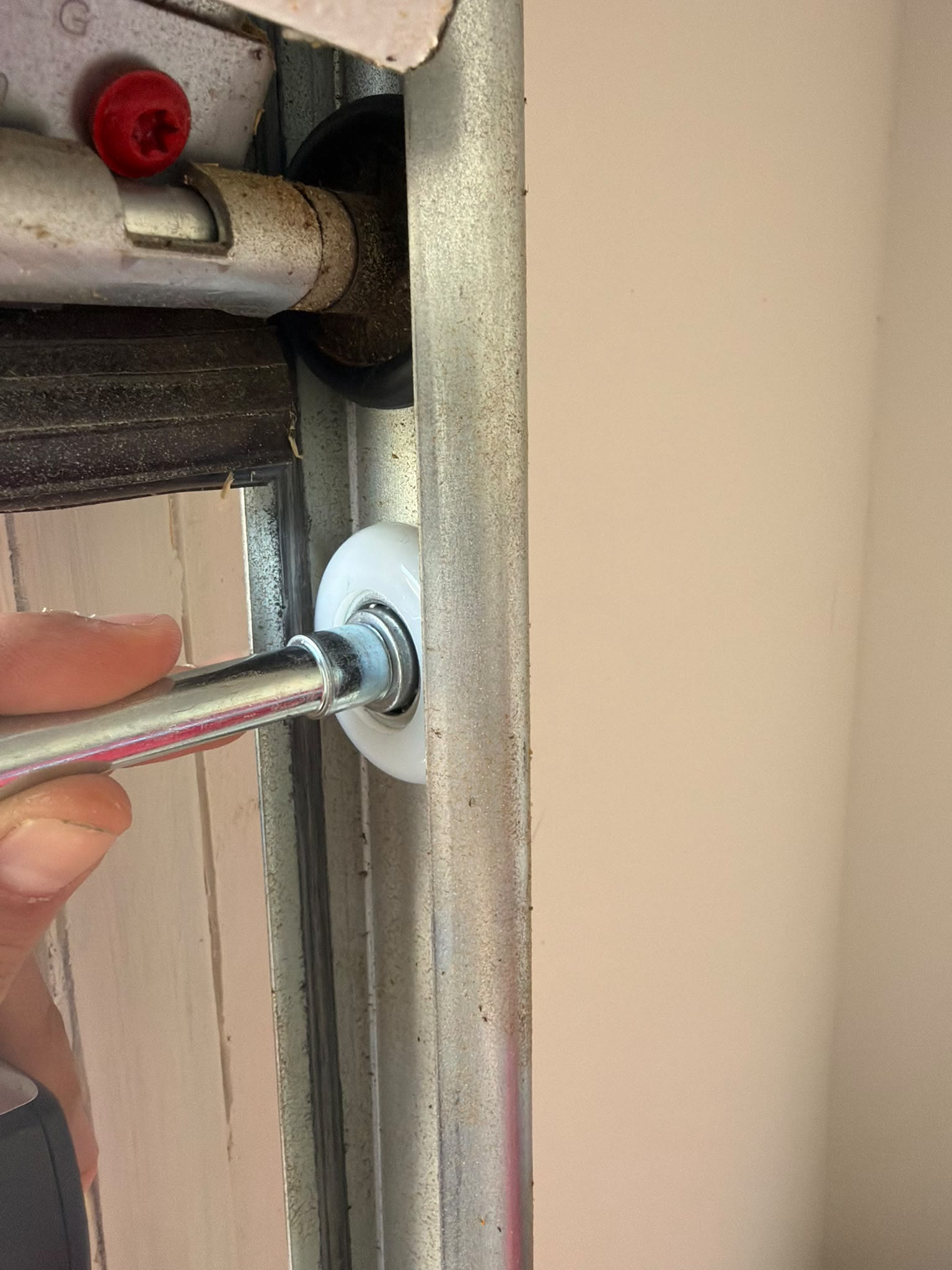
Rollers are returned to the channel section by section. Bowed track is straightened and refastened to solid framing; kinked track is replaced. Worn rollers and damaged hinges are replaced rather than reused.
Rebalance and recommission
Cable tension is equalized at the drums, spring turns are verified against a hand balance test, the door is cycled by hand, and then the opener is reconnected with travel, force, and safety reversal reset.
On the job
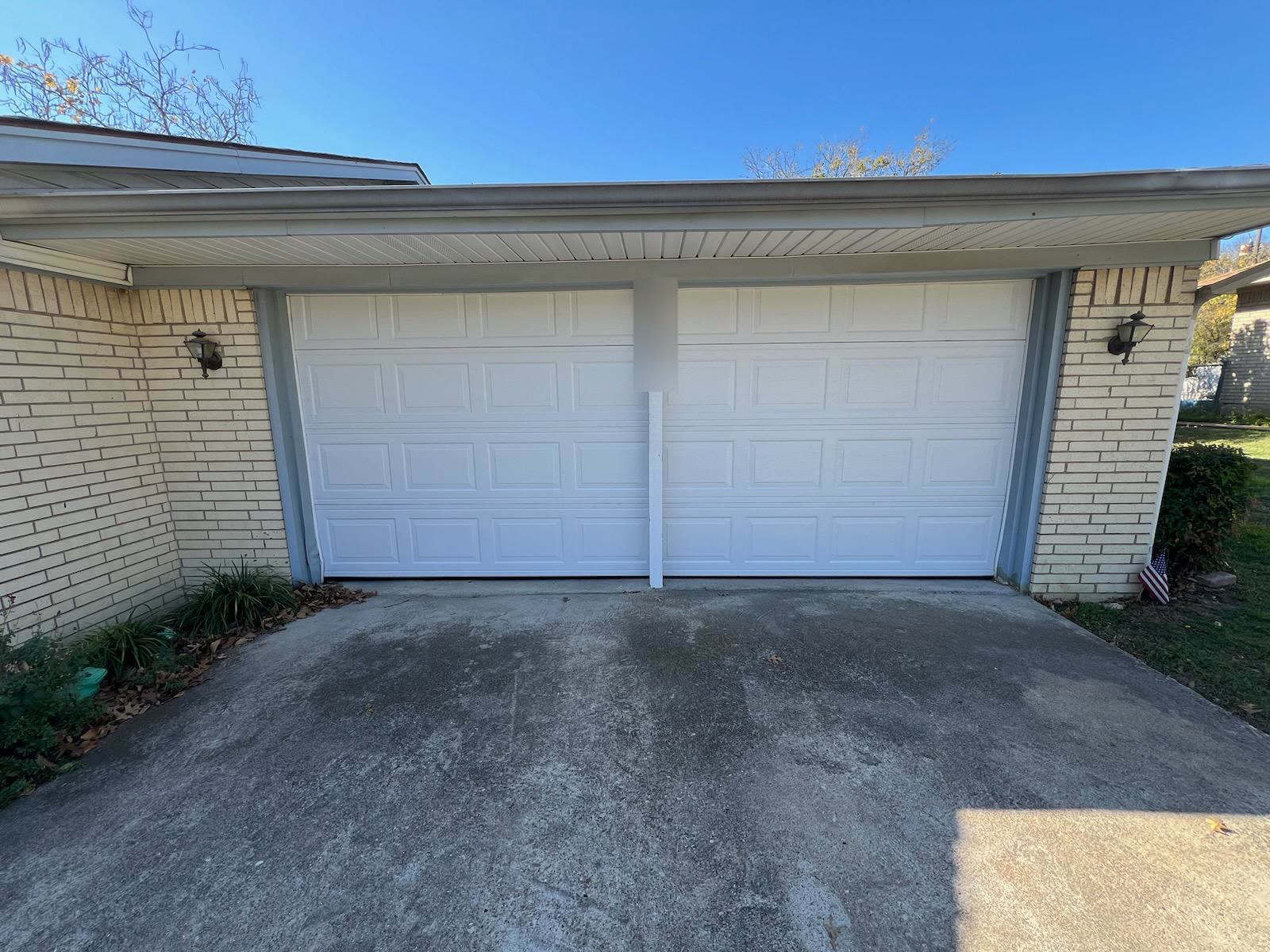
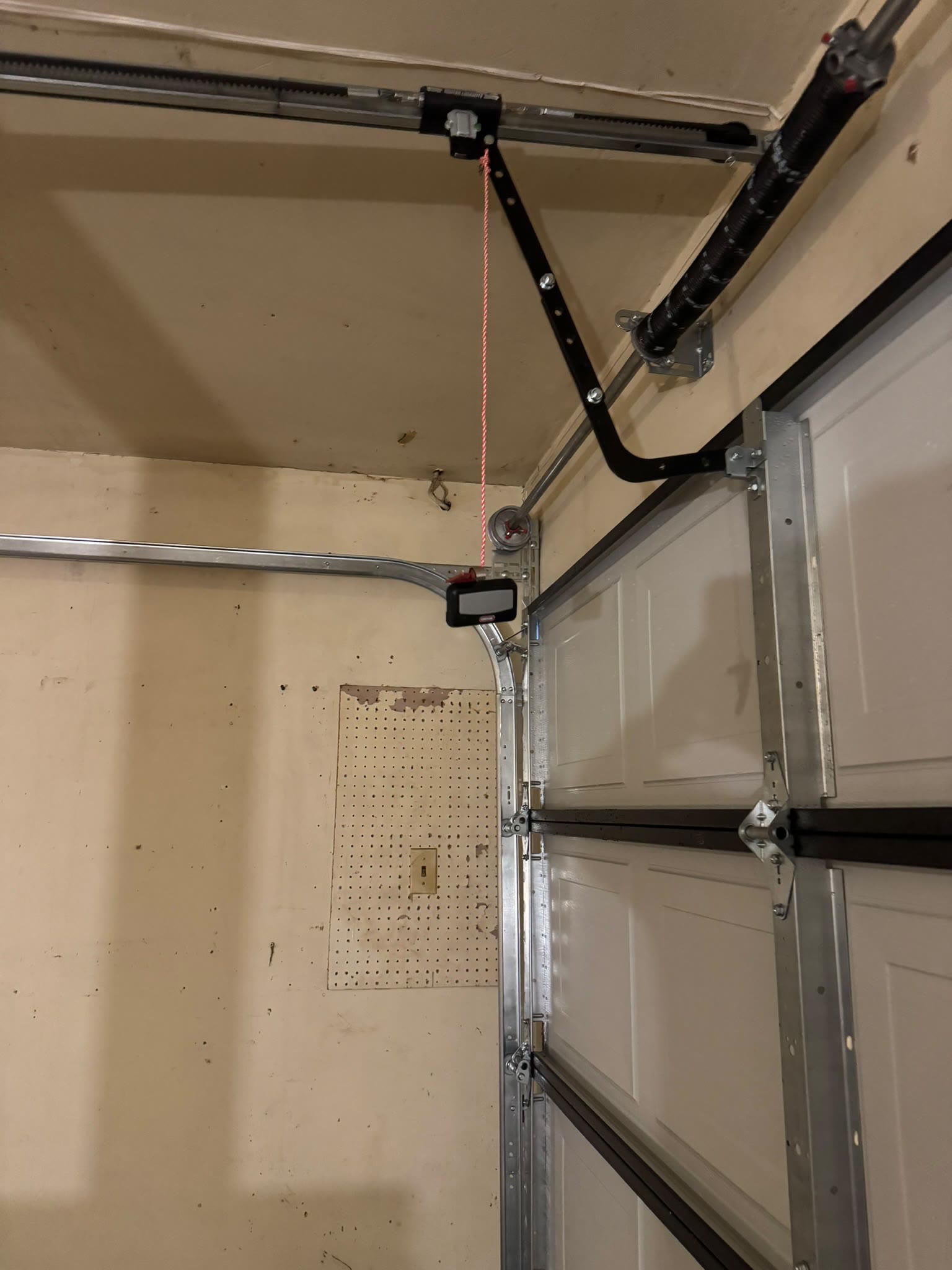
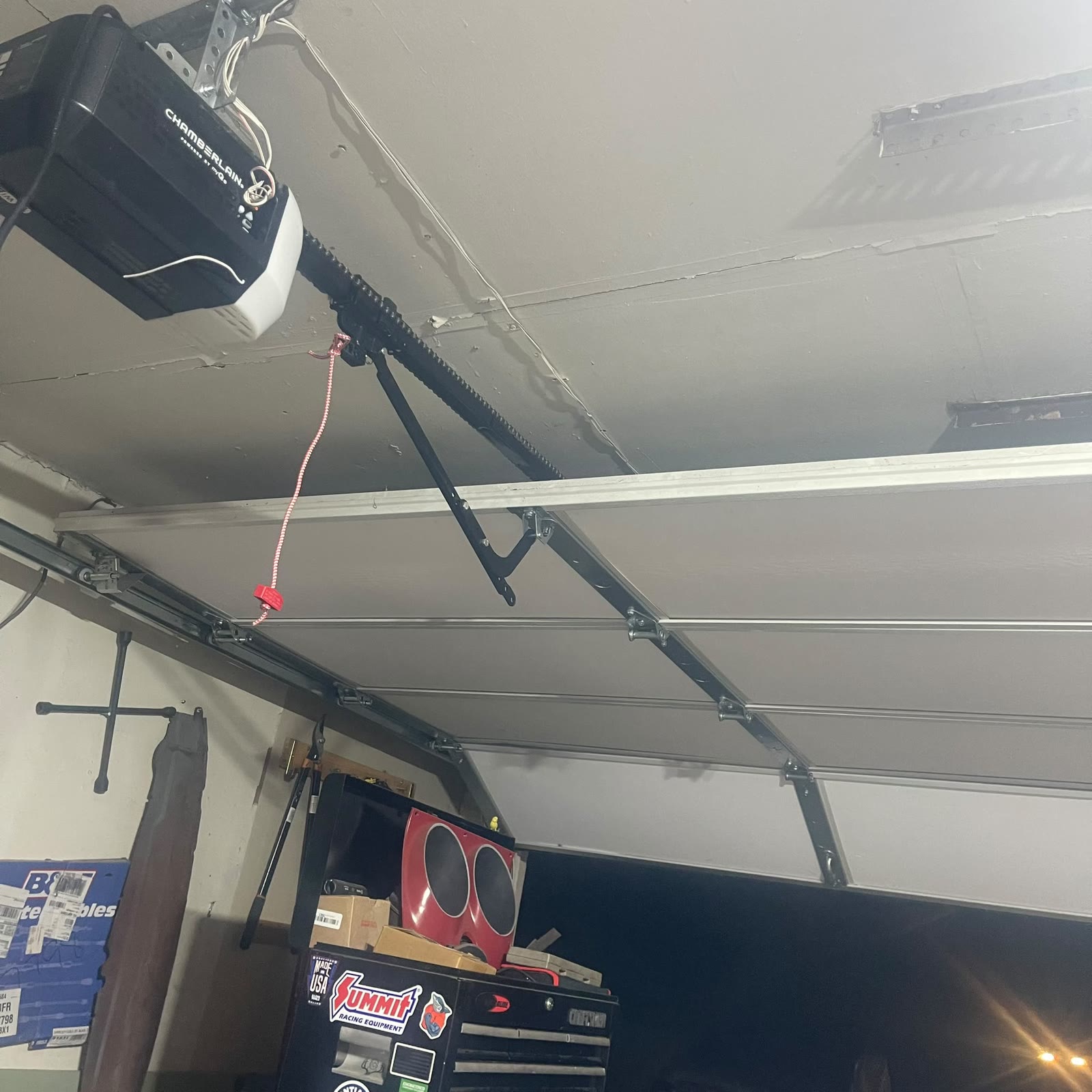
Off-Track Repair in the field
Questions
Off-Track Repair FAQs
Can I put the door back on the track myself?
We would not recommend it on a door that is jammed or that has lost a cable, because the springs are still holding energy and the door is not constrained the way it normally is. If a single roller has popped out near the top with everything else intact and the door is not under strain, that is a more manageable situation, but the honest answer is that most people call after the first attempt rather than before it.
Is my door ruined?
Usually not. In most off track calls the sections are intact and the repair is rollers, alignment, and whatever caused the derailment. Sections get written off when the steel has creased along its length or when hinge plates have torn out and left elongated, deformed holes. We will show you which parts have yielded and which have not.
How long does the repair take?
Straightforward derailments with sound track are generally one to two hours. Add time when track has to be replaced, when a cable failure caused it, or when hinges and rollers have to be replaced across multiple sections. Doors with creased sections take longer because alignment has to be verified section by section.
Why did this happen at all?
Most often something interrupted the door's travel, whether that was an object in the opening or a vehicle. After that, the common causes are a cable that slipped its drum, worn rollers, and track brackets that have loosened over years of vibration and let the rail move. It is rarely random, which is why finding the cause is part of the repair.
Can I still use the opener until you arrive?
No. This is the situation where continuing to operate the door reliably converts a modest repair into an expensive one, and where the door can genuinely fall. Leave it where it is, keep vehicles and people out from under it, and if the opening cannot be secured, tell us when you call and we will treat it accordingly.
Will the door go off track again after this?
Not if the cause was found and corrected. Doors that repeat are almost always doors where the rollers were reseated without anyone addressing the loose track bracket, the worn roller stem, or the drum tension that produced the derailment in the first place.
Does homeowners insurance cover this?
Sometimes, when the cause was a vehicle impact or a covered event rather than wear. We are not in a position to interpret your policy, but we can provide a written description of the damage and its cause, which is generally what an adjuster needs to make that determination.
Where
Off-Track Repair near you
Talk to a technician now
Getting a derailed door back into its tracks safely, then correcting whatever put it there so it does not repeat.