Grand Prairie, Dallas County
Off-Track Repair in Grand Prairie, TX
The most common trigger we see is contact. Backing into a partly open door, or closing the door onto a bicycle, a trash can, or a piece of lumber, stops the bottom section while the counterbalance keeps working. In Grand Prairie that combination pops rollers out and slackens a cable in the same instant.
- Same-day service available
- 10+ years serving Dallas
- Free on-site estimates
- 15% off current repairs
Why forcing an off track door makes it worse
Once a roller is outside the channel, the load path through the door has changed. Running the opener at that point applies force to a door that is no longer free to move where the mechanism expects. What gives way is whatever is weakest: the track folds where the roller is pressing on the outside of it, a hinge tears out of the section leaving elongated holes in the steel, a section creases along its length, or the top section bends where the opener arm attaches. Each of those turns a roller and alignment job into a hardware and section job. The single most useful thing a homeowner can do is stop pressing the button.
The five causes worth ruling out
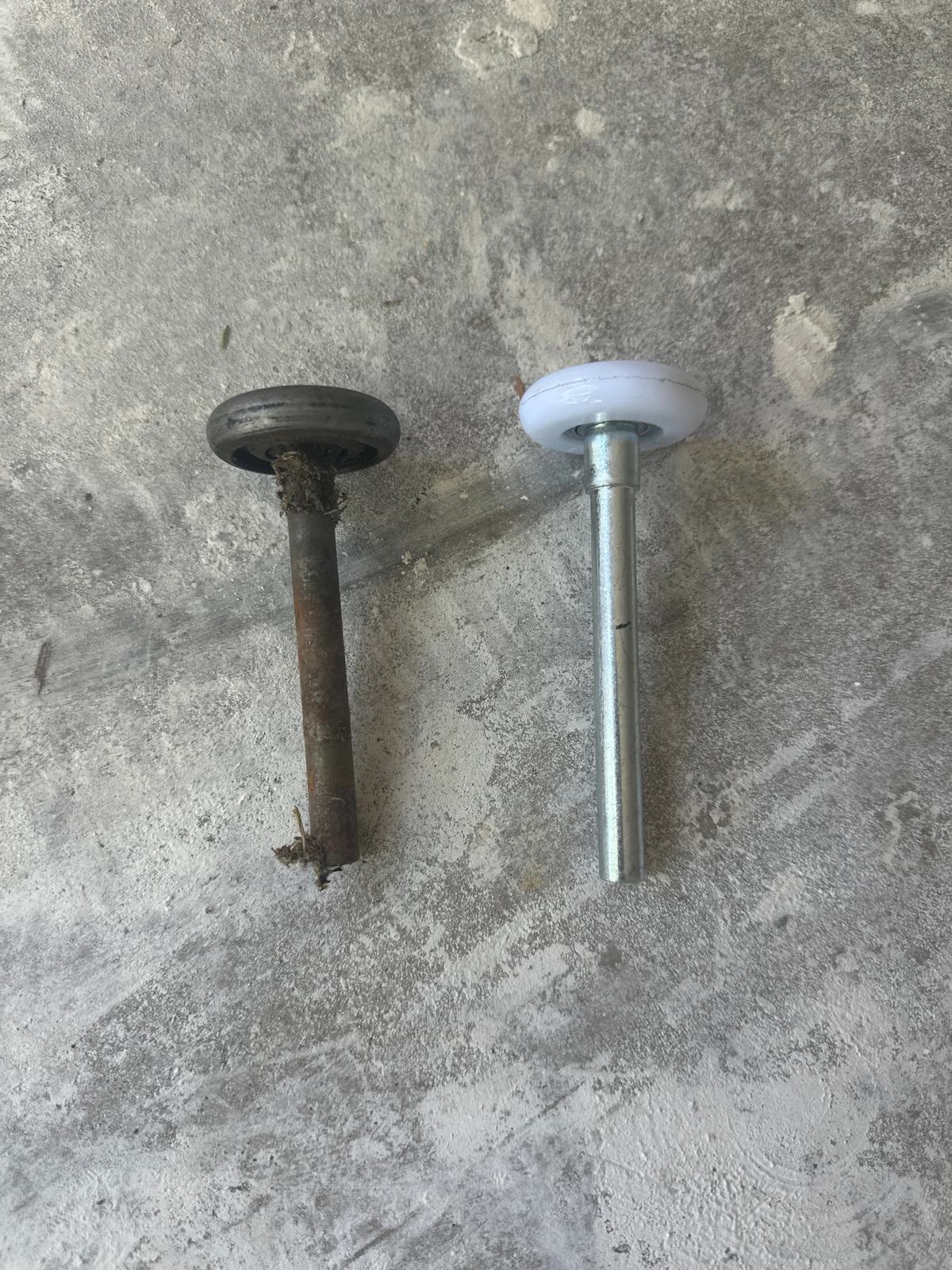
First, cable failure or a cable off its drum, which lets one side of the door drop and pulls the rollers sideways. Second, roller wear, where the stem has worn or the wheel has broken up and the roller no longer sits properly in the channel. Third, loose track fasteners: the lag bolts and brackets holding the track to the jamb and ceiling loosen from vibration over years, the rail shifts outward, and the roller finds the gap. Fourth, bent or damaged track from an earlier impact that was never corrected. Fifth, direct impact, which is the most common single trigger, usually a vehicle or an object left in the opening. The repair is not complete until one of those five has been identified.
Realigning takes the load off first
Correct sequence matters. The door gets secured so it cannot fall. The opener is disconnected. Where the counterbalance is still loaded and the door is jammed, spring tension is released before the sections are moved, because a jammed door with wound springs is holding energy that will express itself the moment the obstruction clears. Rollers are then walked back into the channel one at a time, usually starting from the section closest to correct. Only after every roller is captured and the rail is trued does the door get run by hand, and only after it runs smoothly by hand does the opener go back on.
Off-Track Repair for Grand Prairie homes
A long north-south city with 1970s starter homes near SH-180 and 2000s-2010s master-planned sections south of I-20, so double-wide 16-foot doors and modern belt-drive openers are common on the south end only.
Our route through Grand Prairie takes in 75050, 75051, 75052 and 75054.
We are in Lake Parks, Westchester and Grand Peninsula most weeks.
Anywhere around Lone Star Park is a short run for us.
Grand Prairie is a Dallas County community of roughly 207,331.
Please do not attempt this one yourself
A torsion spring holds several hundred pounds of stored energy even when the door is down. Releasing that energy without the correct winding bars is how people lose fingers. If a spring has snapped, leave the door closed and call us.
What you are probably seeing
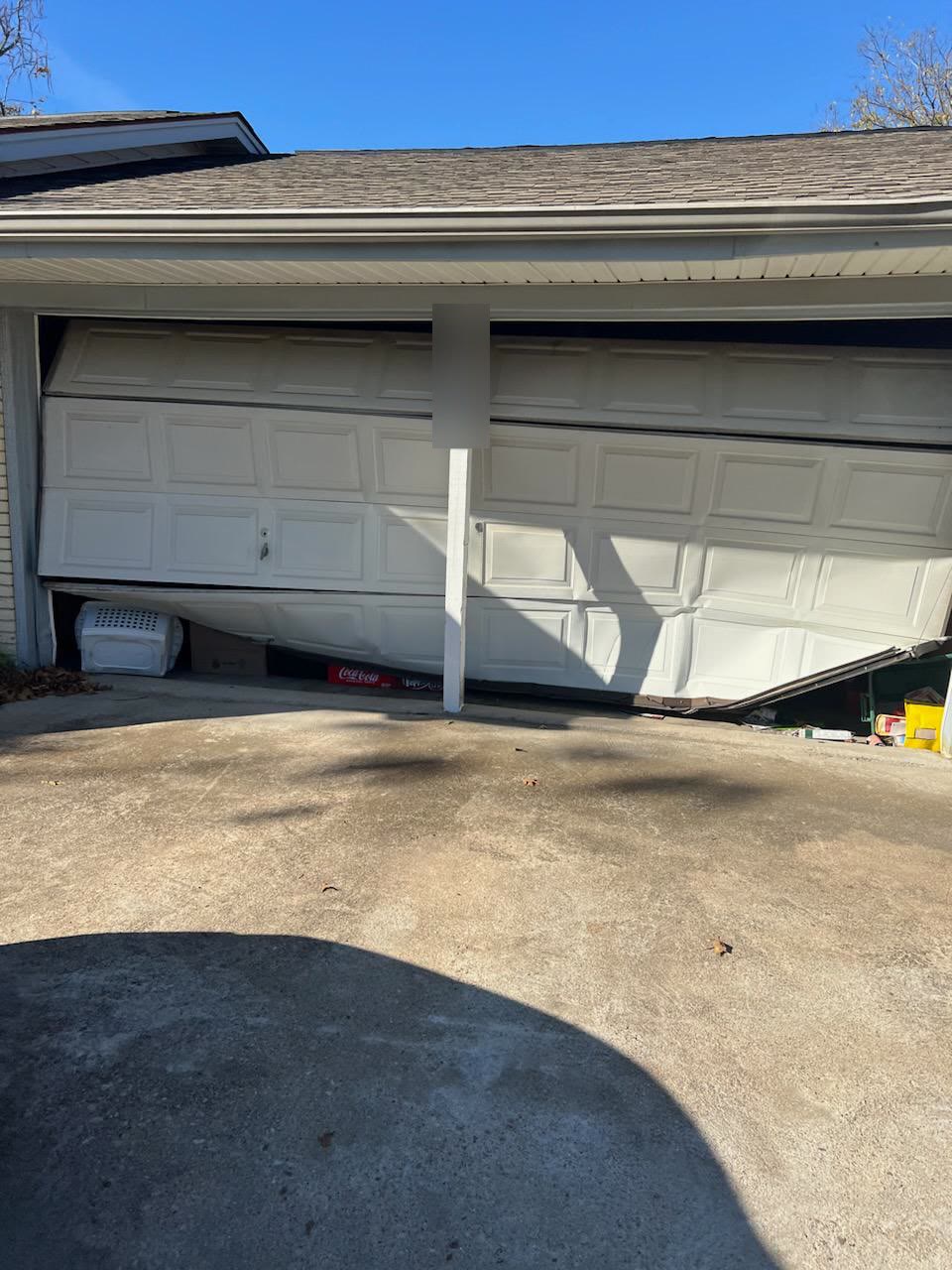
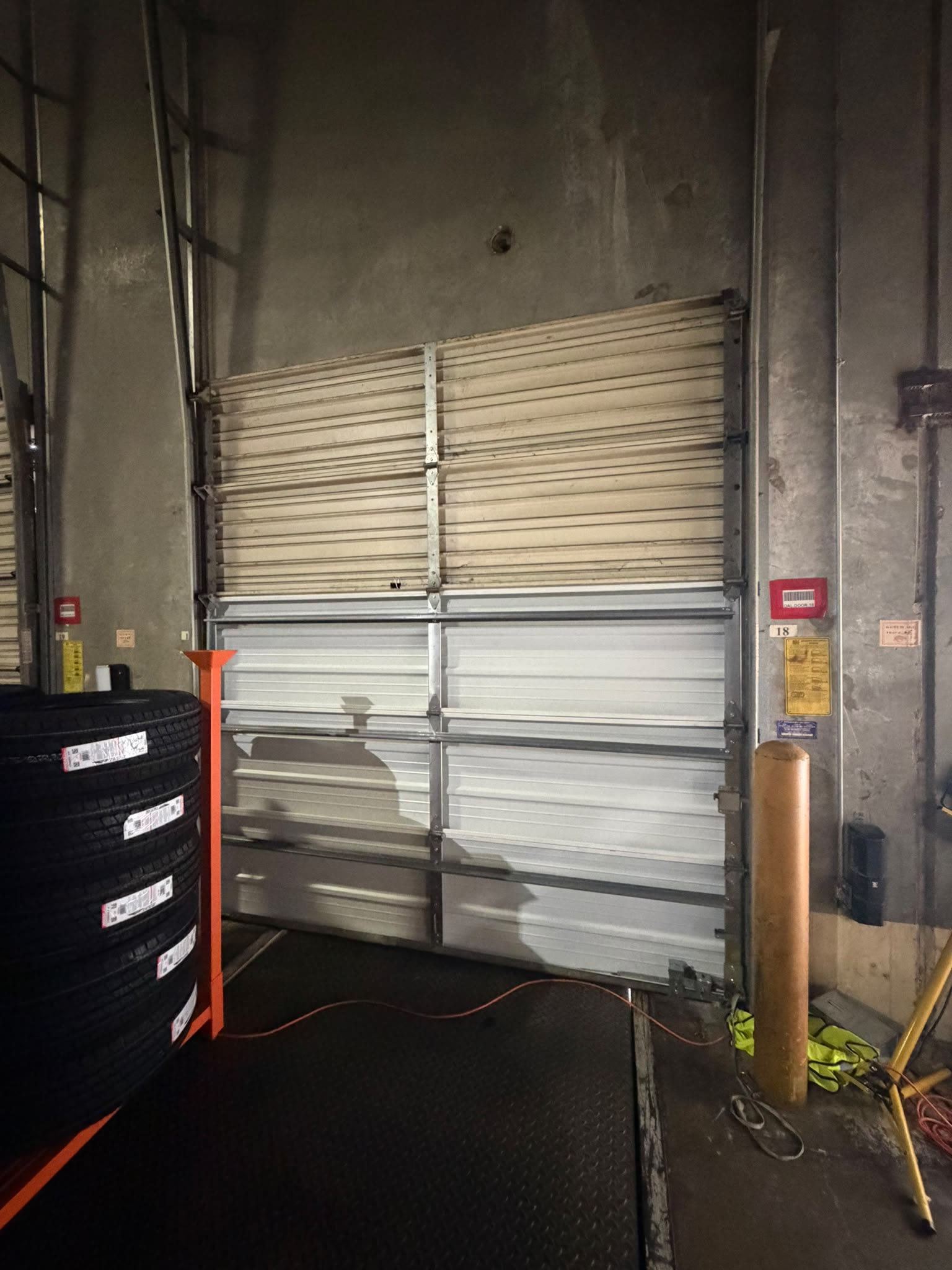
- A section of the door is canted at an angle to the rest.
- The door is jammed and will move neither up nor down.
- There is a visible bend, bow, or crease in the vertical or horizontal track.
- The door came down on an object and has not run right since.
- Loud banging or a metallic pop during travel, followed by the door stopping.
Grand Prairie service
Call (469) 891-6883 or request a visit.
The visit
How a Grand Prairie call runs
Stabilize the door
Before anything is adjusted, the door is clamped or blocked so it cannot drop or shift further, and the opener is disconnected so nobody can operate it mid repair.
Find the cause, not just the symptom
We check cables and drums, roller condition, track fastener tightness, rail alignment, and evidence of impact. The door does not go back into service until we know which of those put it out.
Release load where required
If the door is jammed with the springs still wound, tension is unwound with winding bars before sections are moved, so that clearing the jam does not release stored energy suddenly.
Reset rollers and true the rail
Rollers are returned to the channel section by section. Bowed track is straightened and refastened to solid framing; kinked track is replaced. Worn rollers and damaged hinges are replaced rather than reused.
Rebalance and recommission
Cable tension is equalized at the drums, spring turns are verified against a hand balance test, the door is cycled by hand, and then the opener is reconnected with travel, force, and safety reversal reset.
On the job
Off-Track Repair in the field
Questions
Off-Track Repair in Grand Prairie
Can I put the door back on the track myself?
We would not recommend it on a door that is jammed or that has lost a cable, because the springs are still holding energy and the door is not constrained the way it normally is. If a single roller has popped out near the top with everything else intact and the door is not under strain, that is a more manageable situation, but the honest answer is that most people call after the first attempt rather than before it.
Is my door ruined?
Usually not. In most off track calls the sections are intact and the repair is rollers, alignment, and whatever caused the derailment. Sections get written off when the steel has creased along its length or when hinge plates have torn out and left elongated, deformed holes. We will show you which parts have yielded and which have not.
Why did this happen at all?
Most often something interrupted the door's travel, whether that was an object in the opening or a vehicle. After that, the common causes are a cable that slipped its drum, worn rollers, and track brackets that have loosened over years of vibration and let the rail move. It is rarely random, which is why finding the cause is part of the repair.
Can I still use the opener until you arrive?
No. This is the situation where continuing to operate the door reliably converts a modest repair into an expensive one, and where the door can genuinely fall. Leave it where it is, keep vehicles and people out from under it, and if the opening cannot be secured, tell us when you call and we will treat it accordingly.
Does homeowners insurance cover this?
Sometimes, when the cause was a vehicle impact or a covered event rather than wear. We are not in a position to interpret your policy, but we can provide a written description of the damage and its cause, which is generally what an adjuster needs to make that determination.
Need this handled today?
Off-Track Repair in Grand Prairie and across Dallas County.