Service
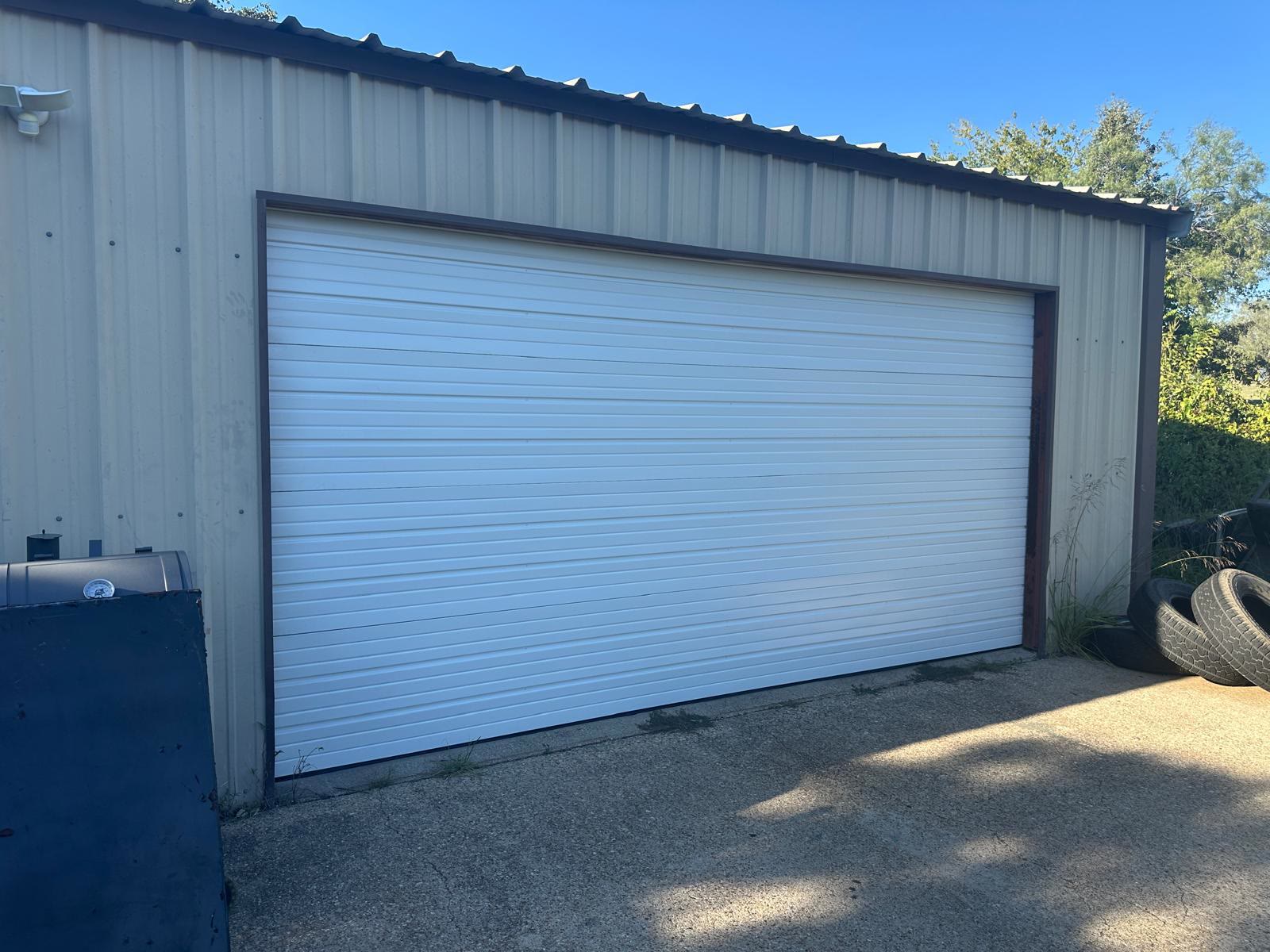
Commercial Garage Doors in Dallas & the east metroplex
Rolling steel and sectional doors on commercial buildings weigh far more than residential doors and often operate over the heads of employees and equipment. A curtain that binds or a counterbalance that has lost tension is a genuine hazard in a working building, and we treat it that way on every Dallas call.
- Same-day service available
- 10+ years serving Dallas
- Free on-site estimates
- 15% off current repairs
Sectional, rolling steel, and what changes between them
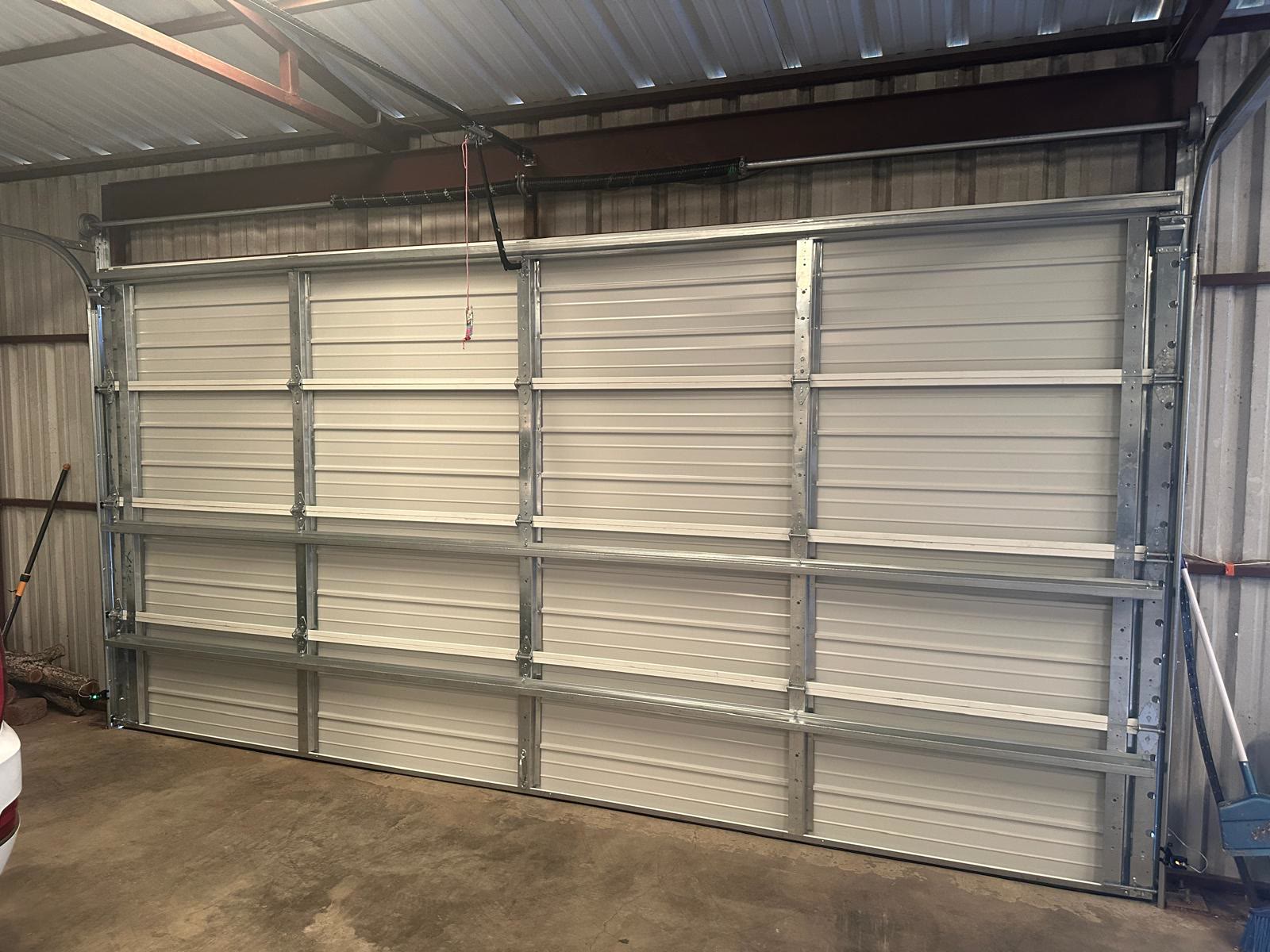
A commercial sectional door is mechanically a heavier version of a residential one: hinged sections, rollers in track, a torsion counterbalance on a shaft above the opening. A rolling steel door is a different machine. Interlocking steel slats coil around a barrel above the opening, the counterbalance springs live inside that barrel, and there is no track above the header at all, which is why rolling doors suit openings with no ceiling room and buildings where the area above the door is used. Servicing the counterbalance on a rolling door means working inside the barrel, and adjusting it is a different procedure with different tooling than winding a torsion shaft.
Duty cycle is the specification that matters most
A spring is rated in cycles, where one cycle is a full open and close. Standard residential springs are commonly rated around 10,000 cycles. A door at a service counter or a busy dock can run thirty to fifty cycles a day, which consumes 10,000 cycles in roughly eight months to a year. High cycle spring packages, built with larger wire and longer springs on the same shaft, are commonly available in 25,000, 50,000, and 100,000 cycle ratings. Specifying up front costs more per spring and much less per year, and it also removes the downtime that comes with each unplanned replacement.
Commercial operators are a different class of equipment
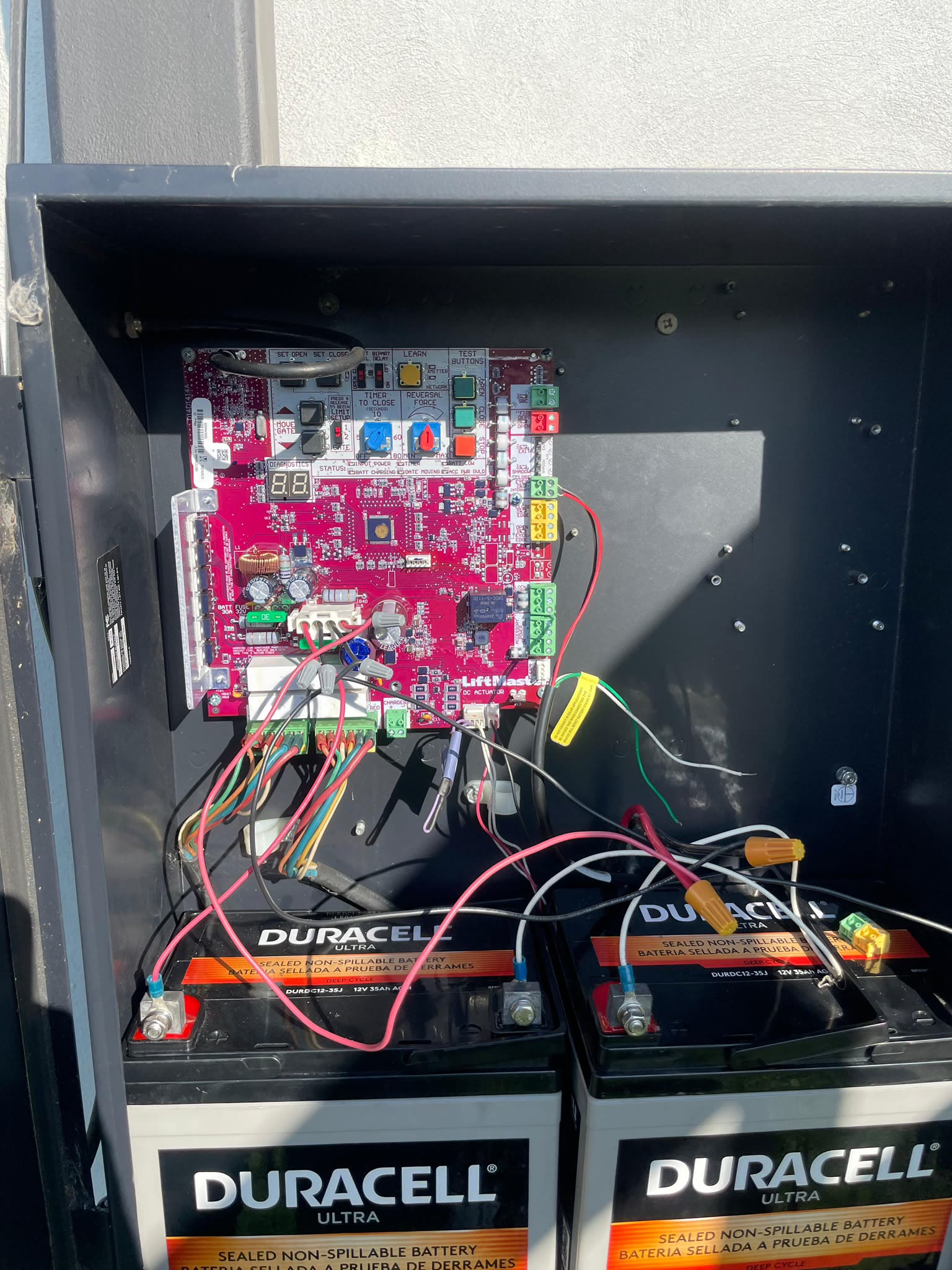
Residential openers are trolley units sized for a light door and intermittent use. Commercial doors typically run a jackshaft operator mounted on the wall beside the shaft, a hoist operator with a manual chain fallback so the door can be moved during a power outage, or a trolley operator built for continuous duty. Control is generally a three button open, close, and stop station rather than a remote, often with additional inputs for loop detectors, pull cords, card readers, or push buttons at multiple positions. The relevant setting is the operator's control type, which determines whether the door closes with a momentary press or requires constant pressure, and that choice has real safety consequences depending on what moves through the opening.
Impact damage and what it does beyond the dent
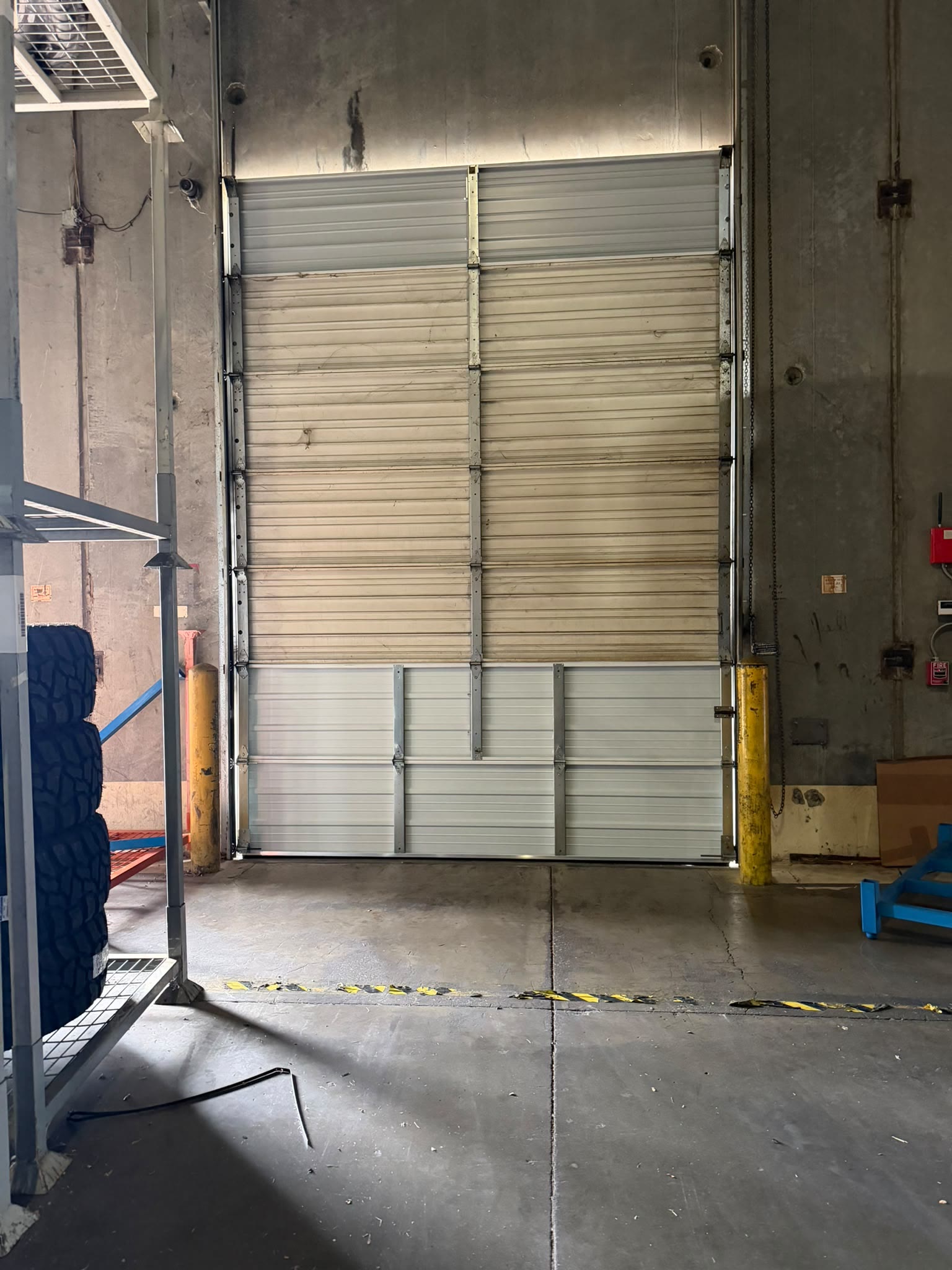
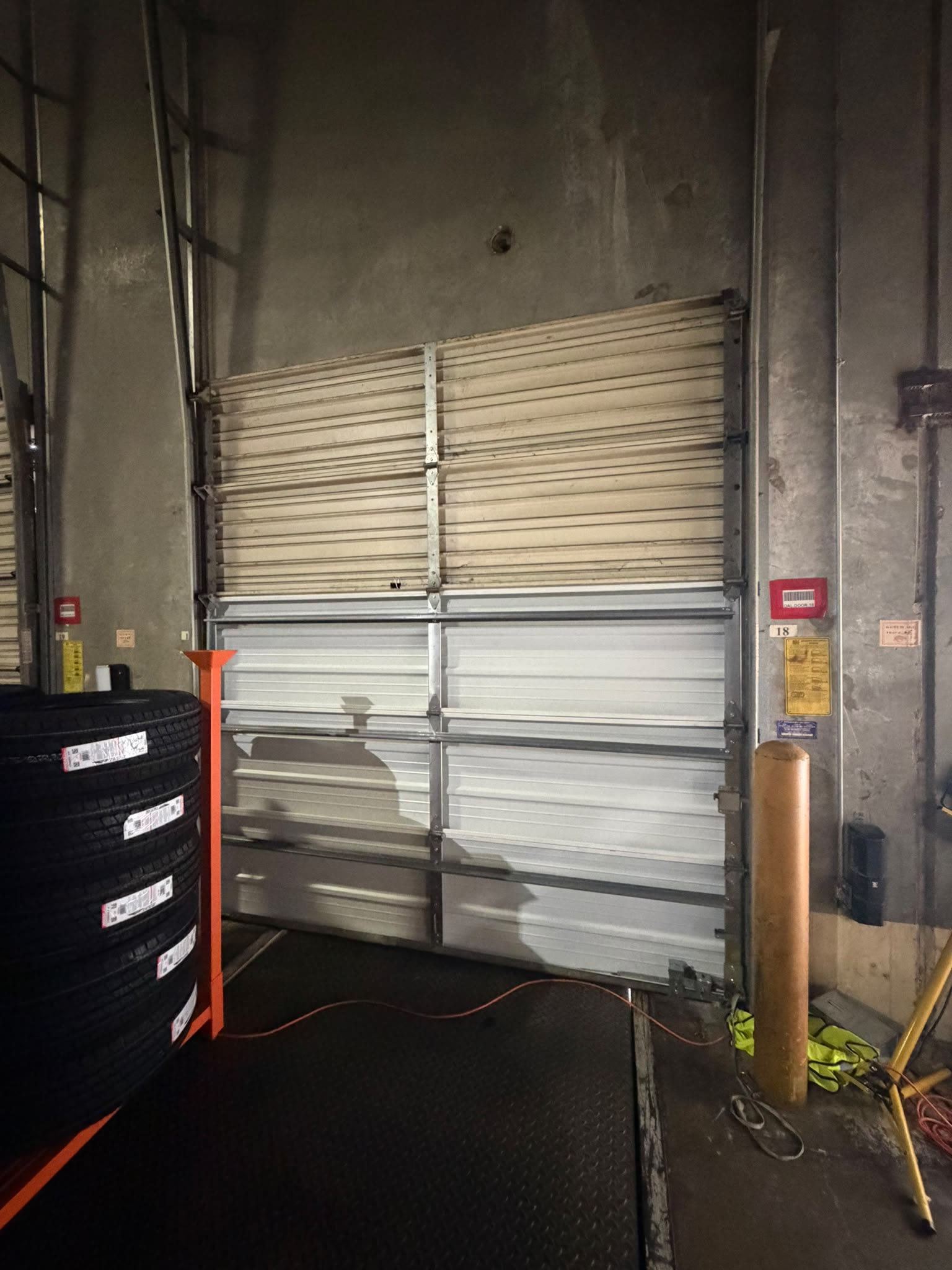
The most common structural damage on a commercial door comes from equipment contact: a forklift mast, a pallet corner, a trailer backing in short. The visible dent is rarely the problem. Impact on a sectional door bends the end stile or the track it rides in, and the door will bind from that point on until both are corrected. Impact on a rolling steel curtain bends slats, and a bent slat will not coil evenly on the barrel, which throws the whole curtain off and can jam it at the guides. Straightening a slat rather than replacing it is a short term measure that usually returns as a second call.
Fire doors have obligations a normal door does not
If your building has rated fire doors, typically rolling steel with a fusible link that releases the curtain on heat, those assemblies are subject to inspection and drop testing requirements under NFPA 80, and the testing has to be documented. This is not the same thing as a service call. If you are not certain whether an opening in your building is a rated assembly, the label on the door or the guide will normally say so, and it is worth resolving before an inspection does it for you.
Planned service beats emergency service on cost
For a building with several openings, the practical approach is to categorize them. Critical openings, meaning the ones where downtime stops revenue, justify high cycle hardware, an annual or semiannual service interval, and in some cases a spare spring set held on site. Secondary openings can run on inspection alone. That triage takes one walkthrough and turns an unpredictable line item into a scheduled one.
Signs you need this
- The door binds or stalls partway up and needs manual help to finish the cycle.
- A rolling steel curtain no longer coils evenly and one edge rides ahead of the other.
- The operator hums or trips a breaker rather than moving the door.
- Spring replacement on the same opening has become an annual or twice yearly event.
- Slats or end stiles are visibly bent from equipment contact.
- The three button station requires repeated presses, or the door stops responding at one station but not another.
- The door drops faster than it lifts, which indicates the counterbalance is no longer holding the curtain weight.
- Guides or track show bright wear marks where the door has been running out of alignment.
Book this service
Call (469) 891-6883 or request a visit online.
The visit
What we actually do
Site assessment
We identify door type, size, weight, counterbalance configuration, operator type, control scheme, and the daily cycle count. The cycle count is the number that determines whether the current hardware was ever right for the application.
Failure isolation
Door, counterbalance, and operator are tested separately. The door is moved manually where it is safe to do so, the counterbalance is checked for the ability to hold the curtain or sections at rest, and the operator is bench checked for control, limit, and motor faults.
Scope and scheduling
You get the repair scope, the parts lead time, and the realistic downtime window in writing. Where work can be staged so the opening stays usable between visits, we say so.
Repair or replacement
Work is performed in the agreed window, including before or after operating hours. Counterbalance work is done with the door secured and the springs unwound in a controlled sequence before any bracket is loosened.
Commission and document
The door is cycled under the operator, limits and safety devices are verified, and you receive a record of what was replaced, the cycle rating of any springs installed, and the recommended service interval for that opening.
On the job
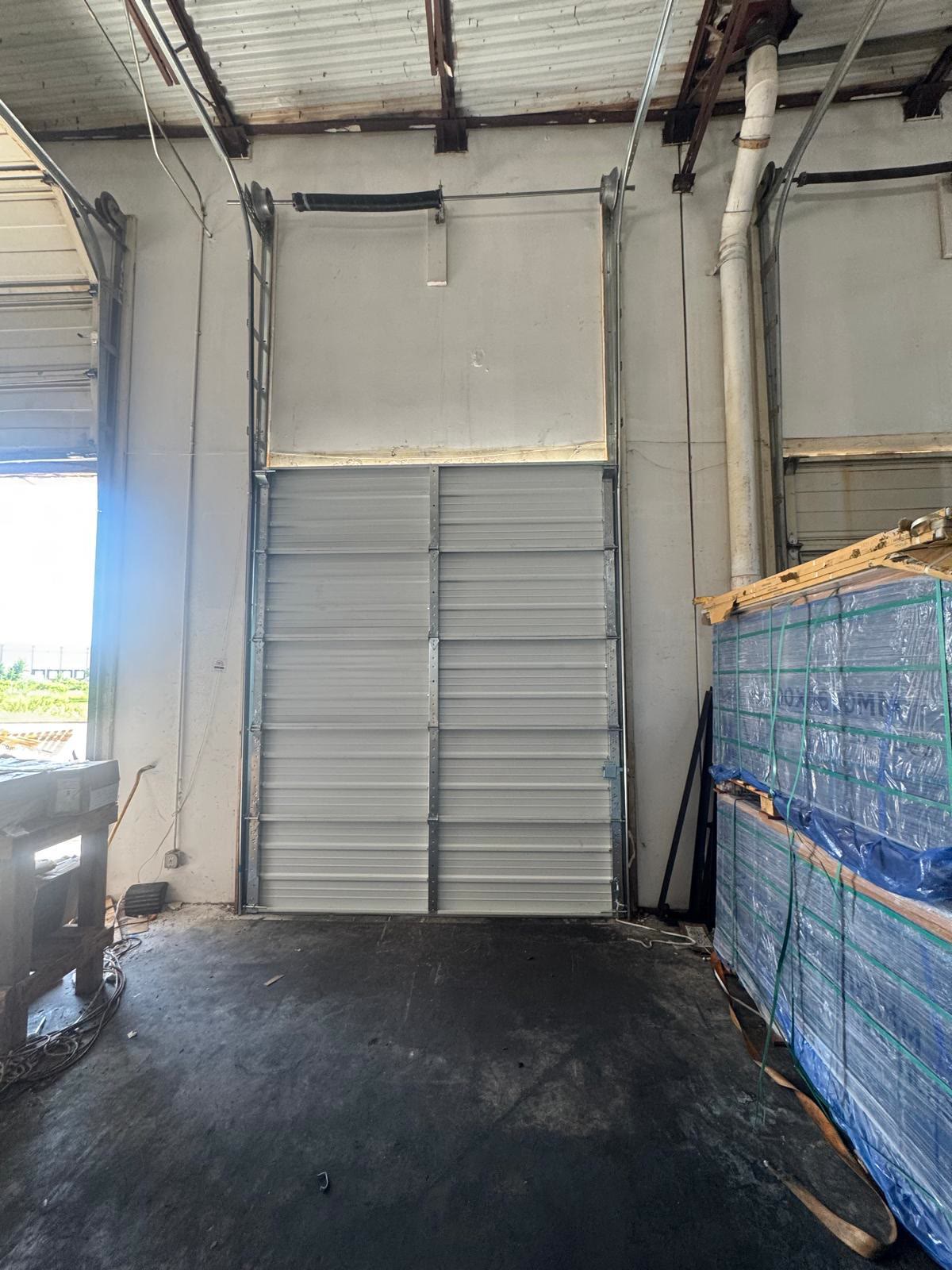
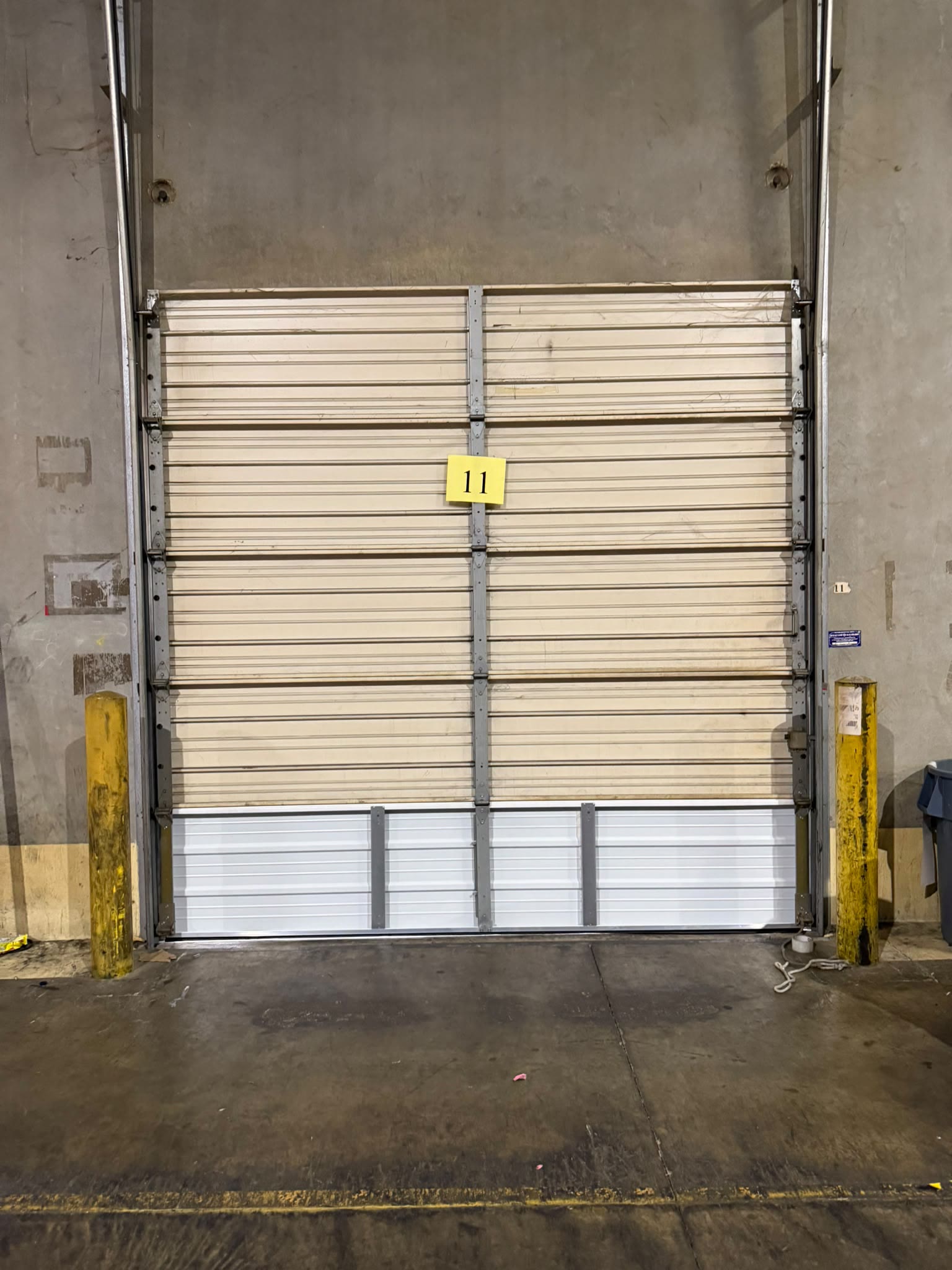
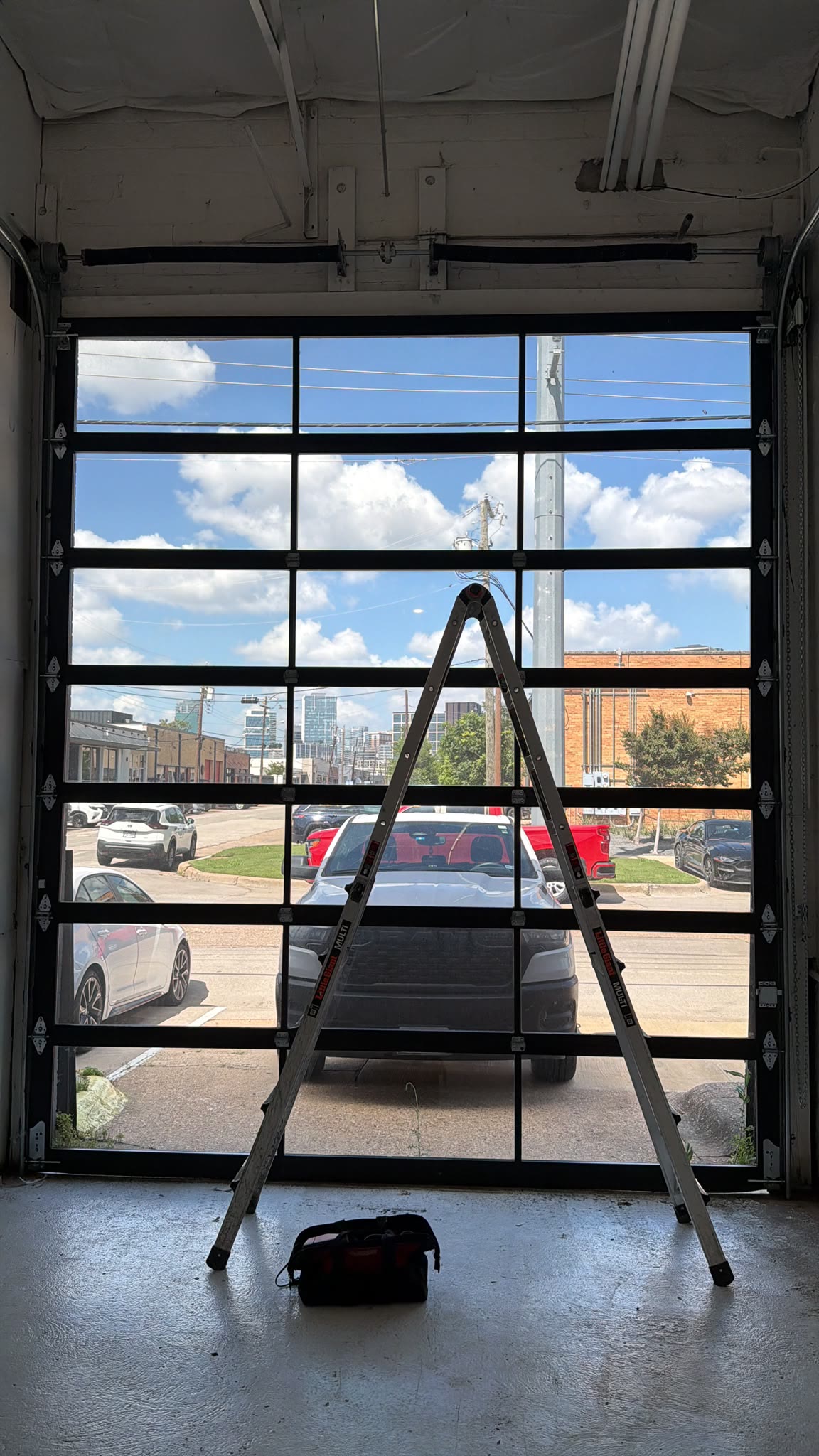
Commercial Garage Doors in the field
Questions
Commercial Garage Doors FAQs
Can you work outside our business hours?
Yes, and for most commercial openings that is the sensible approach. Tell us the window and the access arrangement. Scheduled after hours work is planned around; a door failing at eleven in the morning is not.
Should we replace the springs with the same ones or upgrade?
If the opening is consuming a spring set in a year or less, the same springs are the wrong answer. High cycle packages rated at 25,000 or more cycles cost more per set and less per year once you count the labor and the downtime of each unplanned replacement. If the door cycles a handful of times a day, standard springs are fine.
Our door works but it is loud and slow. Is that urgent?
Not urgent, but it is information. A commercial door that has slowed usually has a counterbalance losing tension, bearings that have gone dry, or a curtain running out of alignment in the guides. All three are cheaper now than they will be at the point the door stops. It is a good candidate for a scheduled visit rather than an emergency one.
Do you install new commercial doors or only repair them?
Both. New installation involves specifying door type, gauge, insulation, wind and duty requirements, counterbalance cycle rating, operator class, and control scheme for the actual use of the opening. That specification conversation is worth having properly, because a door chosen only on price rarely matches the duty it ends up serving.
What about our fire rated doors?
Rated assemblies carry inspection and drop test obligations under NFPA 80 that are separate from ordinary maintenance and have to be documented. If you are unsure which of your openings are rated, the label on the door or guide identifies them. Resolve it before a fire marshal does.
Can a bent slat or section be repaired instead of replaced?
Sometimes, and it is usually a short term answer. Steel that has been bent has yielded, and a straightened slat or section rarely returns to the flatness the assembly needs to coil or track cleanly. On low use openings that may be an acceptable tradeoff. On a door that cycles all day it generally comes back as a second call.
How quickly can you get parts for a commercial door?
Common springs, bearings, cables, rollers, and control components are generally available quickly. Curtain slats, custom sections, and specific operator models can carry lead time, sometimes weeks. We tell you the lead time at the quote so you can decide whether a temporary measure is worth arranging.
Get it fixed, not patched
Service and installation for sectional, rolling steel, and high cycle commercial openings, scheduled around the hours your operation can afford to lose.