Springs
Spring Sizing Is the Whole Job: Wire, Inside Diameter, Length, and Wind
The part of a spring replacement that decides whether the door works for a decade is not the wrench work, it is the four numbers on the spring. This covers wire, inside diameter, length, wind, and how a door actually gets weighed.
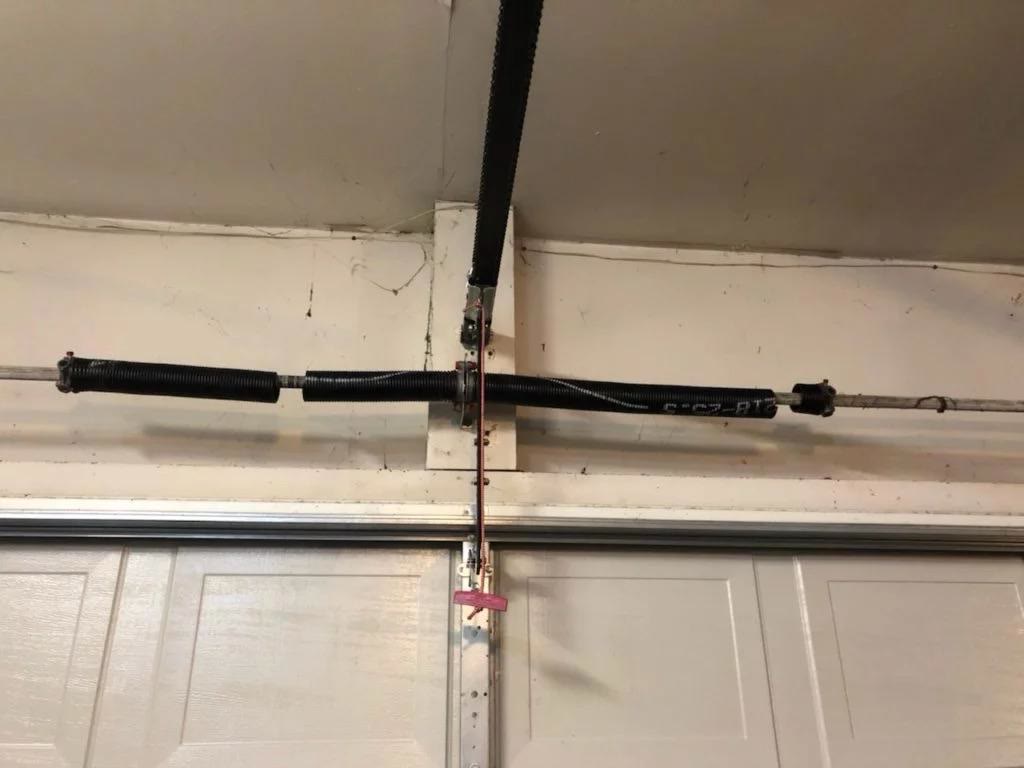
The short version
- A torsion spring is defined by wire diameter, inside diameter, length, and wind direction, and torque rises with roughly the fourth power of wire diameter, so small changes in wire size are large changes in force.
- Springs are sized from the measured weight of the door and the drum radius, not from the door's width and height, which is why two doors of identical dimensions can need very different springs.
- Reusing old springs under a heavier insulated replacement door leaves the counterbalance undersized, which strains the opener and collapses the fatigue life the spring was rated for.
- A spring installed with the wrong wind unwinds its own helix as the door is set, loses its grip at the cone, and cannot deliver torque at all.
The part of a spring replacement that determines whether the door works quietly for a decade or comes back in eighteen months is not the wrench work at the shaft. It is the four values that define the spring, and whether they were selected from the measured weight of your door or copied off whatever happened to be hanging there.
A torsion spring is not a generic part with a tolerance range. It produces a specific torque for every turn it is wound, and that torque has to match the weight of one particular door within a narrow band, or the door will never balance anywhere in its travel.
The four values that define a torsion spring
Every torsion spring on every residential door is described completely by four numbers, and each one moves the torque curve in a different direction.
- Wire diameter, the thickness of the steel. This is the largest lever on torque, because torque rises with roughly the fourth power of wire diameter, so a small step up in wire size is a large step up in force per turn.
- Inside diameter, the diameter of the coil, which must match the cone and sit correctly on the shaft. For the same wire and length, a larger inside diameter produces less torque per turn.
- Overall length, which sets how many active coils there are. More coils spread the same twist over more material, so longer means less torque per turn and considerably more cycle life.
- Wind direction, either left wound or right wound. This is not a performance value but a compatibility value, and it has to be exactly right.
Change any one of these and the whole torque curve moves, which is why a spring cannot be substituted by matching two of the four and hoping. Two springs of identical wire and inside diameter but different lengths deliver noticeably different force.
Springs are sized from the weight of the door, not the size of the door
Two doors of exactly the same dimensions, sixteen feet by seven, can differ in weight by a wide margin. A single layer steel pan door, a two layer door with polystyrene board giving roughly R-6 to R-9, and a three layer door with foamed polyurethane giving roughly R-12 to R-18 are three different weights. Add glazing and heavier skins, where 24 gauge is thicker steel than 27, and the spread grows.
The spring does not see square footage. It sees the moment the door presents at the shaft, which is the weight acting through the radius of the drum. That means the drum is part of the calculation too: a different drum size, or a high lift conversion, changes the cable take up per revolution and therefore changes the spring the door needs.
How a door actually gets weighed
The direct method is a scale. With the springs unwound or already broken and the opener disconnected, the door is lowered onto a scale set under the center of the bottom section. That number includes everything added over the years: a reinforcement strut, a retrofit insulation kit, a heavier bottom seal.
The indirect method is calculation from construction, which is how a door is sized before it is ever hung. Section count, panel thickness, steel gauge, insulation type, glazing, and hardware each carry a known weight, and manufacturers publish figures for their models. Either route ends the same way: the springs go on, the door is wound to the calculated turns, and the balance is verified by hand.
Ask what the springs were sized from
There are three legitimate answers: the door was weighed on a scale, the manufacturer's published weight for that exact model was used, or the four values were read off springs known to balance the door correctly and then confirmed with a hand balance test. The answer that is not legitimate on its own is that the old springs were this size, because on a door that ate its springs early the old size is under suspicion.
The replacement door that weighs eighty pounds more than the one it replaced
This comes up constantly in Plano and Allen, where a large stock of 1980s and 1990s builder grade doors is reaching replacement age at once. The original was very often a single layer, non insulated steel door. The replacement the homeowner wants is an insulated three layer door with a polyurethane core, because it is quieter, more rigid, and more tolerable above a garage that reaches attic temperatures in August. That can add eighty pounds or more.
If the existing springs are carried over onto that new door, the counterbalance is undersized by a large margin and every consequence follows. The door sits heavy at the floor and will not hold position by hand. The opener carries the difference on every lift, so the up force gets raised and the drive gear takes that load thousands of times. A 10,000 cycle spring will not deliver 10,000 cycles.
What an undersized spring feels like, and what an oversized one feels like
Both errors have a recognizable signature, and both seem tolerable enough on the afternoon they are fitted, which is exactly why they get past people.
- Undersized: the door is heavy at the floor, will not hold at waist height with the opener disconnected, strains the opener on the way up, and burns cycles ahead of the rating.
- Oversized: the door wants to fly up when released, will not stay down, forces the opener to push it closed, and shows slack cable at the top of travel because the drums keep turning after the door stops rising.
- Either error tends to be masked by turning up the opener force settings, which is the worst response available, because the down force setting is part of the entrapment protection.
- The clean test for both is the same: release the opener with the door closed, lift by hand, and see whether the door holds where you leave it.
The slack cable symptom deserves its own sentence, because it does more damage than people expect. An untensioned cable can leave its drum groove, wrap over itself, or fall between the drum and the bearing plate. On the next close it re tensions in the wrong place, and a sizing error has become a cable and drum repair.
Left wind, right wind, and why the wrong one unwinds itself
A torsion spring is a helix, coiled in one direction or the other. Viewed from inside the garage facing the door, the right wound spring goes on the left of the center bracket and the left wound spring on the right, so both wind in the direction that tightens their own coils. The convention is that a left wound spring carries a red winding cone and a right wound spring a black one.
Wind matters because the spring is meant to be wound in the direction that closes its coils together, which is also the direction in which the stationary cone bites onto the shaft. Install a spring with the wrong wind and the winding required to lift the door instead opens the helix: the coils separate, the spring loses its grip at the cone, and it can spin on the shaft rather than deliver torque.
Reading the markings and the paint code on the cone
Many springs carry their own identification. Wire size and length are often stamped on the cone or a tag, the cone color tells you the wind, and some manufacturers add a paint code for wire size within their own system. When those markings are legible they save time, and that is the whole of what they are worth.
We do not rely on them because paint codes are not universal between manufacturers, so a color meaning one wire size in one system means something else in another, and a cone repainted or corroded in a humid Little Elm garage is unreadable regardless. So the values get measured: wire diameter across ten or twenty tightly seated coils and divided, inside diameter off the cone and shaft, length coil to coil with the cones excluded.
Why both springs go on together, and when high cycle earns its place
A pair of torsion springs is selected against one weight figure, which makes the pair a single engineered unit rather than two interchangeable parts. Fitting one new spring alongside one that has completed its fatigue life gives two different torque contributions at the ends of a shared shaft, so the door never quite holds position through the middle of its travel.
The economics of the high cycle option are worth understanding in relative terms, even though we publish no prices. The labor to fit a high cycle spring is identical to the labor for a standard one, so the entire difference sits in the part. The real comparison is one high cycle replacement against two standard replacements over the same span of years, counting the second trip and the second day of a door out of service.
Winding bars are not optional and a screwdriver is not a substitute
A torsion spring on an ordinary double door is wound roughly seven and a half turns and holds several hundred pounds of force in reserve. All of that energy transfers through two steel bars seated in the cone's winding holes, and those bars have to fill their holes closely and bottom out properly. An undersized bar, a screwdriver shaft, or a length of rebar cams out under load and leaves at speed with the full torque behind it. The injuries are typically to the hand, wrist, face, and teeth. The same rule covers the bottom brackets and lift cables, which stay loaded until the springs are deliberately unwound.
Need this done?
We handle broken spring repair across Dallas and the eastern metroplex. Call (469) 891-6883 or book online.
Questions
Common questions
What are the four numbers that define a torsion spring?
Wire diameter, inside diameter, overall length, and wind direction. Wire diameter has the largest effect on torque, since torque rises with roughly the fourth power of it, while length primarily sets how much cycle life the spring has at a given torque. Wind direction is a compatibility value that must be exactly right for the side it goes on.
Can I just order the same springs that were on my door?
Only if you know the old springs actually balanced the door correctly. On a door that broke springs early, or one that was replaced with a heavier insulated door at some point, the old size is the thing under suspicion and repeating it repeats the problem. The correct starting point is the weight of the door on a scale or from the manufacturer's published figure.
How do I know if my springs are the wrong size?
Disconnect the opener with the door closed and lift the door by hand. A correctly sized counterbalance lets the door hold its own position when you let go around waist height. If it sinks or drops, the springs are undersized; if it climbs or will not stay down, they are oversized. Slack cable at the top of travel is a further sign of oversizing.
I put a new insulated door on my old hardware. Is that a problem?
It usually is. An insulated three layer door can weigh eighty pounds or more than the single layer door it replaced, and the original springs were sized for the lighter one. The door will sit heavy at the floor, the opener will carry the difference on every cycle, and the springs will run at a stress they were never rated for, so they fail well short of their cycle rating.
What does the color on the end of my spring mean?
The winding cone color indicates wind direction, with red conventionally used for left wound springs and black for right wound. Some manufacturers additionally paint a code identifying wire size within their own system, but those codes are not consistent between brands and a corroded or repainted cone is unreadable. That is why wire size is measured across coils rather than read off a color.
More advice
Keep reading
Why Garage Door Springs Break, and What the Cycle Rating Actually Means
A garage door spring is spent in cycles, not years, and the arithmetic for your own household takes about a minute. This is how fatigue breaks spring steel, why the break happens with the door closed, and what a high cycle rating actually buys.
SpringsTorsion or Extension: Two Ways to Carry the Same Weight
One system stores the weight of your door as twist on a shaft, the other stores it as stretch along the tracks. Knowing which is over your head changes what you inspect, what can hurt you, and why one door tracks squarer than the other.
MaintenanceThe Garage Door Maintenance You Can Safely Do Yourself
Several of the things homeowners get charged for take about ten minutes with a rag and one can of grease. Here is the honest line between maintenance you should do yourself and work that genuinely requires tools and training.