Maintenance
The Garage Door Maintenance You Can Safely Do Yourself
Several of the things homeowners get charged for take about ten minutes with a rag and one can of grease. Here is the honest line between maintenance you should do yourself and work that genuinely requires tools and training.
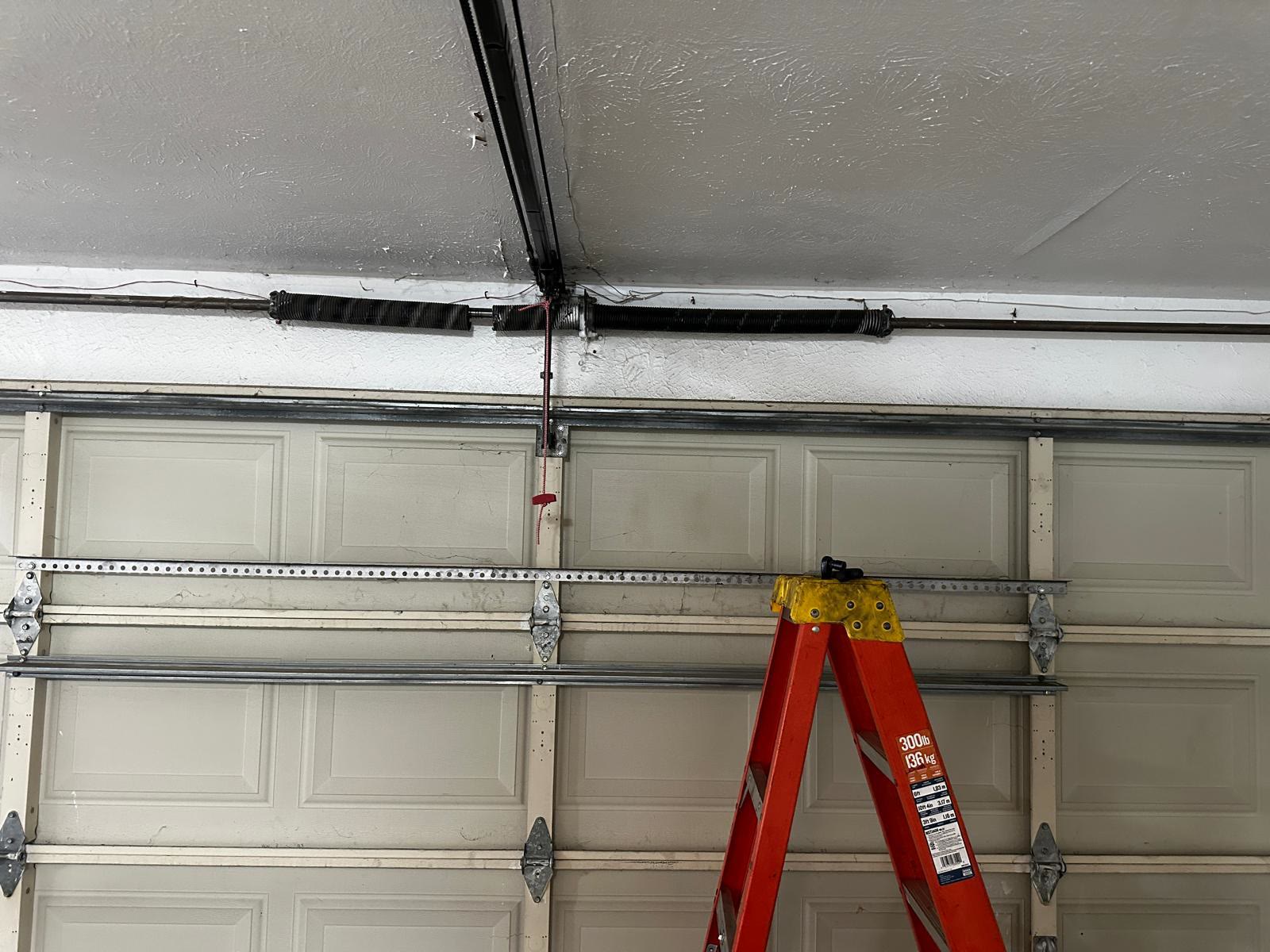
The short version
- The hand balance test takes under a minute and is the most informative check a homeowner can run: close the door, pull the release, lift to waist height, and a balanced door holds position.
- Use white lithium grease or a synthetic garage door lubricant on springs, bearings, hinge pivots, and roller stems, and never on the track surface, where it turns dust into an abrasive paste.
- Photo eyes belong within six inches of the floor and both safety systems should be tested monthly, since a failed contact reversal usually means force settings were raised to hide a balance problem.
- Everything under spring tension is off limits, because a seven foot door's torsion spring is wound roughly seven and a half turns and releases all of that energy at once if a winding bar slips.
A garage door is the largest moving object in most houses. Much of its upkeep is homeowner work, and some of it is work nobody should pay for, because it takes ten minutes twice a year.
What follows is that routine, in order, with the reasoning attached, and with a line drawn where maintenance becomes a job that injures people who attempt it alone. That line falls wherever stored energy is involved.
Twice a year, in spring and in fall, and why those two seasons
Spring and fall suit this climate for opposite reasons. A spring service follows hail season, when strikes have broken the coating and need touching up before summer bakes moisture into the scar. A fall service replaces what August removed, since heat in an attached garage thins lubricant out of open bearings.
Cadence follows usage. A two car household in Frisco or Rowlett using the garage as its front door runs about six cycles a day; a door opened twice a week can go annually. Clay soil argues for twice yearly regardless, since slabs and framing move seasonally and a seal that closed tight in November can show daylight by August.
The ten minute list, twice a year
None of this needs a technician, or more than a rag, a step ladder, a socket driver, and a can of white lithium grease. If you are paying for these items on their own, you are paying for what you can do yourself.
- Walk the visual route: springs, cables, rollers, hinges, track, seal, photo eyes, opener rail.
- Run the hand balance test with the door closed and the opener disconnected.
- Grease spring coils, bearings, hinge pivots, and roller stems, and nothing on the track.
- Wipe the inside face of the track clean with a rag and a mild solvent.
- Snug hinge screws and track lag bolts, stopping when they stop turning easily.
- Wash the door and touch up any break in the coating.
- Test the photo eyes and the contact reversal, and change tired remote batteries.
The inspection route, in the order that keeps you from skipping anything
Do this with the door closed and a flashlight for the parts near the ceiling. A fixed order matters, because the parts that fail quietly are the ones nobody looks at.
- Springs: a broken torsion spring separates and leaves a gap of about two inches, and rust that has pitted the wire is where a fatigue crack starts.
- Cables at the drum above and the bottom bracket at the floor: a fuzzy section, a lifted strand, a kink, or rust at the fitting.
- Rollers: spin each wheel and watch for stem wobble, a flat spot, and cracked nylon.
- Hinges: fastener holes elongating into ovals, and cracks radiating from the plate.
- Track: sight down the vertical for dents, kinks, and flare at the radius.
- Bottom seal: look for daylight from inside, and squeeze it to see whether it springs back.
- Photo eyes: within six inches of the floor on both sides, lenses clean, lights steady.
- Opener rail: a chain should have slight slack without slapping the rail.
The hand balance test, the measurement that predicts everything else
This is the most informative thing a homeowner can do, and it takes under a minute. A door out of balance quietly overloads the opener, the top section, and the springs on every cycle without announcing anything.
- Close the door completely first, with the door down rather than up, because pulling the release on a raised door will drop it if the counterbalance is failing.
- Pull the emergency release cord, the red handle on the trolley, to disconnect the door from the opener.
- Lift the door by hand from the bottom, using your legs, to about waist height.
- Let go slowly and watch what it does.
A pass holds within a few inches of where you left it and felt like lifting perhaps ten pounds rather than the door's real weight. A failure tells you the direction: a door that falls is under sprung, from springs that lost tension or a door that gained weight; a door that rises is over sprung; a door that binds at one height has a roller or track problem there.
The diagnosis is homeowner work and the repair is not. Correcting balance means adding or removing turns on a loaded torsion spring with winding bars, which is not a job for substitute tools. To reconnect, pull the release handle back toward the motor and run the opener through one cycle.
Lubrication, which product, which points, and the one place it must never go
Use white lithium grease or a purpose made synthetic garage door lubricant. Do not use WD-40 as a lubricant. It is a water displacing penetrant, useful for cleaning residue off a track or freeing a rusted fastener, but it evaporates and carries away the grease already in the bearing.
Heat argues for grease over a light oil. A garage above a hundred degrees in August thins a light oil until it runs out of an open bearing within weeks. Grease has body and holds its film at those temperatures.
- Torsion spring coils: a light film along the whole length, because dry coils rubbing against each other are what give an aging spring its squeal.
- End bearing plates at each side of the shaft and the center bearing, applied at the race.
- Hinge pivots, at the knuckle where the halves turn, not across the whole plate.
- Roller stems where they enter the hinge, plus the race on steel rollers. Sealed nylon rollers need only the stem.
- The opener rail on chain and screw drives. A belt drive needs nothing on the belt.
- The lock bar and any side latch.
The track surface gets nothing, ever. Grease there collects the fine dust that blows into every garage here, becomes an abrasive paste, and makes the roller skid instead of turn, which flat spots the wheel and wears the stem. If somebody has greased your track, wipe it clean and leave it dry.
Cleaning the track, tightening fasteners, and washing the skin
Cleaning the track is a rag job: a cloth around two fingers, dampened with a mild solvent, run down the inside face of both vertical tracks until it comes away clean. Then, with the door closed, snug the hinge screws and the track bracket lags with a nut driver rather than an impact driver. Hinge screws are sheet metal screws in thin steel, so over torquing strips the thread the screw cut, and a lag driven too hard into rotten jamb spins and holds nothing.
Do not touch the bottom bracket bolts, where the cables terminate under full load. Washing the door is worth doing: detergent, water, a soft brush, and a rinse clear the grit that holds moisture against the coating and the deposits sprinkler overspray leaves on the bottom section. Touch up any break in the coating with matching enamel.
The two safety tests that take a minute a month
A closing door has two separate systems meant to stop it, each one can quit without the other, and that is exactly why both belong in a monthly test.
- Photo eye test: with the door open, press the wall button to close and pass a broom handle through the beam near the floor. It must reverse fully.
- Contact reversal test: lay a two by four flat in the door path and close onto it. The door must reverse on contact.
A photo eye failure is usually alignment: bumped brackets, dusty lenses, or late afternoon sun on the receiver, and cleaning and nudging them until both lights are steady is homeowner work. A contact reversal failure is more serious, because it usually means force settings were raised to push a door that resists closing, which defeats the system that exists because doors have killed children.
Two parts you can replace yourself: the bottom seal and the remotes
Bottom seal and astragal
This is a reasonable homeowner job on most residential doors. The bottom edge carries an aluminum or vinyl retainer with one or two channels, and the seal has a bead along its top edge shaped like a T or a U that slides into those channels from one end.
The trick is friction. Raise the door partway, pull the old seal out from one end, clean the channel, spray it and the new bead with soapy water or silicone, then feed the bead in and draw it through steadily rather than in jerks. Where clay movement has left a slab that is no longer flat, an oversized U shaped astragal is the answer.
Remotes, keypads, and the learn button
A remote that works from three feet but not thirty is almost always a weak coin cell rather than a failed receiver. To pair one, press and release the learn button on the opener, usually behind the light lens, then press the remote button within about thirty seconds. If the door answers the wall control but ignores all remotes, check the vacation or lock button, which disables radio devices.
Where do it yourself stops, and what a professional visit adds
The line is not about difficulty or about protecting anyone's trade. It is about stored energy and load paths, and it falls in the same five places every time.
- Anything under spring tension: winding, unwinding, adjusting, replacing, or removing a torsion spring, including the winding cone and its set screws.
- The bottom brackets, where the lift cables terminate and the counterbalance force concentrates whenever the door is down.
- Cable work: replacing a cable, re-seating one that jumped its drum, or changing cable length.
- Track that has been kinked, flared, or pulled loose, and any door that has come off its track.
- Opener force and travel settings beyond the manufacturer's stated limit procedure.
The physics of a wound torsion spring
A torsion spring counterbalances a door weighing a couple of hundred pounds, storing that energy in a small space; on a seven foot door a typical spring is wound roughly seven and a half turns. That energy has one way out, through the winding cone. If a bar slips, or a set screw is loosened while the spring is still wound, the cone spins and releases everything at once, at arm's length from your hands and face. The same force exists at the bottom bracket whenever the door is down.
What a technician adds is mostly measurement. Balance is corrected with bars and verified by hand at several heights, the door's actual weight is established rather than assumed, cable tension is equalized at the drums, and travel limits and force are set to how the door behaves now. Keeping a well adjusted door running is homeowner work; bringing one back into adjustment is not.
Need this done?
We handle garage door maintenance across Dallas and the eastern metroplex. Call (469) 891-6883 or book online.
Questions
Common questions
How often should I lubricate my garage door in North Texas?
Twice a year suits this climate, in spring and in fall, for a door running several cycles a day. Summer heat in an attached garage thins lubricant and drives it out of open bearings, so the fall application largely replaces what August removed, while the spring application puts fresh grease in before the heat arrives. A door used a couple of times a week can go once a year.
Can I use WD-40 on my garage door?
Use it as a cleaner and a penetrant, not as a lubricant. It is genuinely good for wiping gummed residue off a track or freeing a rusted fastener, but it evaporates and leaves almost nothing behind, and it will dissolve and carry away the grease already in a bearing you spray. For lubrication, use white lithium grease or a purpose made synthetic garage door lubricant.
What does it mean if my door falls when I let go of it halfway?
The door is under sprung: the springs no longer provide enough lift for its weight, either because they have lost tension over their cycle life or because the door has become heavier. Until it is corrected, the opener carries that difference on every cycle, which is what strips drive gears and cracks top sections at the arm bracket. The test is homeowner work; the correction requires winding bars on a loaded spring and is not.
Can I replace the bottom weather seal myself?
On most residential doors, yes. The seal has a T shaped or U shaped bead that slides into a channel in the retainer along the bottom edge, so you pull the old one out from one end, clean and lubricate the channel with soapy water or silicone, and draw the new one through. You do not need to remove the bottom brackets to do it, and you should not, because the lift cables terminate there under full spring tension.
Why does my door respond to the wall button but not to any remote?
The most likely cause is the vacation or lock button on the wall control, which disables all radio devices by design and is easy to press by accident. Hold that button again to release the lockout and test a remote. If that is not it, replace the coin cell, since a remote that only works within a few feet of the opener is usually reporting a weak battery rather than a failed receiver.
If I do all of this myself, is there any reason to have a technician out?
Yes, for the work that requires measurement and tools you should not improvise. Correcting balance means winding or unwinding a loaded torsion spring with proper bars, and equalizing cable tension at the drums sets the door so both sides lift together. A technician also establishes the door's actual weight for spring selection and resets opener travel and force to current behavior, none of which is safely done from a step ladder with hand tools.
More advice
Keep reading
Why a Quiet Door Gets Loud, and What Each Noise Is Telling You
The character of the sound and where it happens in travel narrow a loud door down to one or two parts. Here is the map, the fixes ranked by how much quiet they buy, and the one noise that means stop using the door.
OpenersSmart Openers, Wi-Fi, and Battery Backup: What Is Worth Paying For
Smart opener feature lists mix genuine safety improvements with novelty, and the box does not distinguish between them. Here is a feature by feature account of what changes an outcome in a North Texas garage and what does not.
Buying GuideSteel, Aluminum, Wood, and Composite: How Door Materials Behave in North Texas
Material choice decides how a door ages, and a showroom will not tell you which one survives a Plano hailstorm or a west facing August. Here is what each material does well, where each gives up, and what changing material does to your springs.