Service
Panel Repair in Dallas & the east metroplex
Most section damage we see in Dallas comes from vehicle contact at low speed. The car is barely moving, the door is barely damaged in the driver's opinion, and the bottom section takes a crease that later shows up as a door that binds in the last foot of travel because the end stile has been pushed out of square.
- Same-day service available
- 10+ years serving Dallas
- Free on-site estimates
- 15% off current repairs
Why a sectional door is repairable in the first place
A modern residential door is built from four or five independent horizontal sections joined by hinges. Each section carries its own rollers, its own hinge plates, and in many cases a horizontal steel strut for stiffness. Because the sections are separate components rather than a single panel, one can be removed and replaced without disturbing the others, which is the whole basis of panel repair. The exception is older one piece tilt up doors, which have no sections at all and cannot be repaired this way.
Cosmetic damage versus structural damage
A dimple or shallow dent in the steel skin is a finish problem. The skin is a stressed surface but a shallow deformation does not meaningfully change the section's stiffness, and the door will run exactly as it did before. Structural damage is different in kind. A crease that runs the length of a section has folded the steel and permanently reduced its resistance to bending, which shows up as flex during lifting. Damage to the end stile, the vertical piece at each end of the section that carries the roller and hinge, throws the roller out of plane and makes the door bind in the track. And cracking in the skin around a hinge plate means the anchoring material has failed, which is the case where continued use is actually risky.
Whether a matching section is still available
This is the first question and it determines everything after it. A section has to match the existing door in width and height, in stamped panel profile, in construction and thickness, and in color. Manufacturers change and retire panel designs, so a door installed twelve years ago may no longer be in production in the same profile. There is also a finish problem even when the part exists: a factory finish that has been on a south or west facing wall for a decade has faded, and a new section in the same nominal color will read as a different color next to it. Painting the whole door after the repair is the usual remedy when appearance matters.
When two or more sections change the math
Replacing one section is a clear win. Replacing two is usually still sensible. By the time three sections are damaged on a four or five section door, the parts and labor approach the cost of a complete new door, and the new door arrives with a factory finish that matches itself, current hardware, better insulation options, and a manufacturer's warranty on the whole assembly rather than on one panel. We will run both numbers rather than assuming which one you prefer.
The strut, and why the top section is a special case
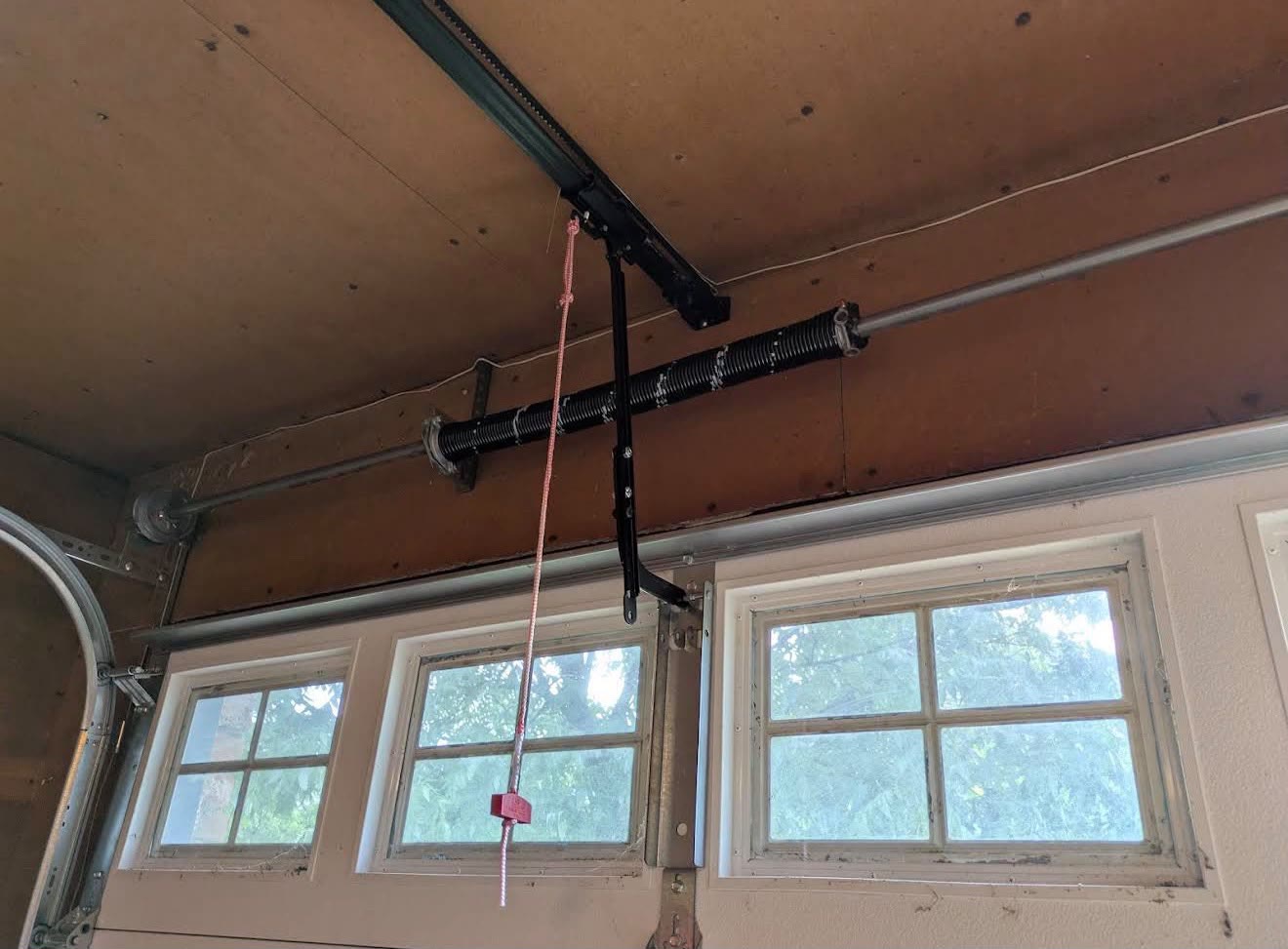
The top section is where the opener arm attaches, which means it takes the concentrated pushing and pulling force of the opener on every cycle while the rest of the door is being lifted by the springs. Many doors, especially lighter single layer models, have a horizontal steel strut fastened across that section specifically to spread that load. A top section that is bowing or cracking at the arm bracket usually has either a missing strut, an unbalanced door making the opener work far harder than it should, or both. Replacing the section without correcting the balance or adding the strut produces the same failure again.
Hail, insurance, and what an adjuster actually needs
Garage doors are one of the most commonly damaged exterior components in a North Texas hailstorm because they present a large, flat, relatively thin steel surface to the sky at an angle. Dents from hail are usually cosmetic in the mechanical sense but are legitimately a covered loss under many policies. What tends to be useful is a written assessment describing the damage, the door's model and construction where it can be identified, whether matching sections remain available, and the cost of section replacement versus full replacement. We can provide that documentation. We cannot tell you how your policy will respond, and we will not pretend to.
Signs you need this
- A visible dent, crease, or bow in one or more horizontal sections.
- Cracks in the steel radiating from a hinge plate or the opener arm bracket.
- The door binds or rubs in the track at the height of the damaged section.
- A section flexes noticeably as the door starts to lift.
- Daylight visible through a split or separation between sections.
- A hinge has torn loose and the fastener holes have elongated into ovals.
- The end of a section no longer lines up with the ones above and below it.
- Widespread shallow dimpling across the door face after a hailstorm.
Book this service
Call (469) 891-6883 or request a visit online.
The visit
What we actually do
Identify the door
Manufacturer, model line, panel profile, construction, and section dimensions are recorded, usually from a label inside the door or on the end stile. Without that identification, a matching section cannot be sourced reliably.
Assess structure, not just appearance
The door is run and watched through travel. We look for flex in the damaged section, binding at the track, end stile deformation, and cracking around hinge and bracket fasteners, then separate what is cosmetic from what affects operation.
Availability and options
We confirm whether the section is still manufactured, quote the section replacement including lead time, and set that against the cost of a complete door so the comparison is in front of you rather than implied.
Section replacement
The door is secured and spring tension released where the work requires it. The damaged section is removed, the replacement is set in place with hinges, rollers, and any strut transferred or renewed, and the stack is checked for square.
Rebalance and retest
A replacement section can change the door's weight slightly, so balance is checked by hand and spring turns adjusted if needed. Opener travel and force are reset, and the safety reversal is tested before we finish.
On the job
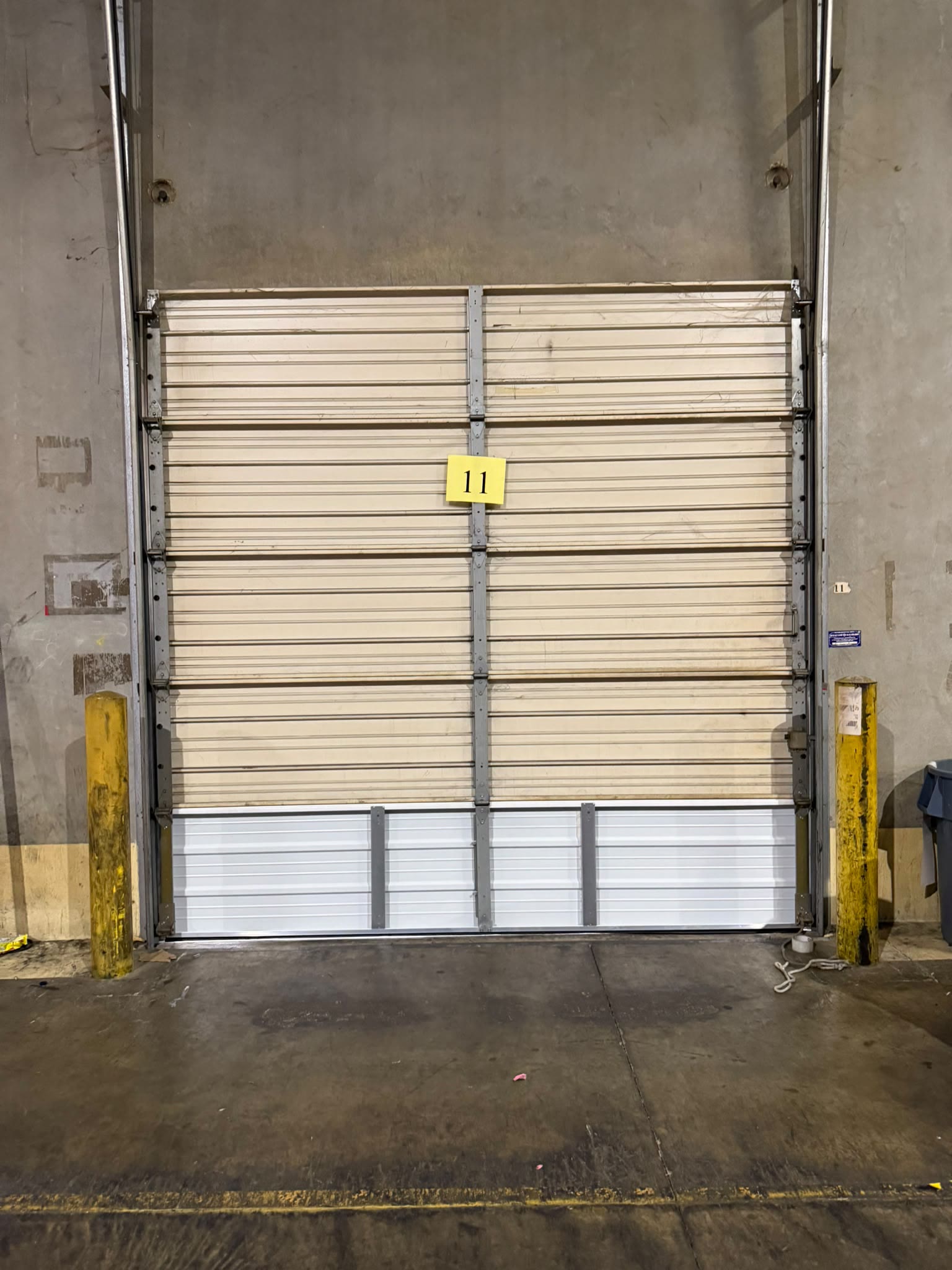
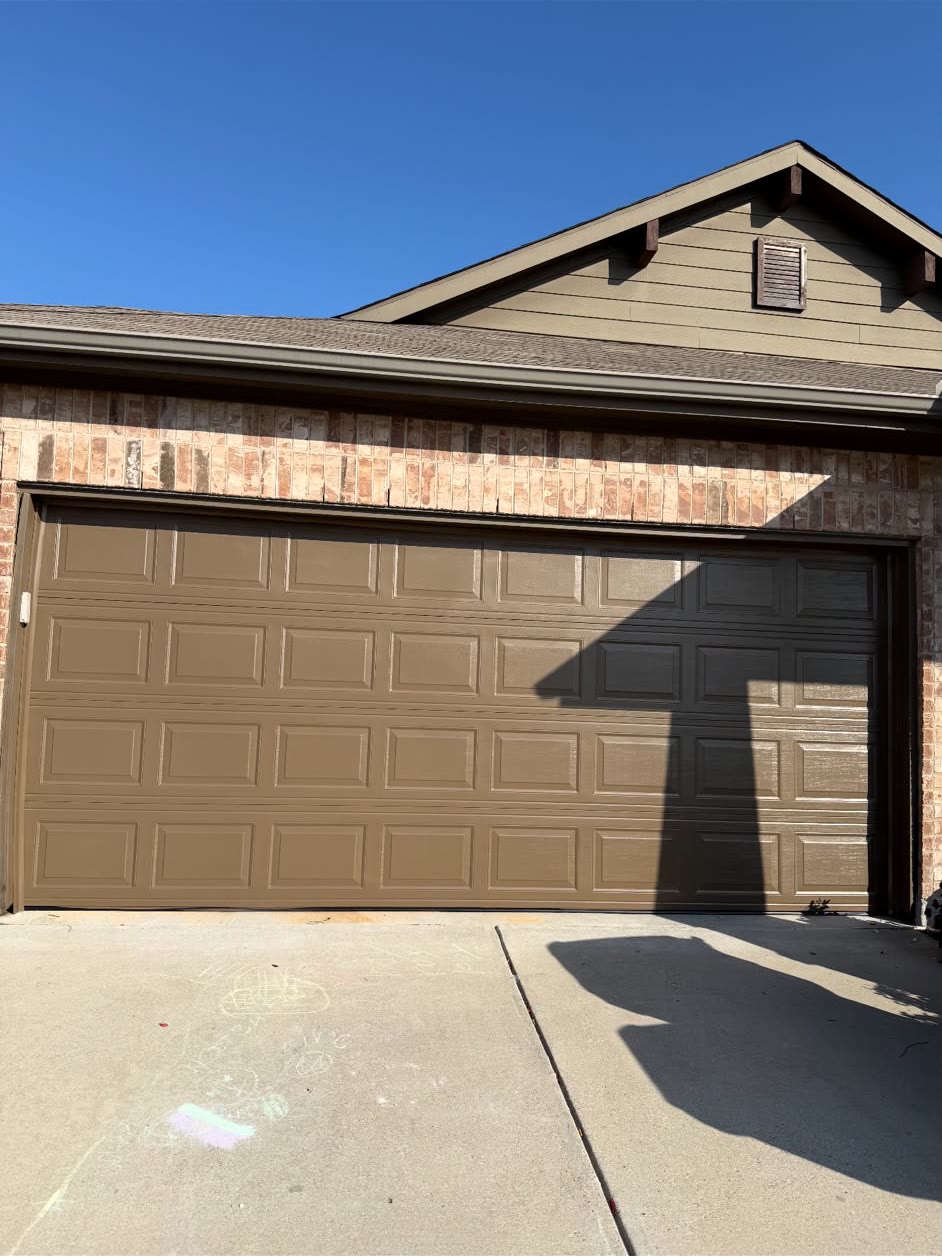
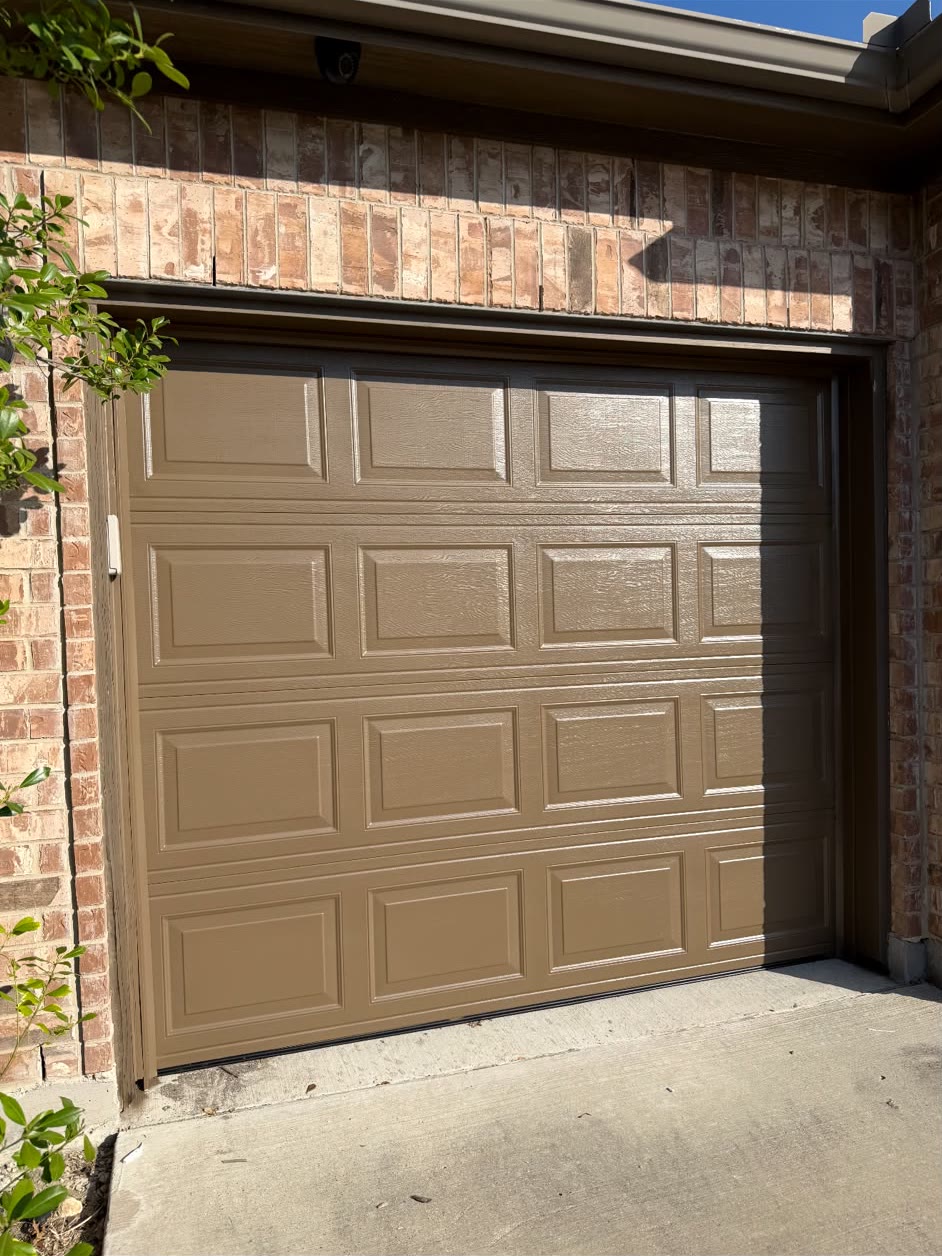
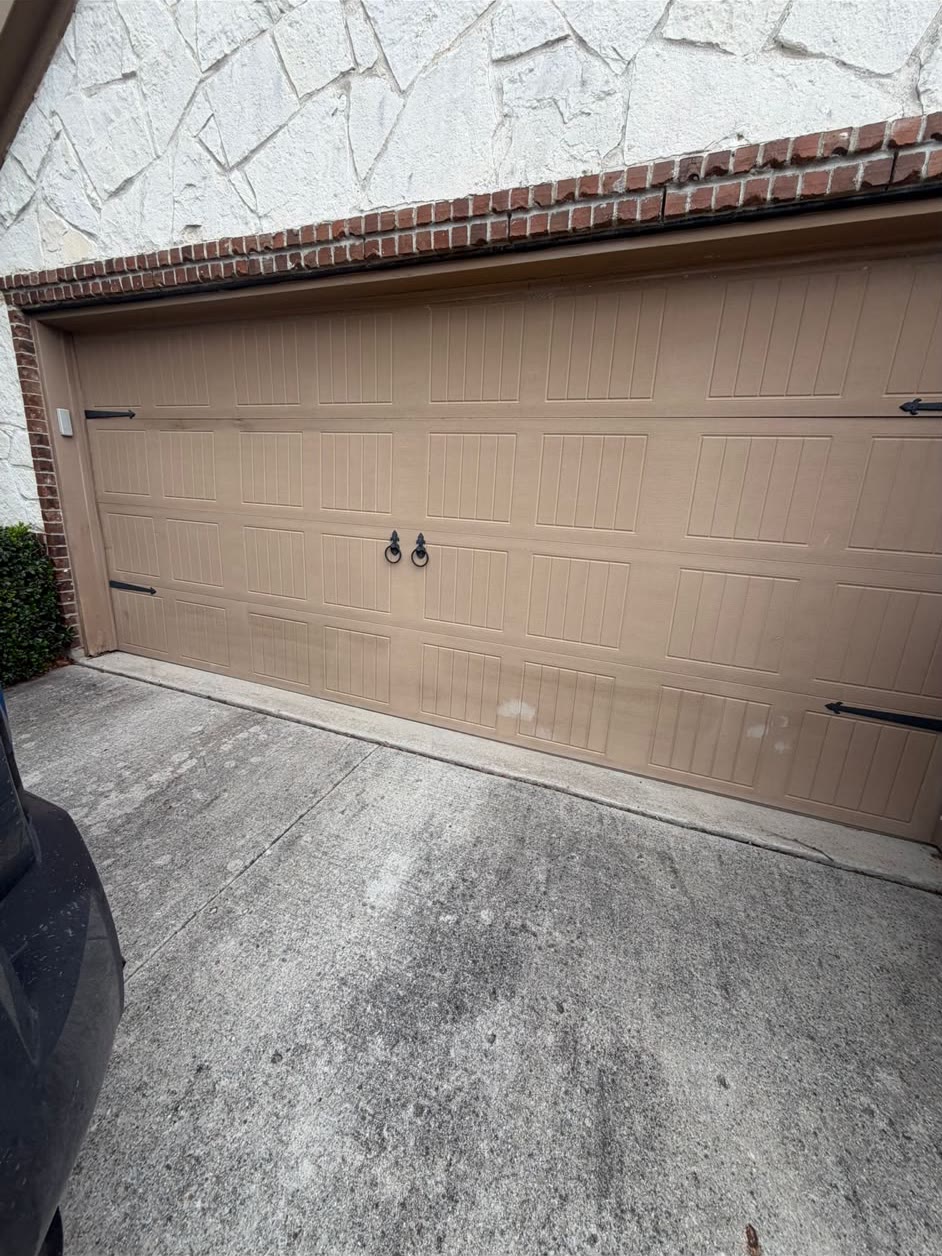
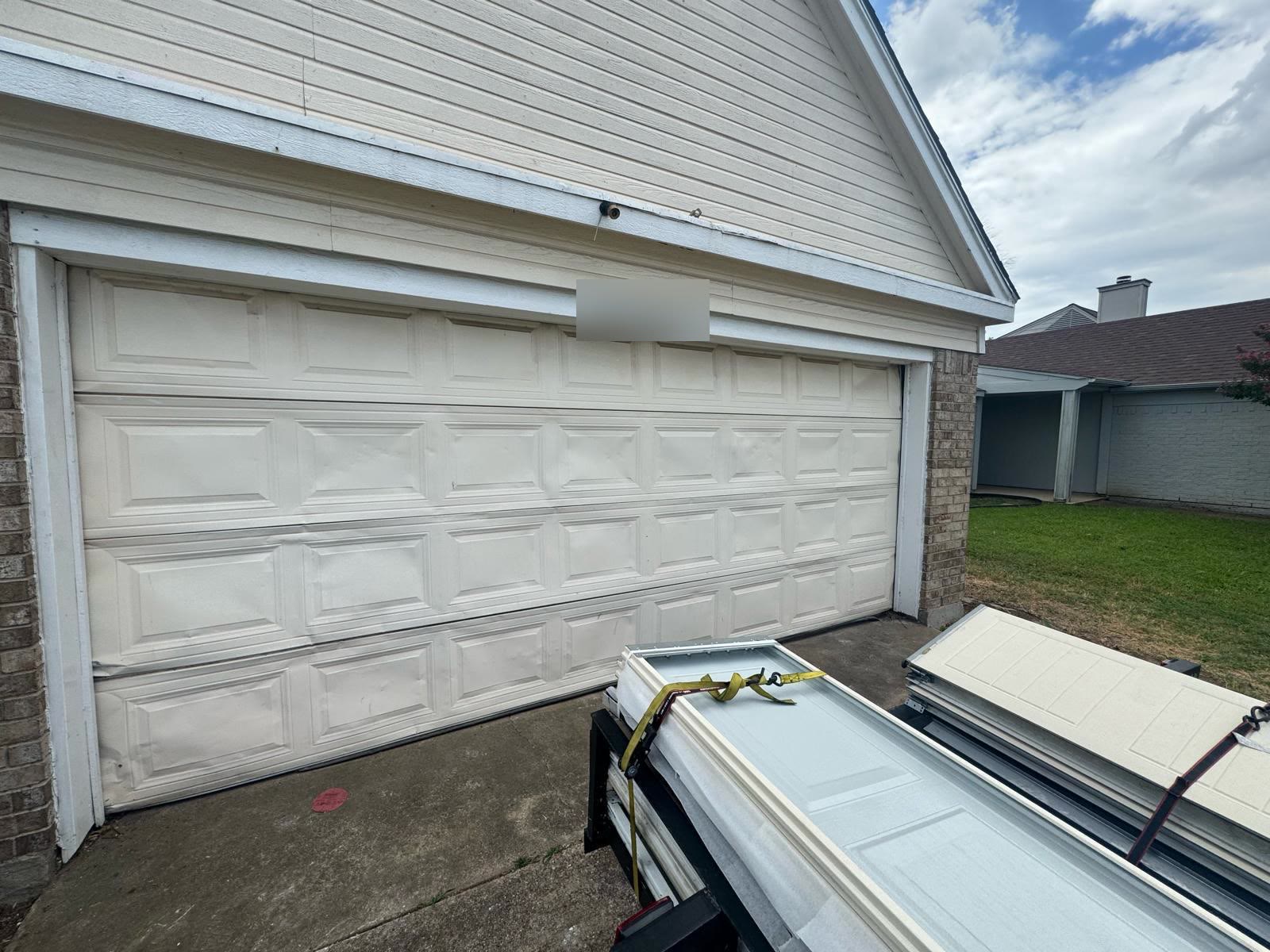
Panel Repair in the field
Questions
Panel Repair FAQs
Can you replace just one panel?
Yes, when a matching section is still manufactured for your door in the same profile, construction, and size. That is the case more often than not on doors under roughly ten to twelve years old. On older or discontinued models, matching becomes the limiting factor rather than the labor.
Will the new section match the rest of my door?
Mechanically yes, visually often not exactly. A factory finish that has faced the Texas sun for years has faded, and a new section in the identical catalog color will read slightly different beside it. If appearance matters, the usual answer is to paint the complete door after the repair with an exterior grade paint, which produces a uniform result.
Can a dent be pulled out instead of replacing the section?
Shallow dents in flat areas can sometimes be improved, and the honest expectation is improvement rather than invisibility. Steel that has been stretched does not return to its original shape, and attempts to work it aggressively usually leave a rippled surface that is more noticeable than the dent. On creased sections it is not worth attempting.
Is a dented panel unsafe to keep using?
Usually not, if the damage is confined to the skin and the door still runs smoothly through its travel. It becomes a safety issue when the steel has cracked around a hinge plate or the opener bracket, or when the end stile is bent enough that the roller is being forced against the track. Those conditions can pull a door out of its track.
How much damage before I should just replace the door?
As a working rule, one damaged section favors replacement of that section, two is a judgment call, and three or more on a typical four or five section door generally means a new door is the better value once labor is counted. Structural damage to the bottom or top section shifts the calculation earlier, because those two carry the most concentrated loads.
How long does the section take to arrive?
Common profiles in standard sizes are often available within a few days to a couple of weeks. Custom widths, specialty finishes, and sections with glazing take longer. We give you the lead time before you commit, and we do not order until you have decided between the section and a complete door.
Will you provide documentation for an insurance claim?
We can provide a written assessment describing the damage, identifying the door where possible, stating whether matching sections remain available, and giving the cost of section replacement against full replacement. What we will not do is characterize how your policy applies, because that is the adjuster's determination and not ours.
Get it fixed, not patched
Section repair or replacement for dented, cracked, or impact damaged panels, with an honest read on whether a single section is still available for your door.